
2026 Water Damage Repair Costs for Homeowners: $3,867 Avg, Per Sq Ft
2026 Water Damage Repair Costs for Homeowners: $3,867 Avg, Per Sq Ft
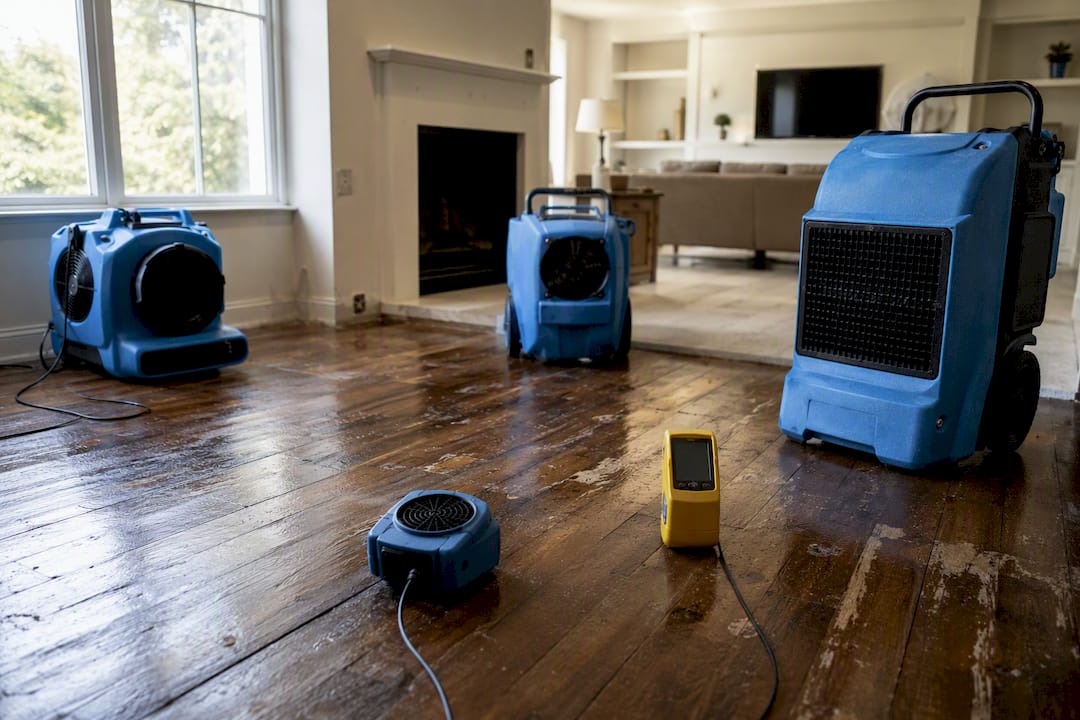
The national average water damage restoration bill runs about $3,867 in 2026, with most homeowners landing somewhere between $1,383 and $6,384. Two things swing that number more than anything else: whether you need mitigation only or a full rebuild, and how fast water gets pulled out and dried. Get an inspection within the first day or two, and you’ll have a real number instead of a guess.
TL;DR:
- Immediate response within the first 24 to 48 hours can significantly reduce overall costs by limiting mold growth and secondary damage.
- Mitigation costs range from $500 to $2,500 for small jobs, while full restoration can exceed $10,000, especially for flood damages affecting entire homes.
- Water category and damage class greatly influence costs, with contaminated or deeply absorbed water requiring more labor, equipment, and higher fees.
- Response time, material choices, and complexity of access are key factors that can cause final bills to vary widely, even with similar damage scope.
- Insurance coverage generally addresses sudden events like pipe bursts but often excludes slow leaks and flood damage, which require specific riders or policies.
Table of Contents
- How much does water damage repair cost on average?
- What does water damage cost per square foot?
- What’s included in mitigation, repair, and mold remediation?
- What are realistic budget examples by room and square footage?
- What factors actually move your final price?
- Will homeowners insurance cover water damage repair?
- How do you get an accurate contractor quote?
- How Bestservicelocal helps you find a vetted restoration pro fast
- Our take on water damage pricing nobody talks about
- Get local, vetted water damage quotes without the runaround
- Sources
How much does water damage repair cost on average?
That $3,867 figure is an average, not a fixed price. Mitigation alone (extraction, drying, sanitizing) can close out for a few hundred dollars on a small, contained leak. A full restoration involving demolition, drywall, flooring, and cabinetry can climb past $10,000 without much trouble, and Angi’s cost data puts the broad range at roughly $1,200 to $10,000 depending on scope. Severe flood events with structural repair frequently blow past $25,000, especially when they trigger separate flood insurance claims rather than standard homeowners coverage.
The table below breaks the total cost into its three natural phases, since contractors typically bill them differently and homeowners often confuse a mitigation invoice with the final restoration bill.
| Project type | Typical cost range | What it includes |
|---|---|---|
| Mitigation only | $500 to $2,500 | Extraction, air movers, dehumidifiers, antimicrobial spray |
| Repair/rebuild only | $1,200 to $10,000 | Drywall, flooring, cabinetry, paint, trim |
| Full restoration (mitigation + rebuild) | $3,867 average, $1,383 to $6,384 typical | Complete cycle from extraction through finished repair |
A handful of factors explain why one guide quotes $2,000 and another quotes $8,000 for what sounds like the same job:
- Regional labor rates. Restoration labor in a major metro can run 30 to 50 percent higher than in a smaller market.
- Finish level. Builder-grade laminate flooring costs a fraction of what solid hardwood or natural stone tile costs to replace.
- Emergency and after-hours fees. A Saturday night call for active flooding often carries a premium that a scheduled Tuesday appointment doesn’t.
- Insurance mediation. Claims processed through an insurer’s preferred pricing software tend to run lower than retail, out-of-pocket quotes.
None of that means you’re stuck guessing. Once you know your square footage and which phase you’re paying for, the ranges above get a lot more useful.
What does water damage cost per square foot?
Per-square-foot pricing is the fastest way to turn a vague worry into a number you can budget around. Mitigation typically runs $3 to $7.50 per square foot, while repair and rebuild work adds another $20 to $37 per square foot for a basic scope, before you factor in premium finishes.
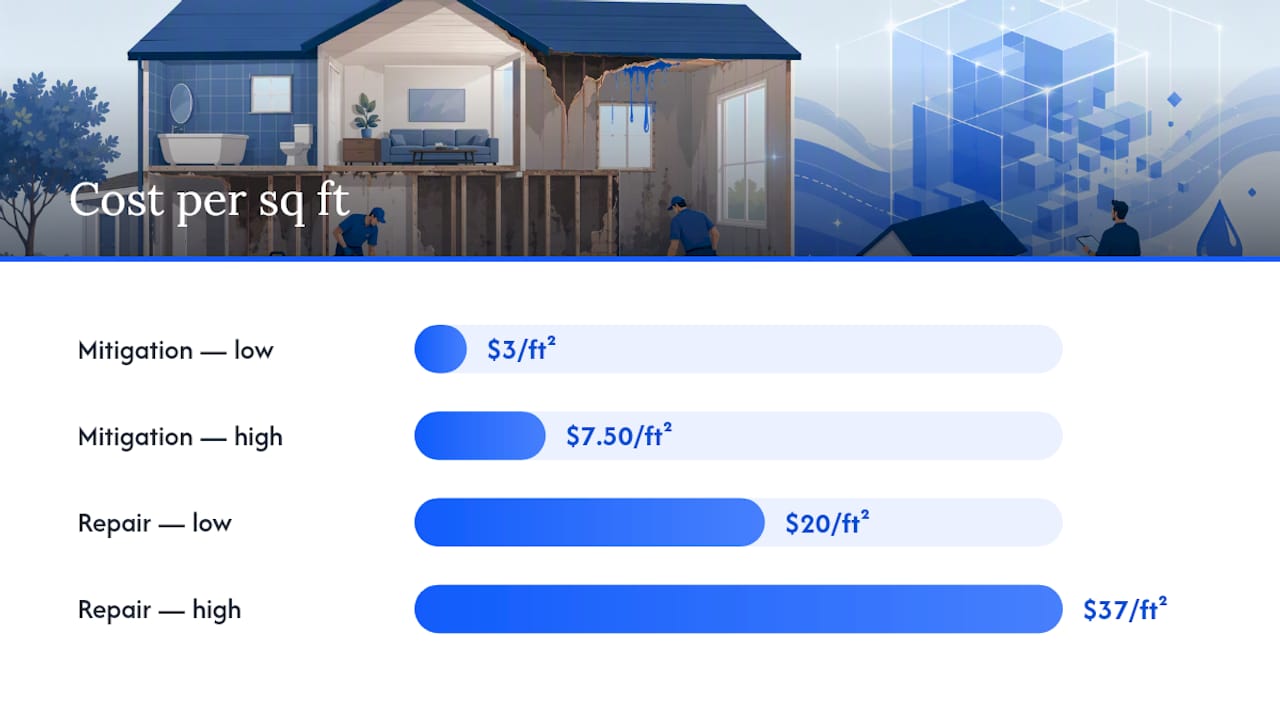
Quick math: a 400 square foot flooded basement at $5 per square foot mitigation lands around $2,000 before any drywall or flooring gets touched.
Water category changes that math fast. The IICRC classifies water intrusion into three categories, and contractors price around them:
- Category 1 — Clean water from a supply line or appliance. Lowest risk, lowest cost, fastest turnaround.
- Category 2 — “Gray water” with some contamination, like a washing machine overflow or dishwasher backup. Moderate cost bump for disinfection.
- Category 3 — Sewage, flood water, or anything grossly contaminated. Expect labor and disposal costs to run 25 to 40 percent higher than clean water jobs because of required PPE, aggressive demolition, and hazardous waste disposal.
On top of category, restoration crews assign a damage class from 1 to 4 based on how much moisture got absorbed and how hard it is to remove. Class 1 might mean a small area with minimal absorption. Class 4 means water soaked into hardwood subfloors, plaster, or concrete, and it needs specialized drying equipment run for days longer than a standard setup. Higher classes mean more equipment-days, which means a bigger invoice even before rebuild starts.
What’s included in mitigation, repair, and mold remediation?
Contractors typically break a water damage job into three distinct phases, and knowing the difference helps you understand why that first invoice isn’t the final one.
- Mitigation comes first: extraction, positioning air movers and dehumidifiers, applying antimicrobial treatment, and logging moisture readings daily. A typical single room setup involves several air movers and one to two dehumidifiers running for three to five days, billed as daily equipment charges plus labor.
- Repair and rebuild follows once the space reads dry: demolition of damaged drywall, new drywall installation, flooring replacement, cabinetry, and any electrical or plumbing trade work needed to close things up. Unit costs matter here. A drywall panel replacement runs a fairly predictable per-panel rate, while hardwood floor replacement costs considerably more per square foot than carpet or vinyl plank.
- Mold remediation, when triggered, gets treated as its own line item separate from standard mitigation, often requiring containment barriers and specialized equipment beyond what a standard drying job uses.
Mold doesn’t wait for your insurance adjuster’s schedule. Standing water left untreated for 24 to 48 hours creates real risk of mold colonization, and once that happens, remediation gets added to the bill on top of everything else.
Pro Tip: Ask your contractor for daily moisture logs, not just a final “dry” confirmation. Insurers and future buyers both want documented proof the space actually reached safe moisture levels, not just a verbal assurance.
What are realistic budget examples by room and square footage?
Numbers change fast depending on what got wet and how big the space is. Here are common scenarios homeowners actually run into:
- Bathroom leak (toilet supply line, Category 1): $500 to $2,500 for extraction, drying, and minor drywall/flooring repair.
- Kitchen dishwasher overflow (Category 2): $1,500 to $4,000, higher if it reached cabinetry or subfloor.
- Finished basement flood, 500 sq ft (Category 3): $8,000 to $20,000, since finished basements often pull in electrical and HVAC trades that unfinished spaces don’t need.
- Whole-house pipe burst affecting multiple rooms: $10,000 to $30,000+, especially if water traveled through multiple floors.
Finished basements and multi-room incidents scale faster than the square footage suggests, since electrical, HVAC, and structural trades get pulled in more often, pushing rebuild costs to an order of magnitude above mitigation-only rates.
Homeowners routinely get blindsided by costs that never show up in the initial quote:
- Contents pack-out and storage while repairs happen
- HVAC and ductwork cleaning if the system pulled in moisture or contaminants
- Permit fees for structural or electrical work
- Structural engineer consultation if load-bearing elements got compromised
What factors actually move your final price?
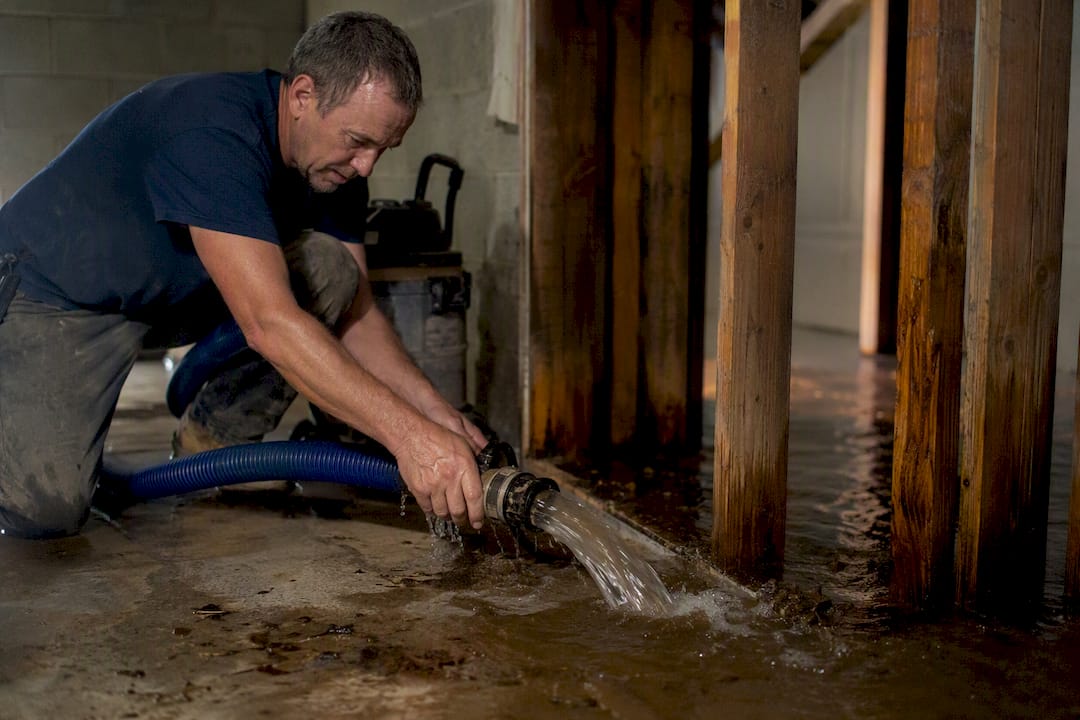
Response time is the one variable you fully control, and it’s the one that matters most. Every day water sits is a day closer to mold colonization, and once delayed drying triggers mold growth, a $1,500 mitigation job can turn into a $6,000 remediation-plus-rebuild job. Calling within hours instead of days is the single highest-leverage decision you’ll make.
Material choice shapes the rest. Solid hardwood floors often can’t be dried in place and need full replacement, while luxury vinyl plank frequently survives a quick response with just cleaning. Carpet with wet padding almost always needs replacing, since padding retains moisture no amount of drying fully removes. Tile usually survives, but the subfloor beneath it doesn’t always.
A few other variables worth knowing about before you call anyone:
- Access and complexity. A finished basement with drywall ceilings and utility runs costs more to open up than an unfinished crawl space.
- Ductwork involvement. If contaminated water reached HVAC ducts, expect a separate cleaning line item.
- After-hours and emergency rates. Weekend or overnight calls commonly carry a surcharge over standard business-hours pricing.
- Local surge demand. After a regional storm or flood event, contractor availability drops and rates climb because every crew in the area is booked.
Pro Tip: If you can safely do it yourself, start pulling standing water and running fans before the contractor even arrives. Every hour of head start reduces the square footage that needs professional-grade drying.
Will homeowners insurance cover water damage repair?
Coverage depends almost entirely on cause, and this is where most disputes start. Homeowners policies typically cover sudden, accidental water damage, like a burst pipe or a failed water heater. They typically exclude gradual damage from neglect, like a slow roof leak nobody noticed for months, and most exclude flood damage and sewer backup unless you’ve added specific riders.
Flood damage from rising water, storm surge, or overland flooding generally falls under the National Flood Insurance Program or a private flood policy, not your standard homeowners policy. NFIP policies commonly carry a 30-day waiting period before coverage kicks in, which matters if you’re trying to buy protection right before a forecasted storm.
To keep a claim moving and reduce disputes:
- Photograph and video everything before any cleanup starts.
- Keep every receipt, including emergency mitigation invoices paid out-of-pocket.
- Request a written scope with itemized, Xactimate-style line items rather than a lump-sum number.
- Ask specifically about your policy’s mold remediation cap, since most policies limit that coverage separately from water damage coverage.
Worth knowing before you negotiate: insurance-mediated pricing through adjuster software often runs 10 to 20 percent lower than retail out-of-pocket quotes for the identical scope of work. That gap is normal, not a sign you’re being shortchanged, but it explains why two homeowners with similar damage sometimes report very different final bills.
- Sudden pipe burst: typically covered.
- Slow leak from unaddressed neglect: typically excluded.
- Sewer backup: typically excluded unless you’ve added a specific rider.
- Flood from external water: requires NFIP or private flood coverage, not standard homeowners insurance.
How do you get an accurate contractor quote?
Getting three comparable quotes instead of three random numbers takes a little prep work, but it pays off fast.
- Measure the affected square footage yourself, room by room, before anyone arrives.
- Log when the water intrusion started and its likely source, since time-to-response affects both cost and insurance eligibility.
- Photograph everything, including baseboards, cabinet interiors, and anywhere water may have traveled behind walls.
- Inventory damaged contents separately from structural damage, since insurers often price these differently.
When contractors show up, ask directly whether their technicians hold IICRC certification, what containment methods they’ll use for Category 3 water, how they’ll document moisture clearance before calling the job dry, and whether they can provide references from similar-scope jobs.
Watch for red flags: a bid dramatically lower than the others usually means a scope omission, not a bargain. No written moisture report, no signed contract, or pressure to sign before you’ve gotten a second opinion are all signs to walk away.
Pro Tip: A quote that skips moisture mapping entirely is a quote that can’t prove the job is actually done when the crew leaves. Insist on documented readings, not just someone’s word that it’s dry.
How Bestservicelocal helps you find a vetted restoration pro fast
Every ranking and estimate in this guide is only useful once you match it to a real local contractor, and that’s where the search usually stalls. Bestservicelocal lets you search restoration providers by ZIP code and pull up verified business profiles side by side, so you’re comparing actual local pricing and credentials instead of guessing from a national average.

Once you’ve got your square footage, photos, and moisture notes together, that’s the moment to start comparing. A platform that lets you cross-check verified providers in your area beats calling random numbers off a search results page, especially during a regional disaster when everyone’s booked. Use what you documented, and let the comparison tools do the filtering.
Our take on water damage pricing nobody talks about
Most cost guides treat water damage pricing like a single number problem: find the average, apply it, done. That’s backwards. The real variable that determines your final bill isn’t square footage or even water category. It’s how many hours pass between the leak starting and a professional pulling water out of your walls.
We’d argue the entire industry undersells response time as a cost lever because it doesn’t fit neatly into a per-square-foot chart. A $2,000 mitigation job and an $18,000 rebuild can start from the identical leak, separated only by 48 hours of inaction. Homeowners fixate on finding the “right” contractor when the bigger risk is spending three days getting quotes while water sits in the subfloor.
The insurance industry’s own pricing behavior backs this up indirectly: adjusters price mitigation-first responses lower precisely because early extraction limits secondary damage. That’s not a coincidence. It’s an admission that speed changes the math more than almost any other input in this whole pricing structure.
Get someone out fast, then worry about comparing bids for the rebuild phase. The reverse order costs homeowners real money every single time.
— Service
Get local, vetted water damage quotes without the runaround
Bestservicelocal gives you something a generic search doesn’t: verified local restoration providers you can compare side by side, filtered by your ZIP code, without wading through unverified listings or cold-calling five companies one at a time.

Before you request quotes, have your square footage, timestamped photos, and any moisture readings ready. Contractors respond faster and quote more accurately when you hand them real documentation instead of a verbal description over the phone. Head to Bestservicelocal and search restoration providers in your ZIP code to see verified profiles and request quotes directly, so you can compare real local pricing instead of guessing from a national average.
Sources
- Water Damage Restoration Cost 2026: $3,867 Avg | Palm Build
- IICRC Certified Firm
- Flooding | US EPA
- How Much Does Water Damage Restoration Cost in 2026? The Complete Price Guide — DryNow