
Homeowners: $1,200–$2,500 Sump Pump Installation Cost, 2026 Checklist
Homeowners: $1,200–$2,500 Sump Pump Installation Cost, 2026 Checklist
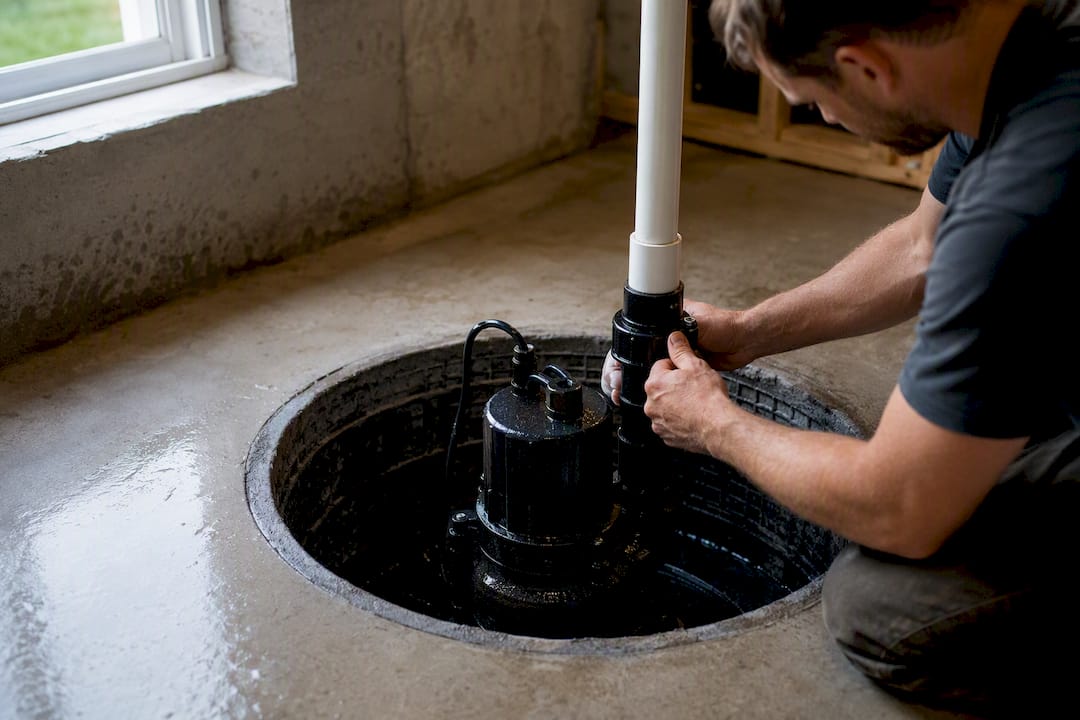
Most homeowners pay between $1,200 and $2,500 for professional sump pump installation, with a $1,400 national average, though a straightforward replacement can run as low as $650 while a full new system with pit excavation and battery backup climbs toward $3,500. The single biggest factor is whether a pit already exists: swapping a pump into an existing basin costs a fraction of digging and plumbing a new one. Use the checklist later in this guide when you’re comparing contractor bids.
TL;DR:
- Replacement of an existing sump pump typically costs $650 to $1,200, while new systems with excavation and backup can reach $3,500.
- Labor rates of $75 to $150 per hour and the scope of work, such as pit digging and discharge routing, significantly influence the final cost.
- The biggest cost drivers are pit excavation, discharge line complexity, electrical upgrades, and basement finishing, rather than the pump itself.
- DIY installation may save $150 to $600 on simple swaps but risks costly mistakes in new system setups or electrical work.
- Obtaining detailed, itemized bids and verifying scope scope can prevent hidden charges and ensure a fair comparison between contractors.
Table of Contents
- Sump Pump Installation Cost Breakdown: What’s In A Quote
- Replacement vs. New Install: Which Cost Scenario Fits Your Home?
- Pump Type And Horsepower: How Specs Change Your Bill
- What Actually Drives Your Bid Up: Pit, Plumbing, And Access
- DIY Sump Pump Installation vs. Hiring A Pro
- How To Get Accurate Sump Pump Quotes
- Ways To Cut Costs Without Cutting Corners
- Maintenance, Lifespan, And Repair Costs After Installation
- Removing Or Relocating Existing Plumbing And Electrical Lines
- Warranties And Service Agreements: What’s Actually Covered
- Do You Need A Sump Pump Alarm System?
- DIY Versus Professional: The Real Cost Gap
- Our Take: Compare Verified Local Installers Before You Commit
- Get Quotes From Verified Sump Pump Installers Near You
- Where These Cost Figures Come From
- Sources
Sump Pump Installation Cost Breakdown: What’s In A Quote
A contractor’s quote for sump pump installation cost usually bundles four things: the pump itself, labor, pit or basin work, and discharge plumbing. Knowing what belongs in each bucket helps you spot a padded bid or a suspiciously thin one.
Pump prices vary by type and horsepower, but that’s only part of the bill. This Old House puts the national average installed cost at $1,400, with a realistic range of $500 to $4,000 depending on pit work, discharge routing, and backup features. Labor alone commonly runs $75 to $150 per hour, according to The Basement Guide, and a typical job takes anywhere from one hour to a full day.
Here’s what a complete, itemized quote should show:
- Pump unit: $100 to $500 for the pump itself, depending on type and horsepower.
- Labor: $150 to $600 for installation, wiring the pump in, and testing it under a hose or bucket of water.
- Pit and basin work: $0 if reusing an existing pit, $500 to $1,200 if a new basin needs to be dug and lined.
- Discharge piping and check valve: $100 to $400, more if the line has to run outdoors or tie into a drain system.
- Battery backup (optional): $300 to $1,200 added to the total.
If a quote lumps everything into one flat number with no breakdown, ask for the line items. A vague total is the easiest place for a contractor to hide an inflated charge.
Replacement vs. New Install: Which Cost Scenario Fits Your Home?
Your project falls into one of three cost tiers, and figuring out which one applies is the fastest way to set a realistic budget.
- Simple pump swap, existing pit. If your basement already has a working pit and you’re just replacing a dead or aging pump, expect $650 to $1,200 installed, per The Basement Guide. Most swaps take one to two hours since there’s no concrete cutting or new plumbing involved.
- New pit, pump, and discharge line. Homes without an existing sump system need excavation, a liner, a new pump, and discharge piping run to daylight or a dry well. This runs $1,200 to $2,500 on average according to BobVila, and typically takes a full day of labor.
- Full system with drainage tie-in or buried discharge. Add a French drain, interior perimeter drainage, or a buried discharge line to the street, and totals climb to $1,500 to $3,500 or higher. HomeCostCalc’s modeling shows premium packages with pit work, backup power, and complex routing exceeding $3,000.
A functioning pit is what separates a $700 afternoon job from a $2,500 project. When labor drops from hours of excavation and concrete patching to a one or two hour swap, that’s why replacement quotes typically run one-third to one-half the cost of a new installation.
Pump Type And Horsepower: How Specs Change Your Bill
Pump specs drive both unit price and installed cost, and picking the wrong size for your situation either wastes money or leaves you underprotected.
- Pedestal pumps cost $60 to $150 for the unit and run quieter on your wallet during installation since the motor sits above the pit, out of the water. They’re best suited to shallow, low-flow basements and typically install for $400 to $700 total.
- Submersible pumps run $100 to $400 for the unit itself and are the standard choice for most homes because the sealed motor handles debris and higher water volume. Installed cost typically lands at $650 to $1,500.
- 1/3 HP pumps handle light to moderate water tables and cost the least, usually under $150 for the unit.
- 1/2 HP pumps cover most standard residential needs and are the most commonly installed tier nationally.
- 3/4 HP pumps suit homes with high water tables or frequent heavy rain and cost more upfront but move significantly more water per hour.
- Battery backup adds $300 to $1,200, while water-powered backup systems and combination units (battery plus water-powered) sit at the higher end of that range but keep working during a power outage, which is exactly when you need them most.
What Actually Drives Your Bid Up: Pit, Plumbing, And Access
Four factors explain most of the spread between a $700 quote and a $3,000 one, and none of them are the pump itself.
Pit and excavation. Cutting concrete and installing a new pit liner often adds $500 to $1,200 to a project, and BobVila notes that drilling through thick or reinforced concrete can push that figure even higher. This is consistently the largest single labor line item on first-time installations.
Discharge routing. Where the water goes after it leaves the pump matters more than most homeowners expect. An above-ground discharge that exits through a wall is cheap and fast. A buried line routed to the street or a French drain tie-in adds materials, trenching, and often a full extra day of labor.
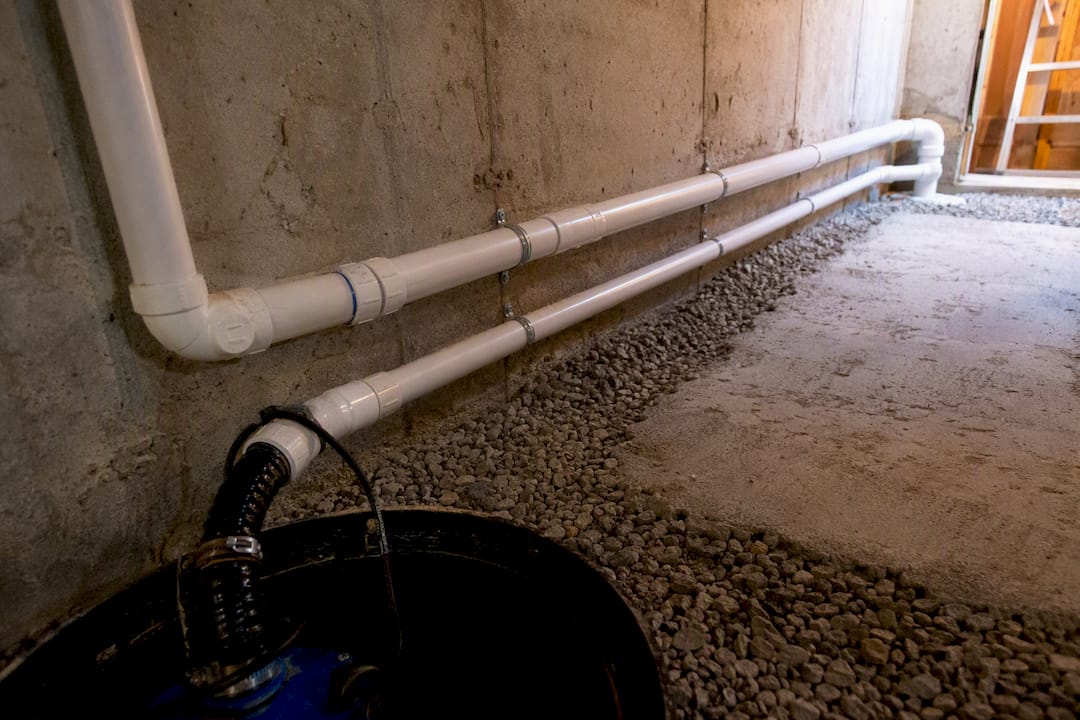
Electrical and permitting. Reconnecting to an existing outlet costs little, but code in many areas requires a dedicated GFCI-protected circuit for a sump pump. That can mean an electrician’s visit, a permit, and an inspection fee on top of the plumbing work. If your panel is already maxed out, you may be looking at a broader electrical panel upgrade before the sump pump work can even start.
Access and finished space. A finished basement with drywall, flooring, or built-ins over the pit location means demo and patching costs before installation even begins, and tight crawlspace access slows every step of the job.
- Concrete cutting and pit work: $500 to $1,200
- Buried or extended discharge routing: adds several hundred dollars over an above-ground line
- Dedicated electrical circuit and permit: varies widely by municipality
- Basement finish removal and patching: added labor hours, billed separately
Pro Tip: Ask upfront whether your discharge line can exit above grade. Two quotes with different routing plans aren’t actually comparable, even if the totals look similar on paper.
DIY Sump Pump Installation vs. Hiring A Pro
A competent DIYer can save real money on a straightforward pump swap, but the line between “doable” and “call a licensed trade” is narrower than most people think.
- What you can reasonably DIY: swapping a submersible pump into an existing pit, replacing a float switch, reconnecting to an existing standard outlet, and testing the system with a hose.
- What usually needs a licensed trade: installing a new dedicated electrical circuit, any work that triggers a permit requirement, and tying discharge piping into municipal storm drains or septic-adjacent systems.
- Where insurance matters: if a DIY install floods your finished basement due to a bad seal or wrong pump sizing, you’re covering that repair yourself. A licensed installer’s insurance and permit sign-off protect you if something goes wrong months later.
- Estimated DIY savings: skipping labor on a simple swap can save $150 to $600, but that savings evaporates fast if you get the check valve orientation wrong or undersize the pump for your water table.
How To Get Accurate Sump Pump Quotes
Getting comparable bids means insisting on the same written scope from every contractor, not just a bottom-line number.
- Get the pump specs in writing. Model, brand, and horsepower should be spelled out, along with pit liner size and material if a new basin is being installed.
- Confirm discharge routing and termination point. Above-ground exit, buried line, or tie-in to a drain system are not interchangeable, and each changes both cost and long-term performance.
- Ask who’s including what. Check valve, concrete patching, electrical work, and permit filing should each be marked as included or excluded, and the quote should state clearly who is pulling the permit.
Once you have that scope nailed down, ask each bidder the same three questions side by side: What’s your labor rate versus materials cost? What’s your estimated timeline start to finish? Can you provide proof of insurance and your contractor license number?
Pro Tip: Insist on a written scope covering discharge routing, termination point, check valve location, pit liner specs, and permit responsibility before you sign anything. This is exactly where change orders come from when what the contractor assumed and what you expected don’t match.
Ways To Cut Costs Without Cutting Corners
Saving money on sump pump installation cost is possible, but a few shortcuts are safer than others.
- Buying the pump yourself and having the contractor install it can save on markup, but only if you’ve confirmed the exact model they’d otherwise supply.
- Schedule installation before storm season rather than during an active flood. Emergency service calls routinely carry a premium that a planned appointment avoids.
- A pedestal pump is a reasonable cost-saving choice for a dry, low-risk basement, but not for a high water table.
- Bundling sump pump work with other basement projects, like waterproofing or drain tile, can reduce the mobilization fee since the crew is already on-site.
Maintenance, Lifespan, And Repair Costs After Installation
A sump pump isn’t a set-it-and-forget-it appliance, and budgeting for its second act matters as much as the install itself.
Submersible pumps typically last 7 to 10 years, while pedestal pumps often run longer, sometimes 20 to 25 years, thanks to the motor staying dry. Annual maintenance, checking the float switch, clearing debris from the pit, and testing the check valve, runs under $250 a year, and skipping it is how a $150 float switch failure turns into a flooded basement.
- Routine annual maintenance: under $250
- Common repairs (float switch, check valve, motor): $200 to $500 on average
- Battery backup replacement: every 3 to 5 years, at $50 to $150 per battery
Removing Or Relocating Existing Plumbing And Electrical Lines
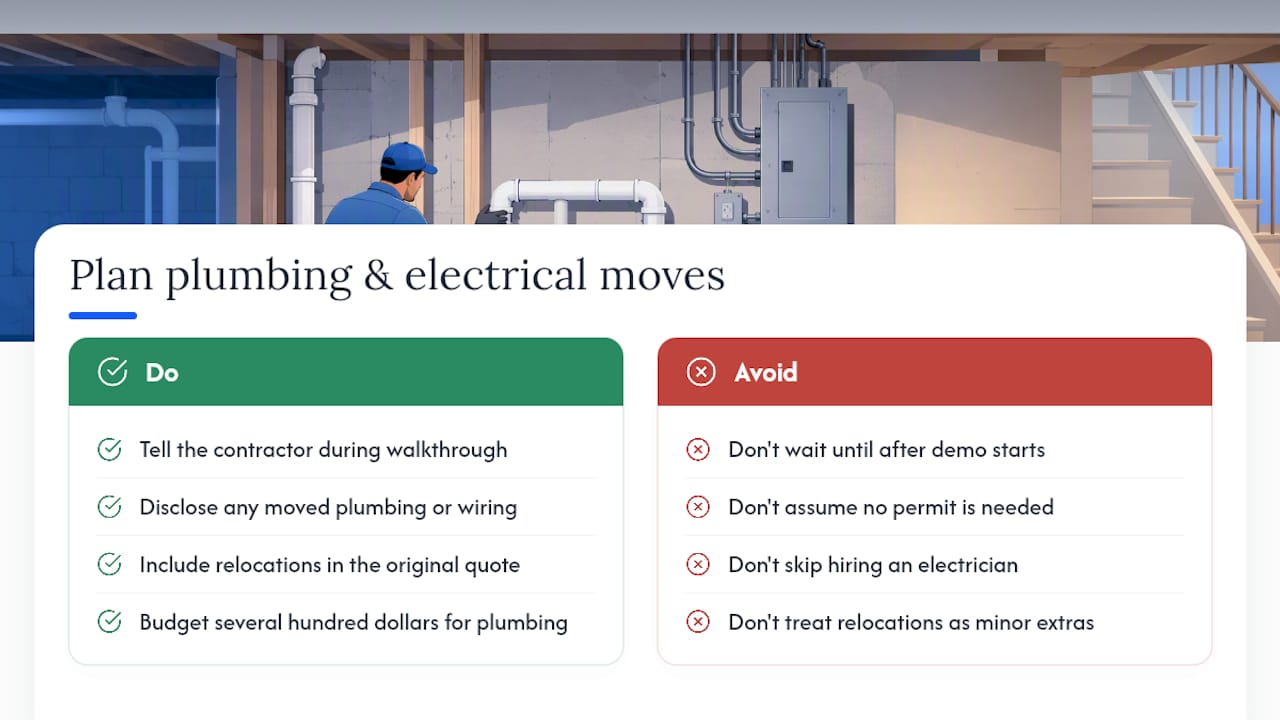
If your project involves moving an existing drain line, relocating an outlet, or rerouting plumbing that conflicts with a new pit location, expect that to add a distinct line item to your quote, separate from the sump pump itself.
Relocating a discharge line that currently runs to a floor drain, for example, means capping the old connection, running new pipe, and possibly patching concrete or drywall along the new path. That kind of rework commonly adds several hundred dollars in labor alone, on top of materials. Electrical relocation is similar: moving an outlet or junction box a few feet to accommodate the new pump location isn’t a huge job on its own, but it does require an electrician, and depending on your jurisdiction, that can trigger a permit even if the rest of the sump pump work doesn’t.
The homeowners who get surprised by this are usually the ones finishing a basement or converting a crawlspace, where the original plumbing and wiring were never laid out with a sump system in mind. If your basement layout has changed since the house was built, tell your contractor during the walkthrough, not after they’ve already opened up the floor. It’s far cheaper to plan the relocation into the original quote than to pay for it as a change order once demo has started.
Warranties And Service Agreements: What’s Actually Covered
Most sump pump manufacturers offer a limited warranty on the pump itself, typically ranging from 1 to 3 years for standard submersible units and sometimes longer for premium models with more robust motors. That warranty covers manufacturing defects, not misuse, improper sizing, or damage from running dry.
Separate from the manufacturer warranty, many installers offer their own labor warranty, often 1 year, covering their workmanship if something fails due to installation error rather than the equipment itself. This is worth asking about directly, since it’s easy to assume the manufacturer warranty covers everything when it only covers the part.
Some contractors also offer optional service agreements, annual or biannual check visits where they inspect the float switch, test the backup system, and clear the pit of sediment. These agreements typically cost less than paying for one-off service calls if you’d need maintenance anyway, but they’re rarely mandatory. Ask specifically whether the installation price includes any post-install visit, or whether that’s a separate add-on you’d need to request and pay for later.
Do You Need A Sump Pump Alarm System?
A water alarm or high-water sensor is a small add-on that flags problems before they become a flooded basement, and it’s worth budgeting for even though it’s not part of the core sump pump installation cost.
Standalone battery-powered alarms that sound when water rises near the pit typically cost $20 to $60 for the unit, with installation often taking a contractor only a few extra minutes if they’re already on-site. Smart, app-connected versions that send a phone alert if the pump fails or water levels rise cost more, generally $50 to $150 for the device, plus a bit of additional labor to wire it in or pair it with your home network.
If your sump pump sits somewhere you don’t check often, a finished basement, a rental property, or a vacation home, this is one of the cheapest additions you can make relative to the cost of a flood. Ask your installer to quote the alarm as a line item rather than assuming it’s bundled in, since it usually isn’t included by default.
DIY Versus Professional: The Real Cost Gap
The dollar difference between DIY and professional sump pump installation cost is smaller than people expect for a simple swap, and much larger for a new system.
For a straight pump replacement into an existing pit, a DIYer might spend $150 to $400 on the pump and parts alone, saving perhaps $150 to $600 in labor compared to hiring a pro. That’s a real but modest gap, and it only holds up if the swap goes smoothly with no wiring or plumbing surprises.
For a full new installation, the gap widens considerably, but so does the risk. Excavating a pit, running discharge piping correctly, and wiring a dedicated circuit involve skills, and often permits, that most homeowners don’t have on hand. A botched DIY new-install can cost more to fix than hiring a professional would have cost in the first place, especially if it results in water damage. The savings look attractive on paper for the simple jobs and much less attractive once code compliance, insurance, and long-term reliability enter the picture.
Our Take: Compare Verified Local Installers Before You Commit
Bestservicelocal built its home repair category around exactly this problem: homeowners staring at a wide sump pump installation cost range with no easy way to tell which quote is fair. We match you with verified local installers by service type and ZIP code, so you’re comparing businesses that actually work in your area rather than a national average that may not reflect your local labor rates.
Our local cost guides get updated regularly to reflect current 2026 pricing, and every business profile on the platform includes verified details you can check before you ever pick up the phone. That transparency matters more here than in most home repair categories, since pit work and discharge routing create so much price variance between otherwise similar-looking quotes.
— Service
Get Quotes From Verified Sump Pump Installers Near You
Comparing sump pump installation cost estimates shouldn’t mean calling five contractors and hoping their quotes are even measuring the same job. Bestservicelocal lets you search by service type and ZIP code, then compare verified business profiles side by side, so you can see licensing, service scope, and customer feedback before you request a single quote.

Submit a request through Bestservicelocal, and you’ll see verified profile details for local installers, including the services they offer and how they’re rated in your area. It’s a faster way to line up two or three real bids using the checklist from this guide, instead of guessing whether a $2,500 quote and a $1,200 quote are actually pricing the same scope of work. Start your search now and get quotes from installers who already work in your ZIP code.
Where These Cost Figures Come From
The ranges in this guide draw on This Old House’s national cost data covering pit work and discharge considerations, BobVila’s breakdown of new-install versus replacement pricing, and The Basement Guide’s scenario-based estimates for swaps and full system installs. The HomeCostCalc calculator was used to illustrate how basic, standard, and premium packages diverge based on pit and backup requirements.
Sources
- How Much Does Sump Pump Installation Cost? (2026)
- Budget breakdown: How much a sump pump typically costs to install
- Sump Pump Installation Cost 2026: What You Will Actually Pay
- Sump Pump Installation Cost Calculator (2026) — Free Online Estimate | HomeCostCalc