
Sprinkler System Installation Costs: $1,800–$7,000 and Zone Budgets
Sprinkler System Installation Costs: $1,800–$7,000 and Zone Budgets
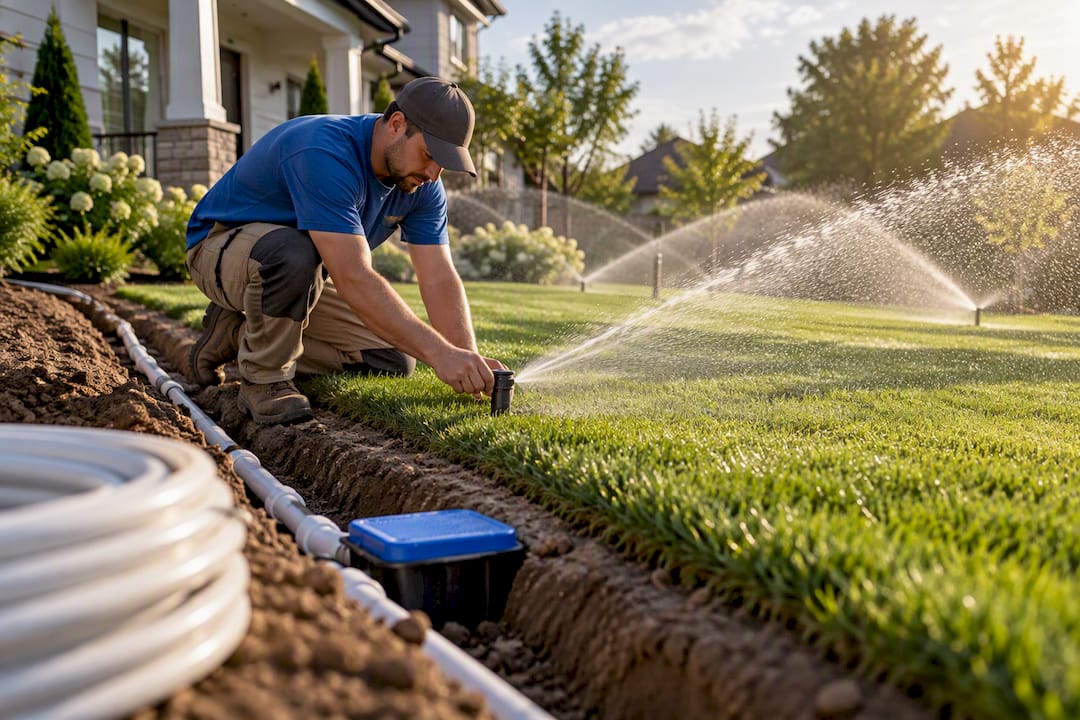
A new residential sprinkler system typically runs $1,800 to $7,000, with most homeowners landing near $3,200 to $3,500 once you average national calculator data and per-zone estimates. Your final number hinges on three things: yard size and zone count, the controller you choose, and how complicated your soil and landscaping are. Local quotes will move around that midpoint, so the math below shows exactly why.
TL;DR:
- Most residential sprinkler systems cost between $1,800 and $7,000, with an average around $3,200 to $3,500, depending on yard size, zone count, and soil complexity.
- Labor accounts for roughly half of the total cost, with trenching, wiring, and testing being significant contributors, especially on larger or more challenging properties.
- Costs increase with materials like rotor heads, valves, and smart controllers, particularly on bigger lots or slopes, and may require additional features such as booster pumps or pressure regulation.
- Price variations often stem from soil type, landscaping obstacles, water pressure, and local permit requirements, making site-specific evaluation essential for accurate budgeting.
- Getting multiple itemized quotes, testing water pressure beforehand, and understanding local codes can prevent costly surprises and ensure competitive, comprehensive estimates.
Table of Contents
- Sprinkler System Installation Cost Breakdown by Line Item
- Sprinkler System Cost by Yard Size and Zone Count
- What Drives Your Quote Higher or Lower
- DIY vs. Hiring a Professional Installer
- Budgeting, Financing, and Long-Term Savings
- Finding Verified Sprinkler Installers Near You
- How Long Sprinkler System Parts Actually Last
- Mistakes That Inflate Your Quote (and How to Avoid Them)
- When Installing a Sprinkler System Actually Pays Off
- Get Itemized Local Quotes Before You Commit
- Verify Your Estimate
- Sources
- FAQ
Sprinkler System Installation Cost Breakdown by Line Item
Contractors don’t quote a flat number out of thin air. They add up equipment, labor, and paperwork, and each piece swings the total differently.
Spray heads run cheap, usually $5 to $15 apiece, and cover smaller, irregular areas like flower beds. Rotor heads, built for larger open lawns, cost more per unit ($10 to $30) but need fewer heads to cover the same square footage. Drip irrigation lines, common for gardens and shrub beds, add $0.50 to $1.50 per linear foot but use far less water than spray zones. PVC piping typically costs $0.50 to $2 per foot depending on diameter, and each zone needs its own valve, priced around $15 to $40 per valve before labor.
The backflow preventer is the one part almost no one budgets for correctly. Most municipalities require one to keep irrigation water from siphoning back into your drinking supply, and the device itself runs $150 to $500 installed, depending on type and local code.
Labor is where the real money goes. Installers estimate that labor accounts for roughly half the total project cost on a typical residential job, covering trenching, wiring the controller, connecting the water source, and running the startup test. A standard 4-zone system usually takes a two-person crew one to two days.
Here’s what a typical quote breaks down into:
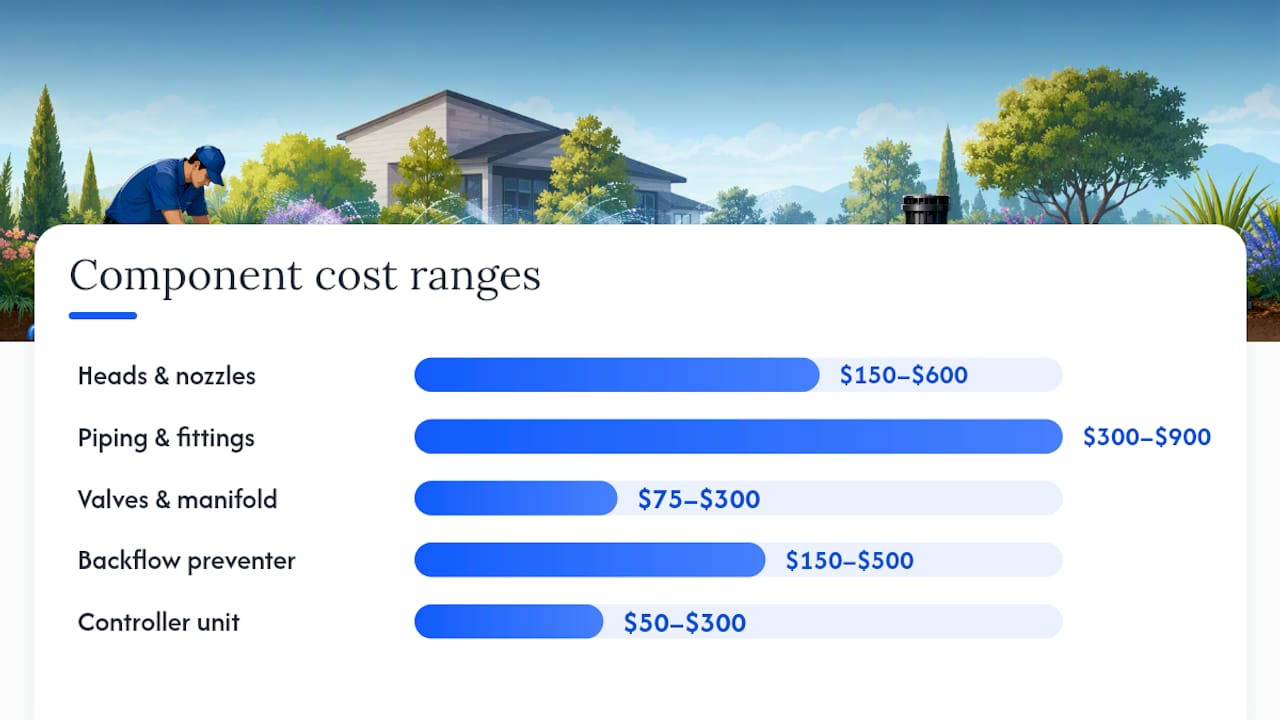
- Heads and nozzles: $150 to $600 depending on zone count and head type
- Piping and fittings: $300 to $900 for a mid-size lawn
- Valves and manifold: $75 to $300 for a 4-6 zone system
- Backflow preventer: $150 to $500 installed
- Controller unit: $50 for basic timers up to $300 for smart Wi-Fi models
- Labor (trenching, wiring, testing): 45-55% of total project cost
- Permit and inspection fees: $50 to $250, varying widely by city
Permit costs deserve their own callout because they’re the most location-dependent line item on the list. Some counties charge a flat inspection fee; others tie it to project value or require a separate plumbing permit for the backflow tap. Always ask your contractor whether the quote includes permit filing or if that’s a separate line you’ll pay to the city yourself.
Sprinkler System Cost by Yard Size and Zone Count
Most calculators use a rough per-square-foot baseline, somewhere around $1 per square foot for a typical installation, though that number compresses on larger lots and stretches on small, oddly shaped ones. Per-zone estimates tend to run $250 to $500 in combined materials and labor once you’re past the first zone, since the initial trenching and water-line tap carry a fixed cost regardless of yard size.
Three scenarios show how this plays out in practice:
- Quarter-acre lot (about 10,890 sq ft), 4 zones: Basic spray heads, standard controller, minimal trenching complexity. Expect roughly $2,200 to $3,800 total, including a backflow preventer and permit.
- Half-acre lot (about 21,780 sq ft), 6 zones: A mix of rotor heads for open lawn and spray heads for beds, plus a mid-tier Wi-Fi controller. Expect $3,800 to $6,500, with per-zone costs pushing toward the higher end of the range.
- Large lot (1 acre or more), 8+ zones: Longer pipe runs, possibly a booster pump if water pressure is marginal, and a smart controller with soil moisture sensors. Costs commonly reach $7,000 to $12,000 or more.
Slope and water pressure change this math fast. A sloped yard often needs pressure-regulating heads and sometimes an extra zone just to keep water pressure even from top to bottom, which adds both material and labor cost beyond the simple per-square-foot estimate.
What Drives Your Quote Higher or Lower
Two identical square-footage yards can generate wildly different quotes, and it almost always comes down to what’s under and around the grass.
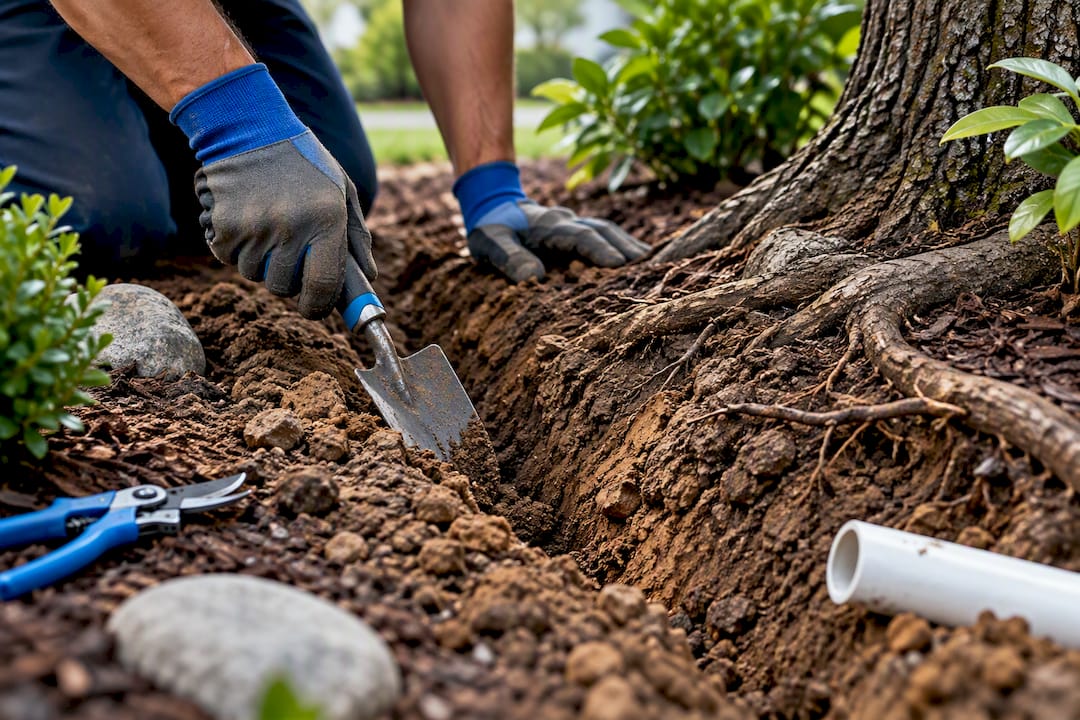
Rocky or clay-heavy soil slows trenching dramatically, sometimes doubling labor hours compared to soft, sandy soil. Mature landscaping, existing hardscaping, and tree roots force installers to hand-dig sections instead of using a trenching machine, which adds cost fast. Steep slopes usually mean more zones and pressure-regulated heads to prevent runoff and uneven coverage.
Water pressure and flow rate matter more than most homeowners expect. If your home’s static pressure is low, you may need a booster pump, an added expense that can run several hundred dollars, or you’ll need more zones with fewer heads each to keep pressure adequate at every sprinkler.
Local code adds its own layer. Backflow prevention assemblies, permits, and required inspections vary by city and can add $200 to $750 combined depending on where you live. Common cost-driving factors include:
- Rocky, compacted, or heavy clay soil requiring extra trenching time
- Mature trees, root systems, or hardscaping that force hand-digging
- Significant slope requiring pressure-regulated heads or additional zones
- Low household water pressure requiring a booster pump
- Local permit, inspection, and backflow testing requirements
Pro Tip: Ask your contractor to test your home’s static water pressure before finalizing zone count. A $50 pressure test can save you from an underpowered system that leaves your back corner brown all summer.
DIY vs. Hiring a Professional Installer
Doing it yourself can shave a meaningful chunk off your total cost since you’re skipping the labor charges that make up about half the bill on a professional install. Kits for a basic 4-zone system run $300 to $800 in materials alone, but expect to spend a full weekend or more trenching, laying pipe, and wiring a controller if you’ve never done it before.
The catch is code compliance. Backflow preventer installation often requires a licensed plumber or a permit-pulling contractor in many jurisdictions, and getting it wrong risks a failed inspection or, worse, contaminating your water supply.
A practical middle path works for a lot of homeowners:
- Handle the easy prep yourself. Mark utility lines, remove sod along planned trench routes, and stage materials before the crew arrives.
- Hire a pro for the technical work. Let a licensed installer handle backflow prevention, electrical wiring to the controller, and the final pressure test.
- Ask every bidder the same three questions. What’s included in labor? Is the backflow device and permit itemized separately? What’s the warranty on parts versus labor?
Budgeting, Financing, and Long-Term Savings
Build your budget in stages rather than guessing at one number. Get at least three itemized quotes, add a 10 to 15% contingency for unexpected soil or trenching issues, and consider phasing installation across zones if cash flow is tight one season.
The controller you choose changes your water bill for years, not just your install-day total. According to EPA WaterSense, smart Wi-Fi controllers that adjust watering based on weather and soil conditions can cut landscape water use by a significant percentage compared to a standard timer, typically between one-fifth to two-fifths. That upgrade adds $150 to $300 upfront, and in most climates it pays for itself within one to three irrigation seasons through lower water bills.
Don’t forget the recurring costs either:
- Spring startup: $75 to $150 for pressurizing and checking heads
- Fall winterization (blowout): $75 to $150 in colder climates
- Annual head or valve repairs: $100 to $300 depending on system age
Finding Verified Sprinkler Installers Near You
Getting three comparable quotes is the single best way to avoid overpaying, but it usually means three separate phone calls and three different formats to compare. Online platforms let you search by ZIP code and pull up verified business profiles for irrigation contractors serving your area, with side-by-side comparison tools to review line-item quotes.
When you request quotes, ask each contractor to itemize heads, piping, valves, the backflow preventer, labor hours, and permit fees separately. That format makes it far easier to spot which bid is genuinely competitive and which one is just cheaper on paper because it left something out.
How Long Sprinkler System Parts Actually Last
Your upfront cost buys equipment with very different lifespans, and that matters when you’re deciding where to spend more versus where basic parts are fine.
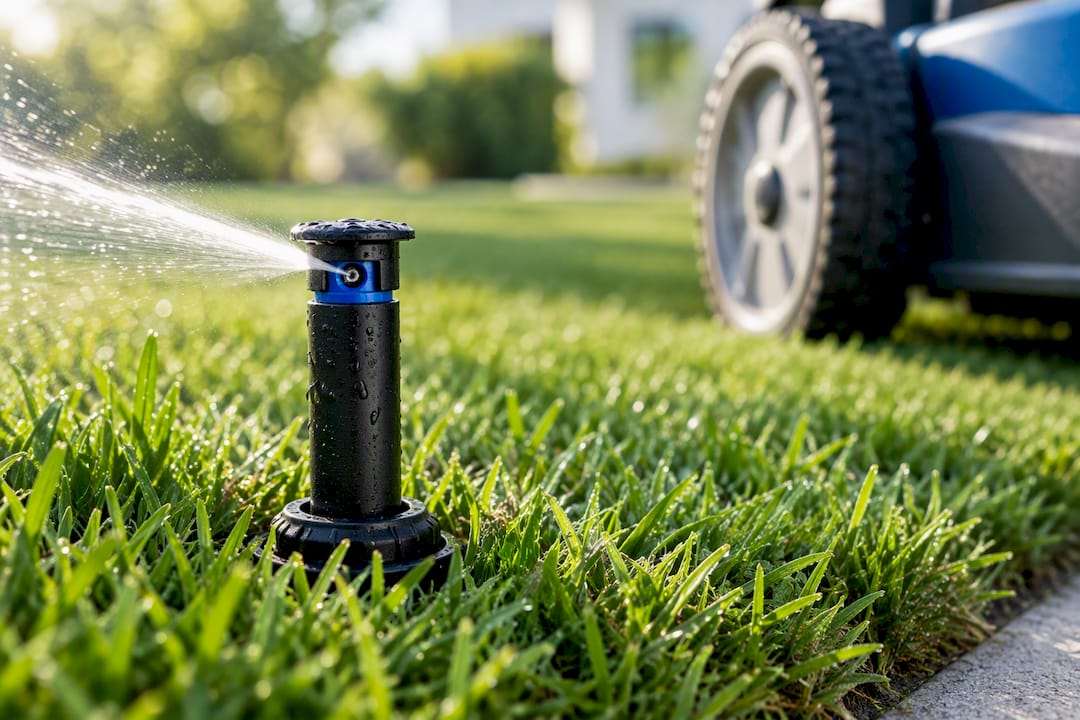
Sprinkler heads take the most wear since they’re moving parts exposed to dirt, lawn mowers, and freeze cycles. Spray and rotor heads typically last 10 to 15 years with normal maintenance, though a head that gets clipped by a mower or cracked by frost can fail much sooner. PVC piping, buried below the frost line and protected from UV exposure, often lasts 15 to 25 years or longer with no issues at all.
Valves see moderate wear and generally last 10 to 15 years before diaphragms or solenoids need replacing. Controllers have the shortest realistic lifespan among major components, not because they wear out mechanically, but because technology moves fast. A basic timer might run fine for 10 years, while a smart Wi-Fi controller may need replacing sooner simply to stay compatible with newer apps and weather data services.
Backflow preventers last a long time physically, often 20 years or more, but most jurisdictions require annual testing regardless of age to confirm the device still functions correctly. That testing fee, typically $50 to $150 a year, is a recurring cost tied to compliance rather than wear.
Thinking about lifespan this way changes how you allocate your budget. Spending a bit more on quality valves and pipe, parts you won’t touch again for over a decade, often makes more financial sense than saving there and spending extra on premium heads you’ll likely replace within ten years anyway.
Mistakes That Inflate Your Quote (and How to Avoid Them)
The single biggest mistake homeowners make is comparing quotes by bottom-line number alone instead of by what’s actually included. A $2,400 bid that excludes the permit and backflow testing isn’t cheaper than a $2,900 bid that includes both. It’s just incomplete.
Another common error is skipping a site visit before getting a quote. Phone or online estimates based on square footage alone miss soil conditions, slope, and existing landscaping, which are exactly the factors that swing labor cost the most. Insist on an in-person walkthrough before treating any number as final.
Homeowners also frequently underestimate zone count needs, either to save money upfront or because a contractor lowballs the zone count to win the bid, then charges more once utility conflicts or pressure issues surface mid-install. Ask directly how many zones the quote assumes and why.
Skipping the water pressure test is another quiet cost driver. A system designed without knowing your home’s actual static pressure risks needing a booster pump added later, at a much higher cost than if it had been built into the original plan.
Finally, don’t assume every bid uses the same materials. One contractor’s “standard head” might be a budget spray nozzle while another’s is a mid-tier rotor. Ask for brand and model names on major components so you’re comparing equivalent equipment, not just equivalent price tags.
When Installing a Sprinkler System Actually Pays Off
Larger lawns, busy households with little time for hand-watering, and homes in regions with strict water restrictions get the most value from a system, especially one paired with a smart controller. Resale buyers rarely pay a premium for irrigation alone, but the daily convenience and healthier turf it delivers usually outweigh that gap for anyone planning to stay put more than a few years.
— Service
Get Itemized Local Quotes Before You Commit
Instead of cold-calling contractors, you can search by ZIP code, view verified business profiles for irrigation installers in your area, and compare itemized estimates side by side rather than juggling separate phone quotes in different formats.
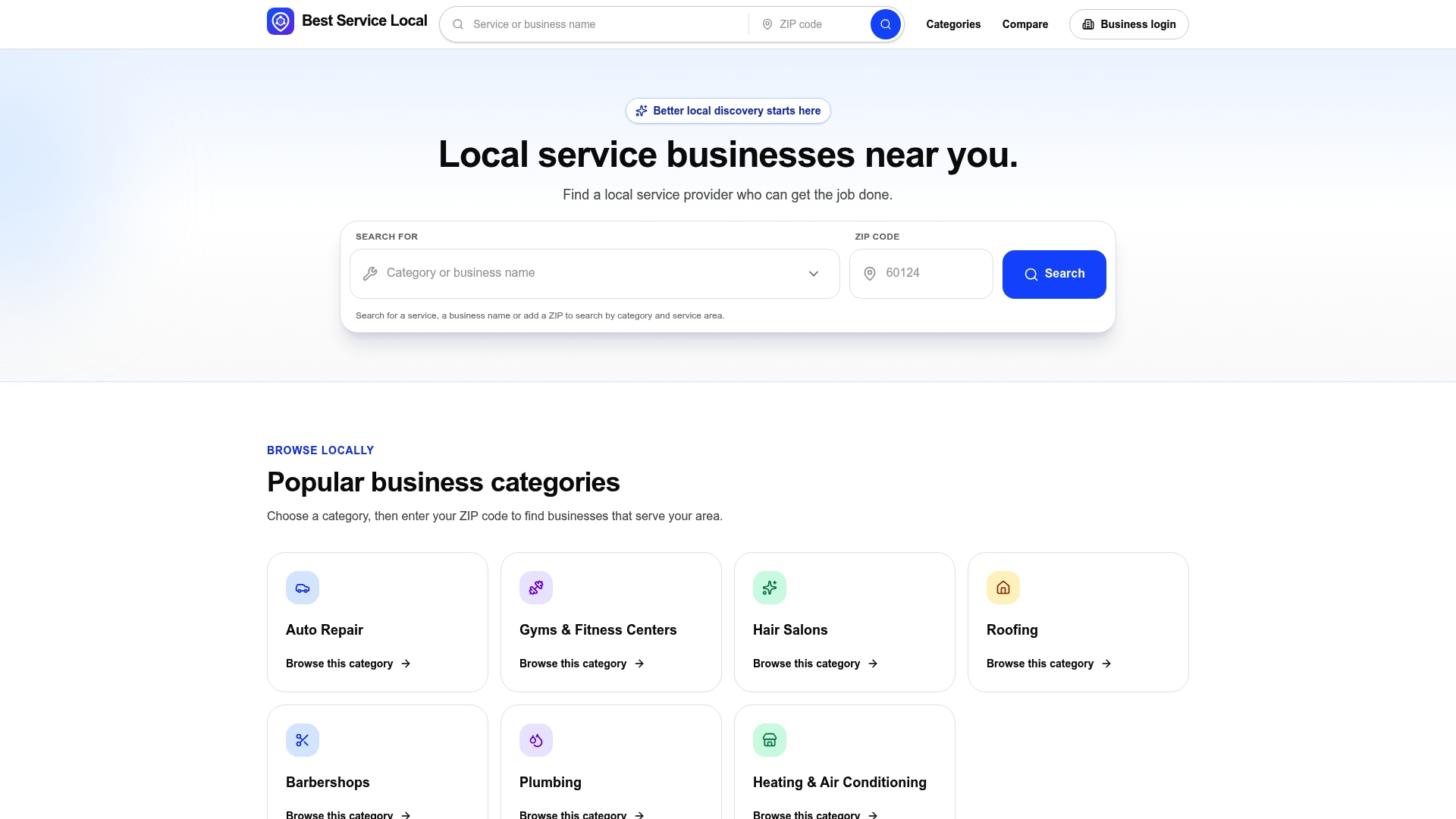
That comparison view is where budgeting actually gets easier. You can line up labor, materials, backflow costs, and permit fees from multiple installers at once and spot the bid that’s genuinely competitive versus the one that just left something out. If you’re also weighing other home projects this season, the local business guides cover budgeting angles for contractors beyond irrigation too. Start your search on Bestservicelocal and request quotes from installers in your ZIP code today.
Verify Your Estimate
Cross-check any quote against the HomeCostCalc sprinkler cost calculator, EPA WaterSense for smart controller rebates, and your local extension service’s irrigation guidance.
Sources
- Sprinkler System Cost Calculator (2026) — Free Online Estimate | HomeCostCalc
- Sprinkler System Cost in 2026: Is It Worth It? - NerdWallet
FAQ
Is Adding a Sprinkler System Worth It?
For most homeowners with lawns over a quarter acre or limited time to water by hand, yes. The upfront cost, typically $1,800 to $7,000, usually pays off in consistent lawn health and time saved, though it rarely adds a direct dollar-for-dollar bump to resale value.
How Much Does It Cost to Install a Sprinkler System in a House?
Most residential installs fall between $1,800 and $7,000, with a national average near $2,539 to $3,500 depending on yard size, zone count, and controller type. Larger or more complex properties can run toward the higher national ranges reported, commonly up to about $12,950.
What Is the Typical Lifespan of a Sprinkler System?
Piping often lasts 15 to 25 years, valves and heads typically run 10 to 15 years, and controllers usually get replaced sooner due to changing technology rather than wear. Backflow preventers can last 20 years or more but require annual testing regardless of age.
How Much Is a Sprinkler System for a Quarter-Acre Yard?
A quarter-acre lot with around 4 zones typically costs $2,200 to $3,800 installed, including a backflow preventer and permit fees. Cost climbs toward the higher end if the soil is rocky or the yard has significant slope requiring extra zones.