
$200 to $8,000: 2026 Siding Repair Cost Checklist for Homeowners
$200 to $8,000: 2026 Siding Repair Cost Checklist for Homeowners
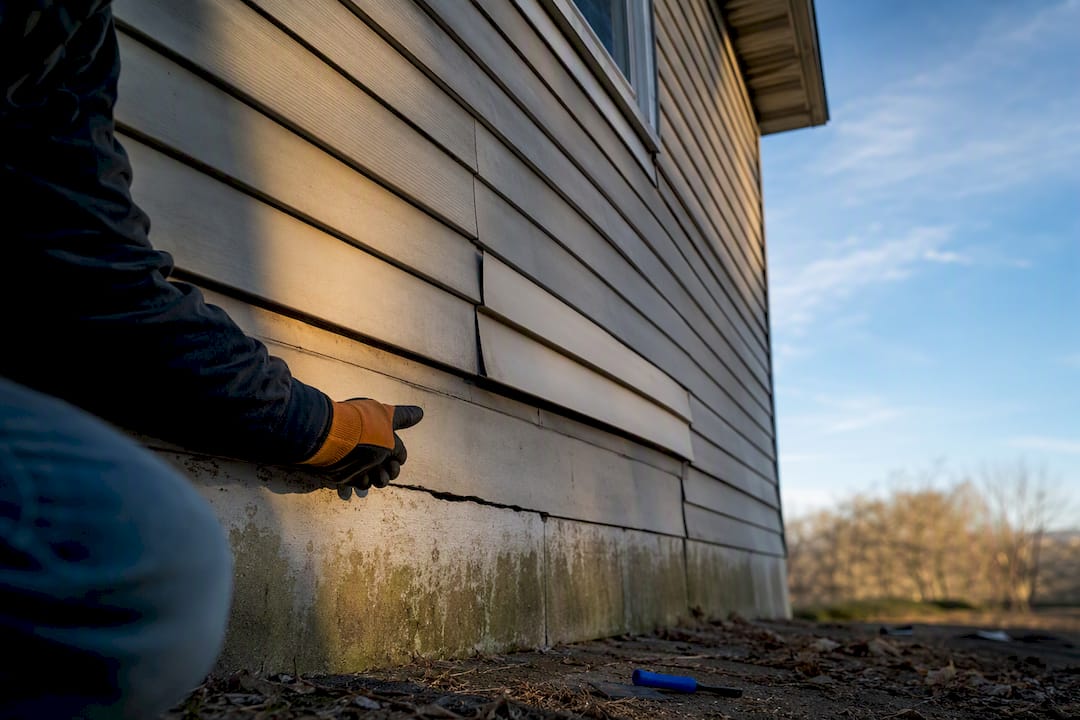
Most siding repairs typically cost in a moderate to high range, with small spot fixes starting in the low hundreds and substrate-involved jobs potentially reaching several thousands. Get two or three local quotes, and ensure at least one contractor inspects the underlying layers beneath the siding, not just the visible surface.
TL;DR:
- Repairing moisture or rot problems often significantly increases costs, especially if structural layers beneath the siding are involved, turning a minor fix into a major project.
- Materials influence repair costs mainly through color matching and profile availability, with older or discontinued siding profiles often requiring more expensive custom matching.
- The repair cost-share for labor can range from 40 to 60 percent of the total, varying regionally and affected by home height, architectural complexity, and hidden issues.
- For serious damage exceeding 30 percent of an elevation or recurring repairs, replacing the siding is usually more cost-effective long-term than repeated patching.
Table of Contents
- What Does Siding Repair Cost by Damage Scale and Material?
- What Drives Siding Repair Costs Up or Down?
- Signs You Need Siding Repair (and What They Mean)
- Repair or Replace: The Real Economics
- How to Save on Siding Repair Costs
- How to Get Accurate Siding Repair Estimates
- Why This Guide Draws on Verified Local Pricing Data
- The Repair-First Instinct Costs Homeowners More Than It Saves
- Find a Verified Siding Contractor Near You
- Sources
What Does Siding Repair Cost by Damage Scale and Material?
The price tag on a siding repair depends less on the material than on how much of the wall is compromised and whether the crew has to open up what’s underneath. A cracked panel near the ground is a different job than a section battered by a fallen branch, which is different again from an entire elevation that’s been soaking up moisture for two winters.
Spot repairs (a handful of panels, one small area) typically run in the low to mid hundreds of dollars. This covers swapping a cracked vinyl panel, patching a dented aluminum section, or resetting a loose board. Labor dominates this price range because the material cost is minimal.
Section repairs (multiple panels across a wall segment, often after storm damage or a long-term leak) land between $500 and $1,500 in most cases, matching the broader averages Angi reports for professional siding work nationally.
Elevation repairs (an entire side of the house) push past $1,500 and can reach several thousand dollars once you’re replacing a continuous run of siding, especially if the crew finds rot or water damage once the old material comes off.
Material changes the math within each tier:
- Vinyl: Cheapest to repair per panel, but older or discontinued colors are notoriously hard to match, which can turn a $200 spot fix into a full-wall job just to keep the color consistent.
- Wood (cedar): Board-and-batten or clapboard repairs run higher per square foot because of labor intensity and refinishing needs. Homewyse publishes unit costs that factor in supplies, equipment, and site conditions for board siding specifically.
- Fiber cement: Durable but heavy and brittle to cut, so labor rates run higher than vinyl even for small patches.
- Engineered wood: Similar labor demands to fiber cement, with material costs that vary by brand and profile.
- Stucco: Crack repair and patching require specialized trowel work; costs scale with the size of the patch and whether the underlying lath needs attention.
- Aluminum: Dent repair is often more expensive than replacement of the panel itself, since aluminum doesn’t patch cleanly.
Profile matching is the quiet cost driver nobody budgets for. Pre-2010 vinyl colors and older lap profiles frequently aren’t manufactured anymore, and contractors report price spikes when a homeowner wants a seamless match instead of a visible patch.
What Drives Siding Repair Costs Up or Down?
Siding pricing works in layers: the visible cladding, the moisture barrier underneath (housewrap or a water-resistant barrier), and the structural substrate. Each layer adds its own labor and material cost, and problems in the deeper layers multiply the estimate fast. A $300 panel swap can become an $1,800 job the moment a contractor pulls off the siding and finds soft sheathing or rotted framing.
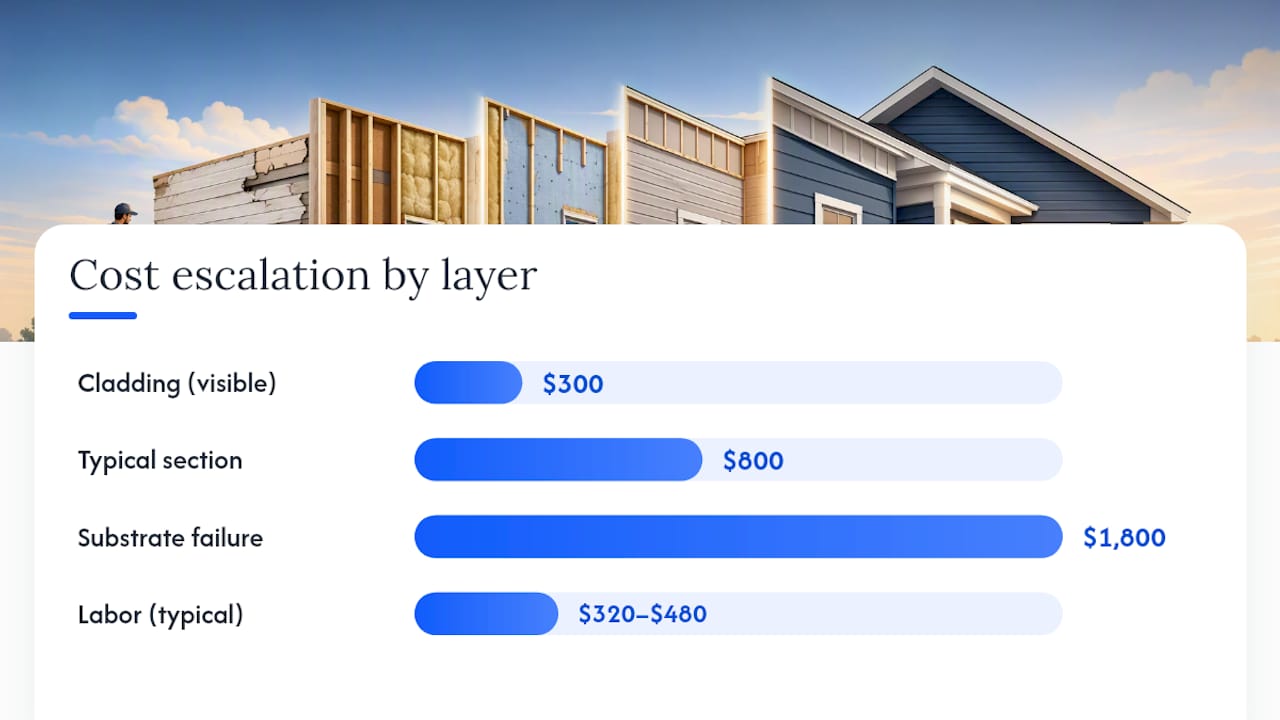
Labor often accounts for a significant portion of the total bill, with regional variations influencing the exact share. Construction wages vary widely across the country, according to Bureau of Labor Statistics wage data, so the same repair can cost noticeably more in a high-wage metro than in a rural market.
Other factors that swing a quote:
- Height and access: Multi-story homes often require scaffolding or a lift, which can add substantial weekly costs on top of the repair itself.
- Architectural complexity: Dormers, bay windows, and multiple roof lines mean more cutting, more trim work, and more time.
- Hidden costs: Mold remediation, permit fees, and disposal charges rarely show up in a first estimate. The EPA notes that moisture trapped behind siding often requires active remediation, not just a patch, once mold takes hold.
Labor share reality: On a typical $800 section repair, expect $320 to $480 of that to be labor alone, even before scaffolding or substrate work enters the picture.
Signs You Need Siding Repair (and What They Mean)
Not every crack or stain means the same thing. Matching what you see to the right response saves you from either overreacting or waiting too long.
- Hairline cracks in vinyl usually mean thermal stress or an aging panel. A DIY caulk fix or single-panel swap handles it.
- Warping or bubbling points to heat damage or moisture trapped underneath. This calls for a pro repair, since the cause needs checking before the fix.
- Soft spots when pressed signal rot in the substrate. Get a professional inspection immediately. This is exactly the kind of damage that turns a cheap patch into an expensive job.
- Visible mold or a musty smell near exterior walls means moisture has been sitting too long. Treat this as a remediation issue, not a cosmetic one.
- Gaps, loose panels, or missing sections covering more than 10% of a wall shift the math toward full-section replacement rather than patching.
- Damage spread across 30% or more of an elevation, especially paired with substrate problems, is when replacement typically becomes the better long-term value instead of repeated patch jobs.
If you’re planning to sell within a couple of years, the calculus shifts again. Cosmetic patching plus a fresh coat of paint can carry a home through a sale without the expense of full replacement.
Repair or Replace: The Real Economics
Replacement isn’t automatically the expensive option. Once repairs stack up past a few thousand dollars, full replacement often wins on cost per year of service, not just cost today.
Vinyl replacement typically runs $3 to $12 per square foot installed, so a 2,000 square foot home usually lands in the $6,300 to $18,300 range depending on the vinyl grade and how complex the house’s shape is. Fiber cement and cedar replacement run higher per square foot, but both last longer between major maintenance cycles.
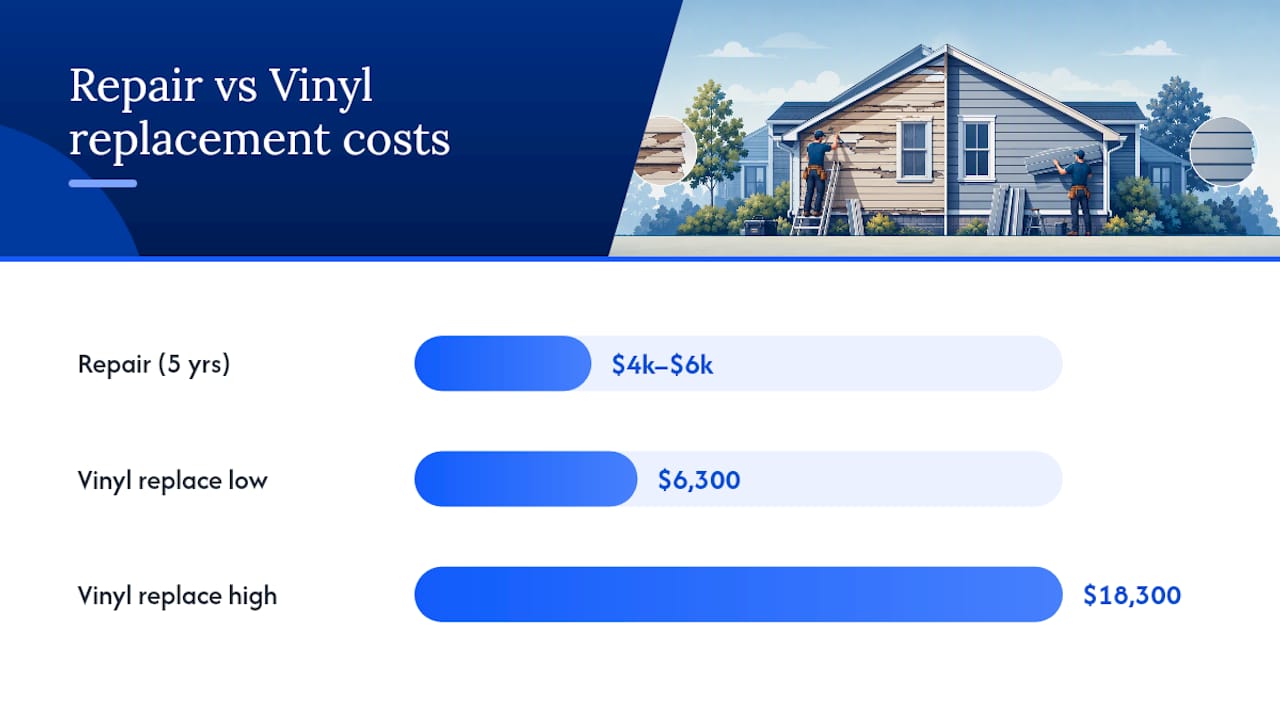
Compare that to a repair-only path: three or four section repairs at $800 to $1,500 apiece over five years can quietly total $4,000 to $6,000, without solving the underlying moisture or substrate issue that’s causing the recurring damage in the first place.
The break-even logic works like this:
- Under 10% damaged: Repair almost always wins. The math doesn’t favor replacement yet.
- 10% to 30% damaged: This is the gray zone. If the siding is over 15 years old, lean toward replacement. If it’s newer and the damage is isolated (one storm, one leak, now fixed), repair.
- Over 30% damaged, or repeat repairs on the same elevation: Replace. You’re paying labor mobilization costs repeatedly instead of once.
For homeowners weighing this against other big exterior projects, the same logic applies to roof replacement budgeting: patch now versus replace later is rarely just about the sticker price, it’s about how many more times you’ll pay a crew to show up.
Rules by situation:
- Selling within 2 years: Repair and repaint. Skip full replacement unless a home inspection forces the issue.
- Staying 10+ years: Replace once damage crosses 20%. You’ll pay less per year of ownership than patching repeatedly.
- Tight budget, stable damage: Repair now, but get a moisture inspection so you’re not masking a bigger problem.
How to Save on Siding Repair Costs
Timing and scope decisions save more money than shopping for a cheaper crew. Contractors often have slower seasons (late fall, early spring in most climates) when they’ll negotiate on price to keep crews busy.
Bundling helps too. If you’re already repainting or having gutters serviced, ask the same contractor to quote the siding repair alongside it. Shared scaffolding and site setup costs drop the per-job price.
A paint-bridge strategy works well if you’re not ready for full replacement: a thorough repaint of aging wood or fiber cement siding can extend its usable life by several years, buying time before a bigger expense hits.
DIY makes sense for narrow tasks:
- Recaulking seams and trim: $15 to $40 in materials.
- Swapping one or two damaged vinyl panels: $20 to $60 per panel plus a zip tool, assuming you can match the profile.
- Touch-up painting on wood siding: under $100 for a small section.
Pro Tip: Before you DIY a panel swap, check the back of an existing panel for a manufacturer code. Discontinued profiles won’t snap into newer panels, and a mismatch means redoing the whole wall later.
Where DIY gets risky: anything involving the water-resistant barrier, sheathing, or framing. Sealing over rot instead of removing it guarantees a bigger bill down the road. That’s also true for fence repairs and other exterior components where the surface looks fine but the structure underneath isn’t. When in doubt, call a professional before the damage spreads.
How to Get Accurate Siding Repair Estimates
A good estimate starts with what you hand the contractor, not just what they tell you.
- Take clear photos of the damage from multiple angles, including a wide shot showing scale relative to the wall.
- Measure the affected area roughly in square feet, and note the siding material if you know it.
- Ask directly whether the quote includes inspection of the WRB and sheathing, or whether that’s a “we’ll see once we open it up” cost.
- Ask about scaffolding or lift fees separately if your home is two stories or taller.
- Confirm permit responsibility. Some jurisdictions require permits for repairs beyond a certain size.
- Get warranty terms in writing, including labor warranty length, not just manufacturer material warranty.
- Collect 2 to 3 quotes minimum. Pricing on siding work varies enough by crew and region that a single quote tells you almost nothing about whether you’re paying fairly.
Why This Guide Draws on Verified Local Pricing Data
This guide is built around published national cost data and common verification standards applied across home repair listings. When you search a service and ZIP code on such platforms, you see business profiles with verified details, not just a phone number and a guess. That’s the same standard of specificity applied here: real ranges, real cost drivers, no rounded-up guesses. If you want quotes that match this guide’s numbers, search local siding contractors by ZIP code and compare their profiles side by side before you call anyone.
The Repair-First Instinct Costs Homeowners More Than It Saves
The conventional advice, patch it and move on, works fine for the first repair. It stops working the third time a contractor shows up for the same wall. Most homeowners treat siding repair as a series of isolated incidents instead of tracking a pattern, and that’s the actual mistake, not the repair itself.
If you’ve called someone out twice for the same elevation, you’re not looking at a repair problem anymore. You’re looking at a substrate or moisture problem wearing a repair-sized bill.
What the data actually supports is boring but true: get the inspection before the patch, not after. A fifteen-minute look behind one panel tells you whether you’re buying a $400 fix or delaying an $8,000 one. Homeowners who skip that step aren’t saving money, they’re deferring a decision at compounding interest.
— Service
Find a Verified Siding Contractor Near You
This platform offers a faster way to get comparable local siding quotes without cold-calling multiple contractors and hoping their estimates use the same assumptions. Searching by ZIP code allows you to see verified business profiles side by side, enabling comparison of labor rates, warranty terms, and specialties before contacting providers.

If your damage looks like it’s crossing that 30% threshold, or you suspect substrate issues behind a section that’s failed twice already, start with a provider who lists siding and roofing work specifically, like G2 Exteriors in Lombard, IL, and request a quote through their verified profile. For everything else, search Bestservicelocal by service and ZIP code to pull up the contractors actually working in your area right now, and get two or three quotes on the table before you commit to either a patch or a full tear off.
Sources
- Siding Repair Cost Guide — Siding Repair Authority
- Siding repair vs replacement cost guide 2026 — Facade Colorizer
- A brief guide to mold, moisture, and your home — EPA