
30 Minute Roof Leak Emergency Plan for Homeowners, Plus Vetted Pros
30 Minute Roof Leak Emergency Plan for Homeowners, Plus Vetted Pros
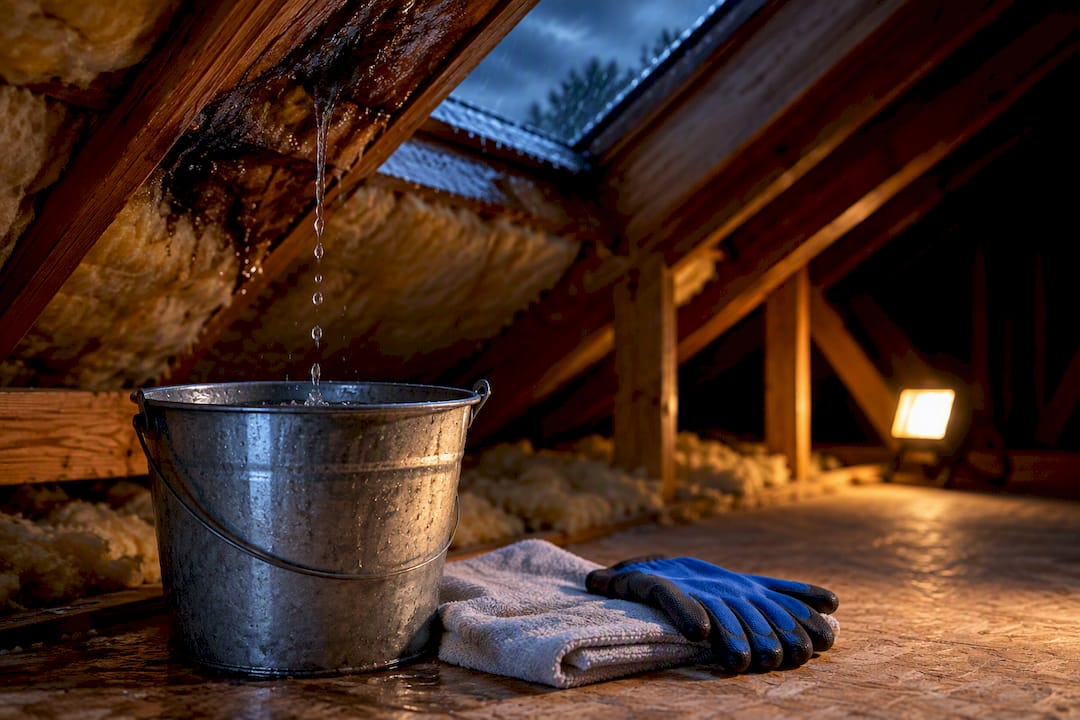
Call an emergency roofing crew immediately, then focus on containing water inside the house while you wait. Do not climb a wet or steep roof yourself. Snap time-stamped photos of every wet ceiling, wall, and puddle before you touch anything, since your insurer will want that record later.
TL;DR:
- Emergency roofing crews should be called immediately if water actively drips or streams, especially near electrical wiring or fixtures.
- A roof tarp made of lightweight poly lasts about 30 days, while heavier materials like reinforced vinyl can hold for several months, depending on conditions.
- Costs for professional emergency tarping range from a few hundred dollars to over $1,000, with large or steep roofs incurring higher fees.
- Homeowners should document damage and request written estimates before permanent repairs to ensure proper insurance reimbursement.
- Choosing a verified, licensed, and insured roofer with clear communication is critical to avoid scams during stressful leak emergencies.
Table of Contents
- Roof Leak Emergency Steps: What to Do in the First 30 Minutes
- When Should You Call an Emergency Roofer?
- Emergency Roof Tarping: Materials, Sizing, and How Long a Tarp Lasts
- How Much Does Emergency Roof Tarping Cost?
- Checklist for Choosing an Emergency Roofer
- After the Tarp: Scheduling the Permanent Fix
- What Homeowners Get Wrong About Roof Emergencies
- Find an Emergency Roofer Fast With Bestservicelocal
- Trusted Resources for Tarping Specs and Repair Verification
- Sources
- FAQ
Roof Leak Emergency Steps: What to Do in the First 30 Minutes
The first half hour decides how much damage you’re cleaning up next week. Water spreads fast once it finds a path through drywall, and every minute of delay adds to the bill.
Start inside, not outside. A wet, steep, or dark roof is not the place to be improvising a fix, and one bad step can turn a leak into a fall injury.
- Move anything valuable out from under the wet area, including electronics, furniture, and rugs.
- Contain the drip with a bucket or trash can, and lay towels around the perimeter to catch splash.
- Check for a ceiling bulge. If drywall is sagging with trapped water, a small controlled puncture in the center, aimed into a bucket, releases pressure before the whole section collapses on its own.
- Kill power to affected outlets at the breaker if a leak is anywhere near an electrical fixture, outlet, or the panel itself.
- Call an electrician if you see wiring that’s wet, smell burning, or a breaker keeps tripping. Don’t test it yourself.
- Step outside only if it’s safe. Clearing a clogged gutter or securing a loose shingle on a low, walkable roof section during a dry lull is reasonable. A steep pitch, an active storm, or standing water on the roof deck means you wait for a professional instead.
Pro Tip: Water rarely drips straight down from where it entered the roof. It travels along rafters and insulation first, so the wet spot on your ceiling can be several feet from the actual hole. That’s one reason patching where you see the stain often fails to stop the leak, and why finding the real source matters more than chasing the puddle.
When Should You Call an Emergency Roofer?
Some leaks can wait until Monday morning. Others can’t wait an hour. The difference usually comes down to how much water is moving and how risky the roof is to access.
Call for immediate emergency roofing help if you’re seeing any of the following:
- Active water actively dripping or streaming, not just a damp stain
- Visible sagging in the ceiling or attic decking, which signals trapped water and structural strain
- Multiple leak points showing up at once, often a sign of widespread wind or hail damage — learn more about stormschade aan uw woning: wat te doen en wanneer een expert inschakelen to know when to call a professional.
- A steep roof or a two-story house, where DIY access is genuinely dangerous
- Water anywhere near electrical wiring, fixtures, or the breaker panel
Emergency roofers advertise 24/7 availability for exactly this reason, and most legitimate crews will give you a real arrival window rather than a vague “sometime today.” Local listings on the Better Business Bureau commonly highlight same-day tarping and 24/7 response as standard service promises, not premium add-ons.
Once a crew arrives, expect a fast sequence: a quick roof and attic inspection, a temporary tarp or peel-and-seal patch over the active leak, advice on protecting your interior further, and photo documentation you can hand to your insurer. After-hours calls, storm-surge demand, and steep or hard-to-access roofs all push emergency fees higher than a scheduled daytime repair.
Emergency Roof Tarping: Materials, Sizing, and How Long a Tarp Lasts
Not every tarp is the same, and the material a crew chooses depends on how long it needs to hold and how exposed your roof is. Lightweight blue poly is fine for a short hold in calm weather. A steep, wind-exposed roof needs something heavier.
| Material | Best for | Typical lifespan |
|---|---|---|
| Blue poly (5–6 mil) | Small holes, short-term hold, calm weather | About 30 days |
| Heavy-duty poly | Larger sections, moderate wind exposure | Up to 90 days |
| Reinforced vinyl or canvas | Steep or exposed roofs, extended waits for repair | Several months in some conditions |
| Self-adhesive peel-and-stick membrane | Small holes, low-slope areas, wet surfaces | Weeks to months, depending on application |
A properly installed roof tarp generally protects a damaged section for 30 to 90 days, with the heavier materials and self-adhesive membranes holding up longer than lightweight poly. Installation matters as much as material. A tarp should overlap the damaged area by three to four feet, run over the roof ridge rather than stopping short of it, and get sandwiched at the edges with 2x4 furring strips screwed into the deck instead of nailed straight through the plastic.
Pro Tip: Loose bricks or cinder blocks are not an anchoring method. Wind gets under an unsecured tarp edge and turns the whole thing into a sail, which is how a “temporary fix” ends up in your neighbor’s yard by morning.
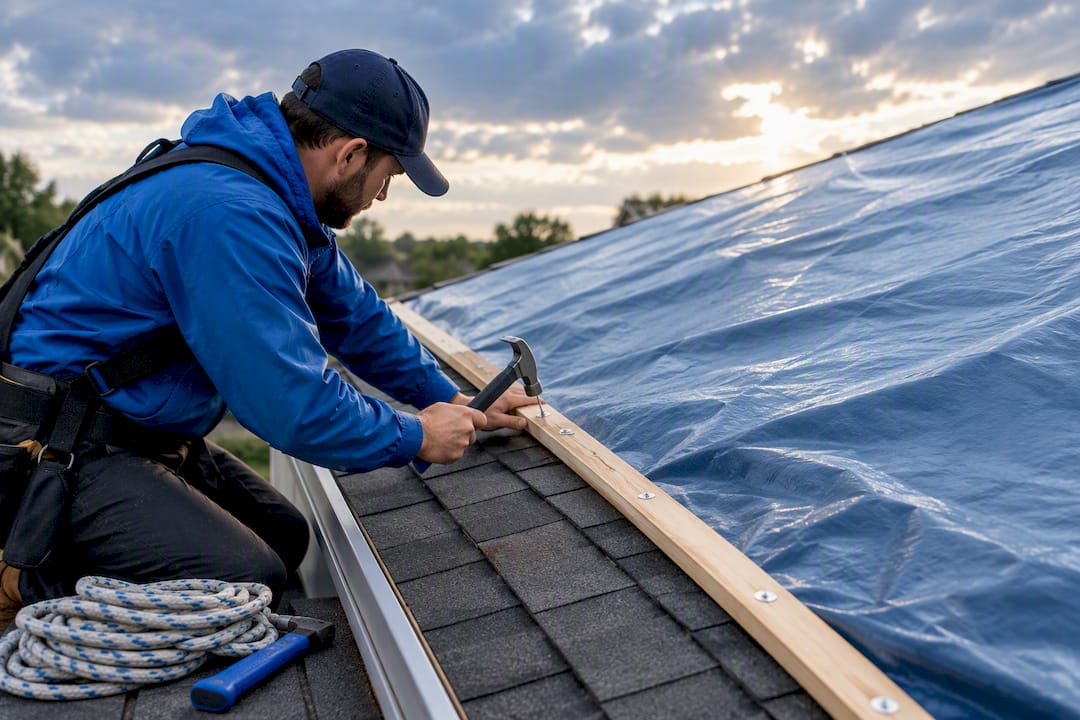
Whatever material goes up, treat the 30 to 90 day window as a deadline, not a suggestion. Schedule the permanent repair before that clock runs out, and hold onto every receipt and photo along the way.
How Much Does Emergency Roof Tarping Cost?
Costs here split into two very different categories: doing it yourself and hiring a crew.
DIY tarp materials typically run $30 to $150, depending on size and grade. Professional emergency tarping usually costs a few hundred dollars, but that figure climbs past $1,000 on large, steep, or hard-to-access roofs. Small permanent repairs, like a shingle patch or a section of flashing, tend to land well below a full re-roof once the emergency phase is over.
Insurance factors into nearly every one of these jobs. Most homeowner policies expect you to mitigate damage right away, and they’ll reimburse reasonable emergency costs when you document them properly.
- Photograph and video the damage before any tarp or patch goes on, and again after.
- Keep every receipt: tarp materials, labor, temporary patch supplies.
- Avoid permanent repairs until an adjuster has seen and documented the damage, if you’re planning to file a claim.
Pitch, roof access, the grade of material used, and after-hours dispatch are the main variables that push a quote up or down.
Checklist for Choosing an Emergency Roofer
You’re making this decision under pressure, which is exactly when it’s easiest to hire the wrong person. A short checklist keeps you from skipping something that matters.
Before you agree to anything, ask the roofer to confirm:
- Current license and insurance, and whether they’ll show proof
- True 24/7 availability, not just a machine that takes messages
- An estimated arrival time you can actually plan around
- What tarp material they’re using and how they plan to anchor it
- Whether they provide written documentation and photos for your insurance file
Before they arrive, have your address, the photos you’ve already taken, any access notes (locked gates, pets, a tricky driveway), and your insurance claim number, if you’ve started one, ready to hand over.
Watch for red flags: no written estimate, pressure to pay cash only, or a contractor who won’t document the work they did. A legitimate emergency crew has nothing to hide on any of those points, and Bestservicelocal’s guide on vetting contractors walks through the credentials worth double-checking before anyone gets on your roof.
After the Tarp: Scheduling the Permanent Fix
A tarp buys you time. It does not fix the roof.
- Book the permanent repair within your tarp’s window, generally 30 to 90 days depending on material and weather, before the temporary fix starts failing.
- Verify the repair with a garden-hose test. Have one person on the roof running water in two to three foot increments starting below the suspected entry point and working uphill, while someone else watches from the attic for the first sign of moisture. Wait 24 hours after any sealant work before testing, so it has time to cure.
- Keep every document together: before-and-after photos, contractor invoices, the tarp receipt, and any inspection reports. You’ll want this file for insurance and again if you sell the house.
Budgeting for that permanent step gets easier with a realistic number in hand. Bestservicelocal’s roof replacement cost guide breaks down what full repairs and replacements typically run.
What Homeowners Get Wrong About Roof Emergencies
Most homeowners treat a roof leak like a plumbing leak: find the wet spot, plug it, move on. That instinct is understandable and usually wrong. Water travels along rafters and insulation before it ever shows up on your ceiling, which means the stain you’re staring at is a clue, not a map.
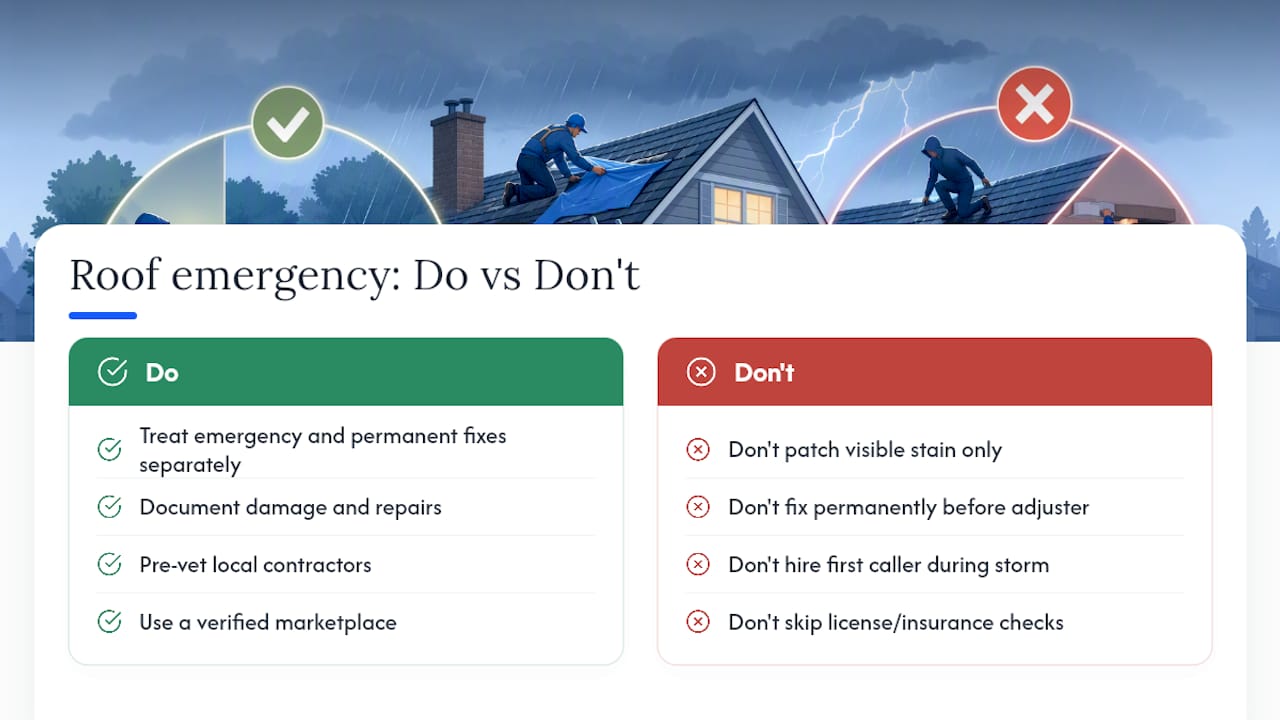
The bigger mistake is speed for its own sake. Rushing a permanent fix before an adjuster documents the damage can cost you the reimbursement you’d otherwise get, and a rushed patch job over the wrong spot just means you’re back up there in a month. The homeowners who come out ahead treat the emergency response and the permanent repair as two separate jobs with two separate timelines, and they document everything in between.
Where things go sideways fastest is the search for a contractor at 11 p.m. during a storm. That’s when people hire whoever answers the phone first, license and insurance unchecked. A verified local marketplace solves exactly that problem, by putting the vetting step before the panic instead of after it.
— Service
Find an Emergency Roofer Fast With Bestservicelocal
An online local service marketplace is the alternative to a frantic late-night search engine scroll when your ceiling is dripping and you need a real, licensed crew, not just the first ad that shows up. Search by service type and your ZIP code on the Bestservicelocal landing page, and you’ll surface verified emergency roofing profiles for your specific area rather than a generic national directory.

Business profiles generally show contact details, listed hours, and often include the ability to compare more than one roofer side by side before you call anyone. Some homeowners have used the platform to check profiles like G2 Exteriors for roofing and siding work, and that same comparison format applies wherever you’re searching from. Instead of gambling on a random search result, pull up your ZIP code on a local service provider site, compare profiles in your area, and request a callback from a crew that can get to you promptly.
Trusted Resources for Tarping Specs and Repair Verification
For deeper technical detail beyond this guide, these sources cover tarp materials and sizing, step-by-step leak repair, and interior mitigation:
- Roof Tarp: Types, Sizes, and How to Tarp a Roof
- How to Fix a Roof Leak: Step-by-Step Guide
- What To Do If Your Roof Is Leaking? – Forbes Home
- How to Temporarily Repair a Roof Leak – Emergency Stop-Gap Guide
Sources
- Roof Tarp: Types, Sizes, and How to Tarp a Roof
- How to Fix a Roof Leak: 2026 Step-by-Step | The Roofing Brief
- What To Do If Your Roof Is Leaking? – Forbes Home
- Rapidrepair
FAQ
Is a Leak in the Roof an Emergency?
Yes, when water is actively entering your home, since it can damage insulation, drywall, and wiring within hours. A slow, contained drip during dry weather is less urgent than active water during or after a storm, but both need attention before the next rain.
What Should You Do If Your Roof Starts Leaking During a Storm?
Move valuables out from under the leak, contain the water with buckets and towels, and stay off the roof until the storm passes. Once conditions are safe, call an emergency roofer for temporary tarping rather than attempting a repair yourself in active weather.
How Much Does It Usually Cost to Fix a Roof Leak?
DIY tarp materials run roughly $30 to $150, while professional emergency tarping typically costs a few hundred dollars and can exceed $1,000 for large or steep roofs. Small permanent repairs like a shingle patch generally cost less than that once the emergency phase is over.
Who Should You Call for a Suspected Roof Leak?
Call a licensed, insured emergency roofing contractor who offers 24/7 response and can provide documentation for insurance purposes. Bestservicelocal lets you search by ZIP code to compare verified local roofers and request an immediate callback instead of guessing who’s actually available.
How Long Does a Temporary Roof Tarp Last?
A correctly installed tarp typically lasts 30 to 90 days, depending on the material. Heavy-duty poly and self-adhesive membranes hold up longer than standard blue poly, but any tarp is meant to buy time until a permanent repair, not replace one.