
Mobile Mechanic vs Shop: How to Choose the Right Fix
Mobile Mechanic vs Shop: How to Choose the Right Fix

Choose a mobile mechanic when the job is routine and the tools fit in a van: a battery, brakes, an oil change, belts, a no-start check. Choose a shop when the job needs a lift, heavy equipment, extensive diagnostics or warranty paperwork. Cost is usually closer than the headlines suggest, so the type of repair matters more than the sticker price. Below you’ll find a job-by-job guide, a cost framework you can run with your own quotes, and a checklist for vetting either option.
TL;DR
- Mobile mechanics suit routine maintenance and simple repairs. Shops suit complex, equipment-heavy or diagnostic-heavy work.
- Lower overhead can mean lower labor rates for mobile service, but trip fees, parts runs and repeat visits can erase the saving.
- If the car can’t be driven, a mobile visit can also save you a tow. Compare that against the total, not the hourly rate.
- Get a written estimate either way, and check licensing, insurance and the cancellation policy before you book.
- Search by service and ZIP code to compare local providers side by side before you commit.
Table of Contents
- What actually separates a mobile mechanic from a shop
- Cost: where mobile service saves money and where it doesn’t
- Which repairs suit each option
- Convenience, scheduling and the car you can’t drive
- Downsides to plan for with each choice
- Our perspective
- How to vet either one before you book
- A simple decision guide
- Compare local car repair providers by ZIP code
- FAQ
- Sources
What actually separates a mobile mechanic from a shop
A mobile mechanic comes to your driveway, office lot or curb with tools and parts in a van. A shop is a fixed building with lifts, bays, diagnostic computers, a parts supply chain and several technicians on site.

Everything else follows from that difference. The van limits what can be done. The building adds cost but also capability. Neither is better in the abstract. The better one is the one that matches your repair, your schedule and the condition of your car.
It also changes how you pay. Shops tend to quote a repair as a package, with labor and parts itemized. Mobile mechanics more often work with an hourly rate, a call-out or trip fee, and parts on top. That is why a quick comparison of hourly rates alone can mislead you.
Cost: where mobile service saves money and where it doesn’t
The common claim is that mobile mechanics cost less because they skip shop rent and carry fewer staff. That logic is sound, and a Capital One Auto Navigator guide makes the same point: lower overhead means savings that can be passed on to the customer.
But the hourly rate is only one line of the bill. Here is what to compare on each side.
| Cost factor | Mobile mechanic | Repair shop |
|---|---|---|
| Labor | Often a lower hourly rate | Often a higher hourly rate |
| Trip or call-out fee | Common, sometimes with a minimum charge | None |
| Diagnostic fee | May be charged as a first visit | Common, sometimes credited toward the repair |
| Parts | Frequently billed separately, sometimes with a markup | Itemized on the estimate |
| Towing | Not needed if the car can’t move but the job fits a van | Needed if the car isn’t drivable |
| Your time | Little lost time | Drop-off, pickup, possibly a ride or rental |
Run the numbers on your own repair
Collect two or three quotes, then total them the same way:
- Labor: hourly rate times the estimated hours.
- Fees: trip fee, diagnostic fee, shop supplies.
- Parts: ask whether they are included and where they come from.
- Extras: a tow if the car won’t move, a rental or rideshare, and any time off work.
- Risk: what happens if the first visit doesn’t finish the job.
In practice, the picture often splits like this. For a battery swap or brake pads on a car in your driveway, mobile is hard to beat because there’s no tow, no waiting room and often no markup on labor. For a clutch or exhaust job that needs a lift, a mobile quote that sounds cheap may take far longer or end with the car going to a shop anyway.
Rates also differ by place. Big metro areas typically run higher than suburbs and small towns, for mobile and shop labor alike, so quotes from your own ZIP code matter more than any national average.
Which repairs suit each option
The most reliable way to decide is by job type. A Motor1 report on mobile mechanics describes the usual split: routine maintenance is a practical fit for mobile service, while complicated jobs that need specialized tools, major engine or transmission work and extensive diagnostics belong in a traditional shop.
Good fits for a mobile mechanic
- Battery replacement and charging system checks
- Oil and fluid changes, filters
- Brake pads and rotors on accessible vehicles
- Spark plugs, belts and hoses on engines with easy access
- Starter or alternator replacement
- Check-engine light reads and simple no-start diagnosis
- Pre-purchase inspections, which are convenient because the mechanic can meet you at the seller’s location
Better handled in a shop
- Engine rebuilds and transmission replacement
- Clutch, gearbox and exhaust work that needs a ramp
- Wheel alignment and tire mounting, which need dedicated machines (for tire-only jobs, see our tire repair cost guide)
- Suspension overhauls and frame or body repairs
- Computer programming and module work
- Warranty or recall repairs that must be done at an authorized facility
If your problem is in the gray area, such as an intermittent noise or a warning light that returns, a shop’s equipment and second set of eyes can save you from paying for the wrong part twice.
Convenience, scheduling and the car you can’t drive
Convenience is the real reason many people choose a mobile mechanic. You skip the drive, the waiting room and the ride home. A Capital One guide also notes that mobile mechanics work to a fixed time window, so it is in their interest to keep to the appointment.
Mobile service is especially useful in three situations:
- The car won’t start or isn’t safe to drive, and you’d otherwise pay for a tow.
- Your schedule makes a full-day drop-off impractical.
- The repair is simple and you want it done where the car is parked.
Shops win when you need a larger team, a wider parts selection on hand, or one place that can handle several problems in the same visit. If you’re deciding between the two, consider how urgent the repair is, whether you’d have to deliver the car yourself, and whether it’s safe to drive at all.
Downsides to plan for with each choice
Every option has trade-offs, and knowing them lets you pick well and avoid surprises.
With mobile service
- Weather and workspace. Rain, snow, heat and a cramped or sloped parking spot can limit what’s practical. Ask where the work will happen and what the plan is if the weather turns.
- Cancellation terms. Jalopnik’s guide to hiring a mobile mechanic cites an example of a $150 fee for canceling or rescheduling within 48 hours. Ask about the window before you book.
- A diagnostic first visit. If the right parts can’t be identified up front, the first appointment may be diagnostic only, with the repair following later.
- Equipment limits. A van can’t hold a full hydraulic lift or an engine crane.
With a shop
- Drop-off and pickup take your time, and a multi-day repair may mean a rental.
- You’ll pay for a tow if the car isn’t drivable.
- Labor rates often run higher because the shop carries rent, equipment and staff.
None of these is a dealbreaker. They are things to price in, and they point back to the same rule: match the provider to the job.
Our perspective
We built Best Service Local around a simple idea: the right provider is the one that works in your area, does the job you need and shows you clear details before you call. For car repair, that means you shouldn’t have to pick a side in the mobile versus shop debate before you’ve seen your options.
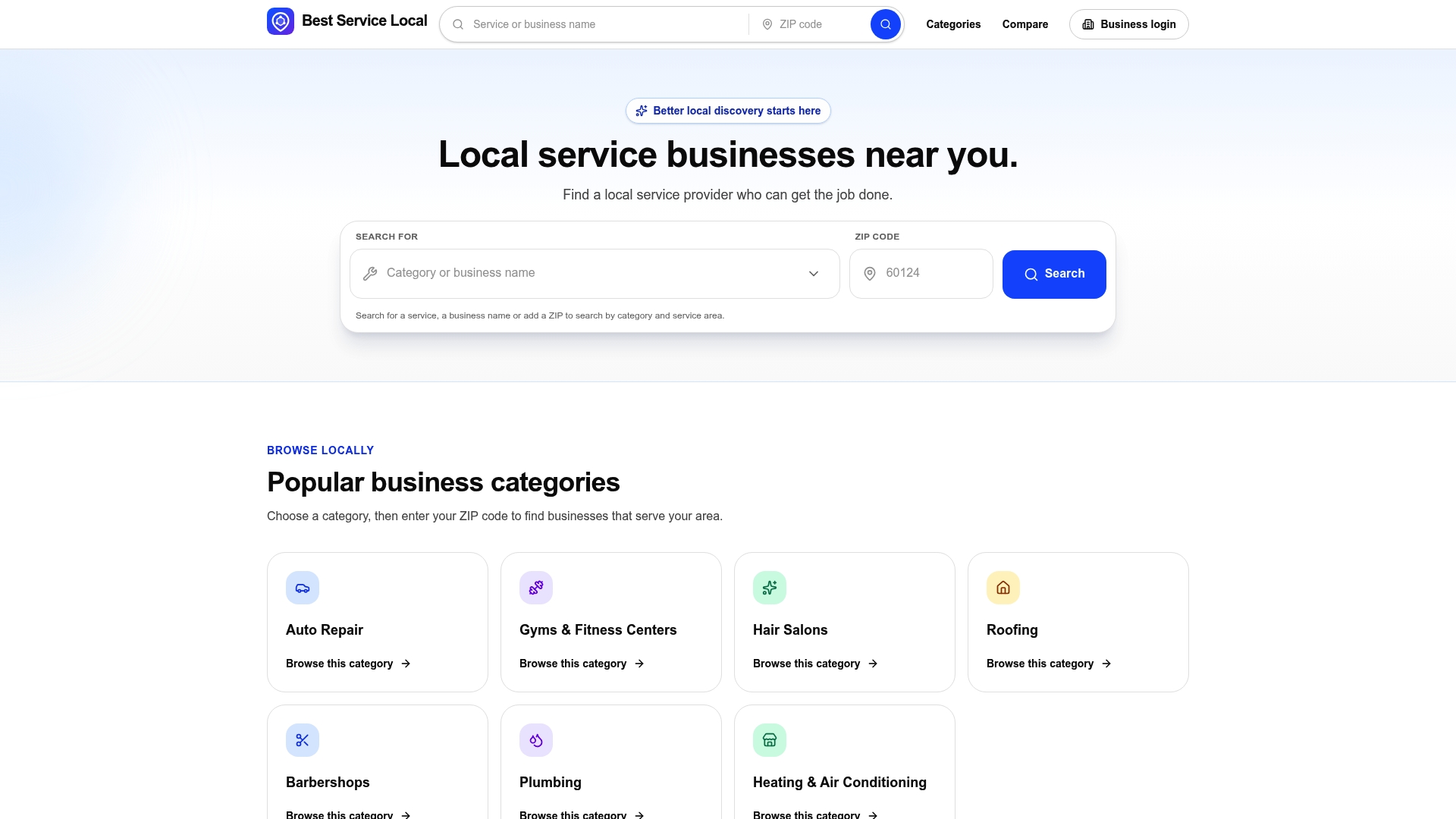
Our platform lets you search by service type and ZIP code, so you only see businesses that operate where you are. Verified business profiles and side-by-side comparison help you see what each one offers, whether that’s a repair shop with a full bay setup or a provider that handles routine work at your location.
Our advice: shortlist two or three providers of each kind, compare their services and contact details, and ask for a written estimate. Comparing real local options is a better route to a fair price than relying on a national average.
Service
How to vet either one before you book
The same few checks protect you whether the mechanic comes to you or you go to a shop. Jalopnik’s guide recommends several of them.
- Get a written estimate. It should identify the problem, the parts, the labor and the expected cost. Ask how diagnostic charges work and whether additional repairs need your approval first.
- Verify qualifications and registration. Check any advertised certifications and ask about the business registration or licensing that applies where you live.
- Ask about insurance. Confirm the mechanic or company carries appropriate coverage for work on your vehicle.
- Clarify fees up front. Ask about trip fees, minimum charges, after-hours surcharges and cancellation terms.
- Ask about parts and warranty. Find out who supplies the parts and what’s guaranteed, in writing, on parts and labor.
- Read recent reviews and look at the profile. Look for consistent comments about punctuality, communication and whether the final bill matched the estimate.
If the car is still under a manufacturer warranty, check your warranty documents before authorizing outside work, since some repairs must be done at an authorized facility.
A simple decision guide
Use this quick path when you’re not sure:
- The car won’t move and the fix looks simple (battery, starter, alternator): start with a mobile mechanic.
- You need maintenance on a schedule (oil, filters, brakes): mobile is usually the easiest.
- A warning light, noise or problem you can’t pin down: a shop with full diagnostic gear is the safer first stop.
- The job needs a lift, alignment or major engine or transmission work: go to a shop.
- Warranty or recall work: go to an authorized facility.
- Several issues at once: a shop can often handle them in one visit.
Car detailing is another service where mobile and fixed options both exist, and our car detailing cost guide shows how to compare local quotes the same way.
Compare local car repair providers by ZIP code
Start on Best Service Local, choose the service you need and enter your ZIP code. You’ll see businesses that operate in your area, with profile details you can compare side by side before you reach out. It costs you nothing to search or compare.
To see what a shop profile looks like, browse an example such as NV Auto Repair and Maintenance in Naperville, IL. Then run your own search and line up the options that fit your car and your schedule.
FAQ
Is a mobile mechanic cheaper than a shop?
Often, for simple jobs. Lower overhead can mean lower labor rates, and you may avoid a tow. But trip fees, separately billed parts and repeat visits can narrow the gap, so compare the total of two or three written quotes rather than hourly rates alone.
What are the downsides of using a mobile mechanic?
The main ones are limited equipment, weather and workspace constraints, possible cancellation fees and a diagnostic-only first visit when parts can’t be identified in advance. Asking about these before you book keeps surprises off your bill.
Is it a good idea to use a mobile mechanic?
Yes, for routine maintenance and straightforward repairs like batteries, brakes and fluid services, where convenience adds real value. For work that needs a lift, specialized tools or extensive diagnostics, a shop is the better match.
What should I ask before hiring a mobile mechanic?
Ask for a written estimate, proof of qualifications and insurance, and the details of fees, parts and warranty. Also ask about cancellation and rescheduling terms, and what happens if the job can’t be finished at your location.
Sources
- 9 Things To Know Before Hiring A Mobile Mechanic (Jalopnik)
- Mobile Mechanics: What You Need to Know (Capital One Auto Navigator)
- Mobile Mechanics: Are They Worth It? (Motor1)