
Budget for 10–20% Contingency: Kitchen Remodel Cost in 2026
Budget for 10–20% Contingency: Kitchen Remodel Cost in 2026
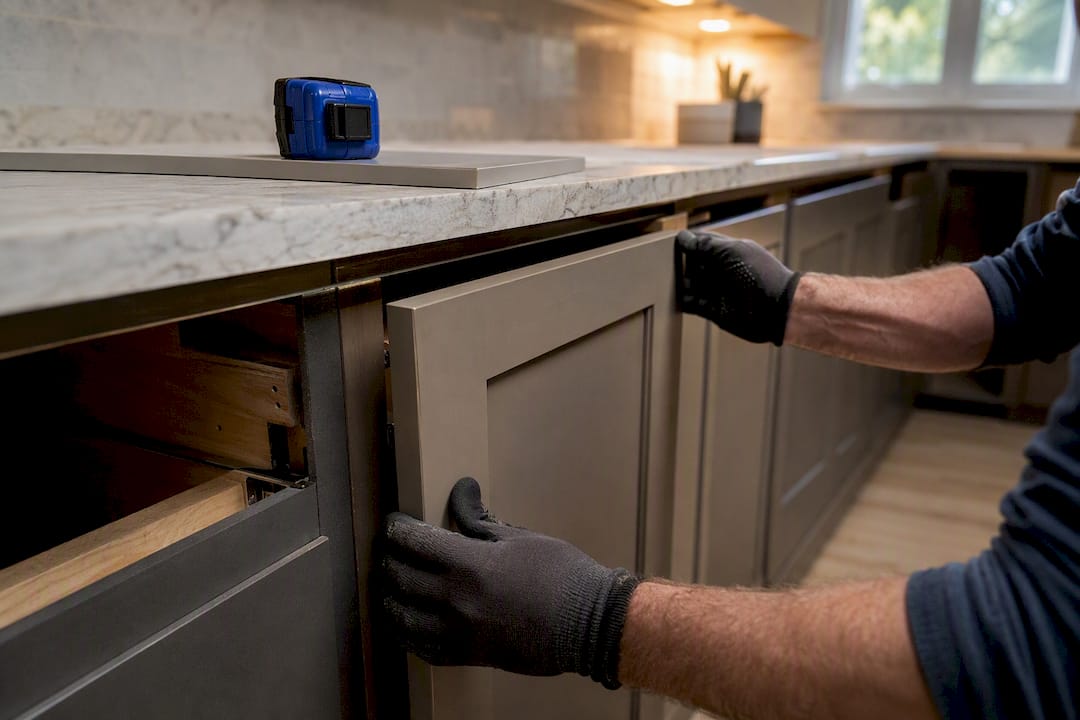
Expect a kitchen remodel to cost a wide range depending on scope, with many homeowners spending a midrange amount for a solid update. Cabinets, layout changes involving plumbing or electrical work, and appliance tier drive the biggest swings in that range. The single rule that keeps a budget honest: whatever your target number is, add 10 to 20% on top for contingency before you sign a contract.
TL;DR:
- Moving plumbing or structural walls can more than double or triple your project costs, shifting a midrange remodel into the major or upscale tier.
- Cabinets typically consume 25 to 40% of the total budget, with stock options costing $150 to $300 per linear foot, significantly affecting overall expenses.
- Adding square footage or relocating major systems almost always pushes the project into the upscale range, regardless of finishes or materials used.
- Budgeting should include 10 to 20% contingency, soft costs like permits and design fees, on top of hard costs to prevent overspending.
- Confirm contractor licenses, request detailed bids with fixed allowances, and account for permit delays and living costs to stick to your intended budget and timeline.
Table of Contents
- Kitchen Remodel Cost by Project Scope
- Where the Money Actually Goes: A Line-Item Breakdown
- Sample Budgets by Kitchen Size and Project Type
- How to Build Your Actual Budget (and Pay for It)
- Timeline and the Hidden Costs of Living Without a Kitchen
- Smart Ways to Cut Costs Without Hurting Resale
- How to Vet Contractors and Compare Bids Fairly
- Why Homeowners Trust Bestservicelocal for This Kind of Research
- What Permits Actually Cost and When You Need One
- Budgeting for Energy-Efficient and Sustainable Upgrades
- Should You Splurge or Save? It Depends on Your Timeline
- Turn Your Budget Into Real Local Bids
- Sources
- FAQ
Kitchen Remodel Cost by Project Scope
Industry benchmarks group kitchen work into five rough tiers, and knowing which one you’re actually planning saves you from comparing your project to the wrong number. A “kitchen remodel cost” quoted by a friend or a magazine only means something once you know what scope it describes.
Cosmetic refresh ($5,000 to $15,000). New paint, hardware swaps, a backsplash update, maybe new light fixtures. Layout and cabinet boxes stay put. This is the fastest tier and the one that recoups the highest percentage of its cost at resale.
Minor remodel ($12,000 to $28,000). Cabinet refacing or refinishing instead of replacement, a countertop swap, updated appliances, new flooring. No structural or plumbing changes.
Midrange remodel ($25,000 to $55,000). New cabinets (often stock or semi-custom), a full countertop replacement, a full appliance suite, updated lighting and flooring. This is where most full-scale kitchen renovation cost estimates land, and it’s the tier that Forbes reports averaging around $27,000 across homeowner surveys.
Major remodel ($65,000 to $130,000+). This tier usually involves moving a wall, relocating plumbing or gas lines, or reconfiguring the layout entirely. Standardized project specs from industry benchmarking put major midrange projects closer to $82,793, well above the survey average, because they assume real structural work rather than a straight swap.
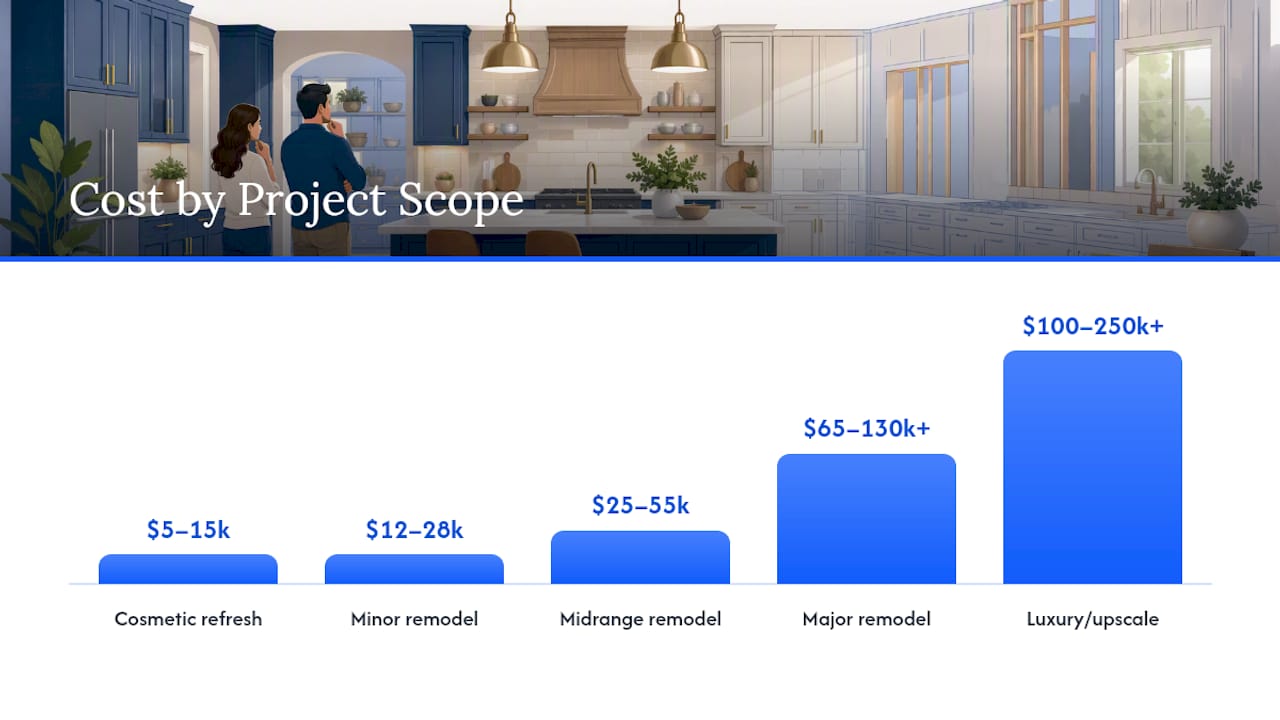
Luxury/upscale ($100,000 to $250,000+). Custom cabinetry, natural stone, commercial-grade appliances, and often an addition or major structural change. According to CostPrism’s 2026 cost guide, this band varies enormously based on material choices alone.
Here’s the detail that trips up most budgets:
- Keeping your existing footprint (same sink location, same appliance placement) keeps you inside the minor or midrange band.
- Moving a single wall or relocating plumbing can push a midrange project into major territory, sometimes doubling the labor line by itself.
- Adding square footage (a bump-out or knocking down a wall to an adjacent room) almost always lands you in the upscale tier regardless of finish quality.
That layout decision, more than any single material choice, is what separates a $30,000 remodel from an $85,000 one.
Where the Money Actually Goes: A Line-Item Breakdown
Once you know your scope, the next question is how a contractor’s bid should break down. Cabinets absorb more of a typical budget than any other line, and it’s not close.
Cabinets typically consume a significant portion of a total kitchen remodel budget — more than labor, more than countertops, more than appliances combined, according to Buildermuse’s 2026 component breakdown.
Here’s how a midrange budget usually splits out, per that same component analysis:
- Cabinets: 25 to 40% of total budget
- Labor (installation, plumbing, electrical rough-in): 20 to 25%
- Countertops: 10 to 15%
- Appliances: 10 to 15%
- Plumbing and electrical fixtures/parts: 5 to 10%
- Flooring, lighting, permits, and miscellaneous: the remainder
Cabinet pricing swings hardest based on construction type. Stock cabinets, installed, typically run $150 to $300 per linear foot. Semi-custom sits in the middle. For a standard 10 to 12 linear feet of upper and lower cabinets, that’s the difference between $3,000 and $14,000 on cabinets alone.
Countertop materials vary in price from budget options like laminate to higher-end surfaces such as quartz and granite, with costs reflecting material quality and installation complexity.

Appliance costs also vary widely by tier, from modest packages to professional-grade suites; plumbing and electrical expenses remain relatively low unless fixtures are relocated, which increases costs substantially.
Sample Budgets by Kitchen Size and Project Type
Numbers land differently depending on your actual footprint. These scenarios give you a rough anchor point, not a quote.
- 10x10 kitchen, minor refresh: About 100 square feet. New countertops, cabinet refacing, appliance updates. Typical budget: $15,000 to $25,000.
- 10x10 kitchen, full midrange remodel: Same footprint, new cabinets and layout tweaks. Typical budget: $28,000 to $45,000.
- 12x12 kitchen, midrange with island addition: A larger footprint plus a new island. A simple island with no plumbing runs $3,500 to $6,500; add a prep sink or dedicated electrical circuit and that jumps to $7,000 to $15,000, per Buildermuse’s fixture-cost notes. Total project: $40,000 to $65,000.
- Full gut remodel, any size, with a moved wall or relocated plumbing: $75,000 to $130,000+, depending on how much structural work is involved.
Regional labor rates shift these numbers meaningfully. Per-square-foot pricing (often quoted as $150 to $400 per square foot for a full remodel) is a useful sanity check, but it breaks down fast on small kitchens, where fixed costs like appliances and plumbing rough-in don’t scale down proportionally with square footage.
How to Build Your Actual Budget (and Pay for It)
Setting a number that survives contact with real bids means separating three buckets: hard costs (materials and labor), soft costs (design fees, permits, delivery), and contingency. Skipping the third bucket is the most common reason kitchen remodeling expenses blow past the original estimate.
- Total your hard costs using the scope band and line-item percentages above.
- Add soft costs. Design fees (if you’re using a kitchen designer), permit fees, and delivery/disposal charges typically add 5 to 10% on top of hard costs.
- Add contingency. Set aside 10 to 20% of your hard-plus-soft total for the unexpected, whether that’s a leaking pipe found behind old drywall or a countertop template that needs correcting, per HGTV’s budgeting guidance.
- Confirm the payment schedule with your contractor. Most ask for a deposit (often 10 to 30% at signing) followed by progress payments tied to milestones: demo complete, rough-in complete, cabinets installed, final walkthrough.
Pro Tip: Never pay more than the industry-standard deposit up front, and hold back the final payment until after your punch list is complete and any warranty paperwork is in hand.
If cash on hand doesn’t cover the full budget, homeowners generally choose between a home equity loan or line of credit, a dedicated renovation loan, or an unsecured personal loan. Home equity products usually carry the lowest rates but take longer to close. This comparison of renovation loans versus personal loans breaks down which fits which situation, and it’s worth reading before you commit to either.
Timeline and the Hidden Costs of Living Without a Kitchen
A minor remodel typically takes 2 to 4 weeks. Midrange projects run 6 to 8 weeks. A major remodel involving structural or plumbing changes can stretch to 10 to 16 weeks once you account for inspections and material lead times. The phases follow a predictable order: demo, rough-in (plumbing and electrical), cabinet and countertop install, finish work, and final inspection.
What most homeowners underbudget isn’t the construction, it’s everything around it:
- Eating out or ordering in for weeks, sometimes months, easily adds $500 to $1,500 to the real total
- Temporary housing, if the disruption is severe enough to leave, can run into the thousands
- Storage rental for displaced furniture and pantry items
- Permit delays that stretch the timeline by days or weeks with no warning
A few small moves cut the pain. Set up a temporary kitchen (a folding table, microwave, mini-fridge, and hot plate in another room) before demo day. Schedule the noisiest, most disruptive phases for weeks when your household has the most flexibility. Budget the living-cost buffer separately from your construction contingency, since the two rarely overlap.
Smart Ways to Cut Costs Without Hurting Resale
The single biggest lever for controlling a kitchen remodel budget is what you do with cabinets. Keeping the existing layout and refacing or repainting cabinet boxes instead of replacing them can cut that line item by half or more.
- Keep plumbing and gas lines in their current locations; moving them is the fastest way to blow a budget
- Reface or repaint cabinets instead of full replacement when the boxes are still structurally sound
- Choose quartz or laminate over natural stone if you want the counter look without the counter price
- Buy a matched appliance package during a sales event rather than piecing together individual units
DIY tasks that genuinely save money: demo, painting, and installing hardware or a simple backsplash. DIY tasks that usually cost more once mistakes get fixed: plumbing, electrical, and countertop templating, all of which carry real safety and code implications.
Pro Tip: Spend where buyers actually look, cabinets, counters, and layout flow, and economize on things nobody notices once the room is styled, like outlet cover finishes or pantry shelving material.
For surface-level updates that don’t require full construction, smart tactics for refreshing a space without a full renovation cover some of the same cost-saving logic.
How to Vet Contractors and Compare Bids Fairly
Before signing anything, confirm the contractor holds an active license and carries liability insurance, ask for at least three references from projects similar in scope to yours, and request a written scope of work that spells out inclusions and exclusions.
- Read every line item, especially allowances. A suspiciously low bid often hides cheap appliance or countertop allowances, or excludes permit fees and waste removal entirely.
- Ask bidders to convert vague allowances into firm unit prices so you’re comparing apples to apples across quotes.
- Watch for red flags: a contractor who won’t provide a certificate of insurance, demands a deposit above 30%, or gives a bid dramatically lower than competitors without explanation.
A contractor background check guide walks through exactly what to verify before signing.
Why Homeowners Trust Bestservicelocal for This Kind of Research
A local service platform connects homeowners to verified contractors searchable by service type and ZIP code, with business profiles built for side-by-side comparison. That transparency matters most when kitchen remodel pricing varies as much by region as it does by scope. For related project planning, see the roof replacement cost guide and electrical panel upgrade cost breakdown.
What Permits Actually Cost and When You Need One
Most kitchen remodels that involve plumbing relocation, electrical panel changes, gas line work, or structural modifications require a permit from your local building department. A cosmetic refresh, new paint, cabinet refacing, or a straight countertop swap, usually doesn’t.
Permit fees vary widely by municipality, but homeowners should generally expect a combined total somewhere in the low hundreds to low thousands of dollars once you add up separate permits for plumbing, electrical, and general building work. Many jurisdictions calculate fees as a percentage of the project’s declared value, while others charge flat fees per trade. Some areas add a plan review fee on top, especially if you’re moving a load-bearing wall.
Skipping a required permit is a costly gamble. Unpermitted work can complicate a home sale, trigger fines if discovered during an inspection, and in some cases force a homeowner to tear out completed work to bring it up to code retroactively. It can also void portions of a homeowner’s insurance coverage if damage traces back to unpermitted electrical or plumbing work.
Timeline matters here too. Permit review and inspection scheduling can add anywhere from a few days to several weeks to a project, depending on how busy the local building department is and whether your plans require revisions. Build that buffer into your contractor’s proposed schedule rather than assuming work starts the day after signing. A contractor familiar with your specific municipality’s permit office will usually move faster through this process than one working outside their normal territory, and that familiarity is worth asking about during the bidding stage.
Budgeting for Energy-Efficient and Sustainable Upgrades
Check your local utility’s website before finalizing an appliance choice, since rebate programs shift year to year and vary heavily by state.
LED under-cabinet and recessed lighting costs more upfront than incandescent or basic fixtures but pays that difference back through lower electricity bills and far longer bulb life, often 15 to 25 years versus a couple of years for older bulbs.
On materials, sustainable choices split into two camps: some cost more (FSC-certified hardwood cabinetry, recycled-glass countertops) and some cost about the same as conventional options (bamboo flooring, low-VOC paint, water-based finishes). Induction cooktops draw more attention lately for efficiency reasons; they cost somewhat more than standard electric ranges but use less energy per cooking session and heat faster.
The most cost-effective sustainable move for most budgets isn’t a flashy material swap. It’s simply choosing high-efficiency appliances and LED lighting during a remodel that was happening anyway, since the incremental cost gets absorbed into a project you’re already paying for rather than tacked on as a standalone expense.
Should You Splurge or Save? It Depends on Your Timeline
If you’re selling within a couple of years, favor targeted updates, paint, hardware, counters, that recoup well rather than a full gut. If you’re staying long term, spend on durable materials you’ll actually use daily. Either way, match your finishes to the neighborhood; over-improving rarely pays back.
— Service
Turn Your Budget Into Real Local Bids
You’ve got the numbers. The next step is finding out what your specific kitchen actually costs in your specific market, and that’s where a spreadsheet stops being useful and local bids start mattering. Bestservicelocal is the practical next move after this research: it lets you search verified contractors by ZIP code, compare business profiles side by side, and request quotes from multiple local pros instead of cold-calling names from an old flyer.

Every contractor profile on the platform includes verified details, so you’re not guessing whether a company is licensed or reading reviews you can’t trace back to a real project. Once you’ve settled on a scope band and a rough budget from this guide, the fastest way to sanity-check it is to search for local kitchen remodeling contractors near you and get two or three bids on the table. Comparing real numbers against your own estimate is what turns a planning exercise into an actual renovation.
Sources
The ranges in this guide draw from homeowner-survey data (Forbes), scope-based benchmarking (CostPrism), component-level cost data (Buildermuse), and budgeting guidance (HGTV). Survey averages measure what homeowners actually spent; standardized specs measure a fixed project definition. They rarely match, and that’s expected.
- Forbes: Kitchen remodel cost breakdown
- CostPrism: Kitchen Remodel Cost Guide 2026
- Buildermuse: Kitchen remodel cost 2026 — breakdown by component
- HGTV: 10 steps to budgeting for your kitchen remodel
FAQ
How much does a kitchen remodel cost on average?
Most homeowners spend around $27,000 for a midrange kitchen remodel, though the full range spans $5,000 for a cosmetic refresh to $250,000 or more for an upscale gut remodel.
Is it cheaper to reface cabinets instead of replacing them?
Yes. Refacing or repainting existing cabinet boxes typically costs less than half of full replacement, provided the boxes are structurally sound.
How do I find reliable contractors to bid on my kitchen remodel?
Search verified, locally licensed contractors by ZIP code through Bestservicelocal, compare business profiles, and request multiple bids before signing a contract.