
Home Inspector Cost: What to Expect and How to Compare Quotes
Home Inspector Cost: What to Expect and How to Compare Quotes

Most buyers pay somewhere between $200 and $500 for a standard home inspection, and a typical single-family house lands in the mid-$300s to low $400s. Your own quote can sit above or below that range depending on your ZIP code, the size and age of the house, and the extras you add. This guide shows what moves the price, what a quote should include, and how to compare local inspectors so you pay for the right scope rather than the lowest number.
TL;DR
- Typical range: about $200 to $500 for a standard inspection, with an average near $340 according to Forbes Home. Market data from Spectora put the national average quote at $484 in August 2024, so expect real quotes to vary.
- Price drivers: location, home size and age, travel time, inspector availability and add-on services.
- Extras cost more: radon, mold, sewer line, termite and similar specialty checks are usually separate from the base inspection.
- Compare scope, not just price: ask what is included and excluded, and read a sample report before you book.
- Sellers can order a pre-listing inspection too, and it is priced like a buyer’s inspection of the same house.
Table of Contents
- What a home inspection costs at a glance
- Why prices differ so much from city to city
- What changes the price of your inspection
- What a standard inspection includes, and what costs extra
- What a pre-sale inspection costs
- How to compare inspector quotes
- Our perspective
- Related costs to budget for
- Find local providers by ZIP code
- How to use your inspection report
- FAQ
- Sources
What a home inspection costs at a glance
There is no fixed national price. InterNACHI, a professional association of inspectors, says fees depend on the inspector, the local market, the region and the scope of the inspection. That is why you see such different numbers from one article to the next.
Here is how the published figures line up:
| Source | Figure | What it tells you |
|---|---|---|
| Forbes Home | $340 average, $200 to $500 range | A realistic floor and ceiling for a typical house |
| Spectora market data | $484 average quote, August 2024 | Actual booked quotes can run higher than headline averages |
The gap between $340 and $484 is not an error. Averages built from cost guides, from inspector surveys and from live booking quotes measure different things, and they cover different years and markets. Treat each as a rough frame, then get two or three quotes for your own address.
A practical way to budget: plan for roughly $350 to $500 on an average-size house, add a cushion for any specialty tests, and replace that estimate with real quotes as soon as you have a property address.

Why prices differ so much from city to city
Two houses of the same size can be inspected for noticeably different fees because local conditions differ. Spectora lists location or region, travel time, home size and age, market conditions, how many inspectors work in the area and how available they are, and add-on services as the main cost variables.
A few things sit behind that:
- Labor and operating costs. Inspectors in high-cost metros charge more to cover insurance, software, vehicles and their own time.
- Demand. In a hot market, good inspectors book out days ahead and have little reason to discount.
- Rules by state. Licensing and standards of practice differ across states, and that affects how inspectors work and what they include.
- Travel. A rural property an hour outside town can carry a trip charge or a higher base fee.
If you are buying in a new area, do not rely on a figure from a different state. Searching by service and ZIP code is the quickest way to see what inspectors who actually cover your property are asking. On Best Service Local you can search that way and compare profiles side by side.
What changes the price of your inspection
Size of the home
Larger homes take longer to evaluate, so they cost more. A small condo can often be done in two hours, while a 4,000 square foot house with a basement and an attic may take half a day. Many inspectors publish a price ladder by square footage on their own sites, so you can see exactly where your house falls.
Age and condition
An older home may cost more to inspect than a newer one of similar size, depending on its condition and design, as SoFi explains. Older houses tend to have more systems to examine, more past repairs to trace and more places for problems to hide. Expect the inspector to spend extra time in the crawl space, around the electrical panel and on the roof.
Type of construction
Single-family homes, condos, townhomes, multi-family buildings, manufactured homes and homes with outbuildings do not take the same effort. Properties with a pool, a guest house, a detached garage or a large deck add components to check. If your property has a deck, a bottom-up deck safety inspection looks at the ledger, joists and posts, which is the sort of detail worth raising when you discuss scope.
Rush timing
Inspection periods in a purchase contract are short. Booking within a day or two, on a weekend or in peak buying season can cost more, or leave you with whoever has an opening instead of the inspector you wanted. Start calling as soon as your offer is accepted, or earlier if you are already in a tight market.
What a standard inspection includes, and what costs extra
A standard general inspection is a visual review of the major systems and visible structure: roof, exterior, foundation where accessible, attic, plumbing, electrical, heating and cooling, interior and built-in appliances. It is not a guarantee, and it does not open walls.
The add-ons are where quotes diverge. The American Society of Home Inspectors says some additional services may be separate or cost extra, and it lists asbestos, lead, mold, radon, sewer-lateral and wood-destroying-insect inspections as outside the scope of a home inspection (ASHI). Some inspectors hold extra certifications and bundle these services, while others subcontract them. Either way, they are usually quoted separately.
Which add-ons make sense depends on the house:
- Radon: worth considering where your region has elevated radon levels, and for any home with a basement.
- Sewer line scope: a camera check of the line is a common request on older homes with mature trees. For a sense of what plumbing-specific inspections run, see this plumbing inspection cost breakdown.
- Termite or wood-destroying insects: often required by lenders in some regions. Our pest control cost guide shows how pest work is priced locally.
- Mold or air quality: helpful when you see staining, smell dampness or the home has a history of leaks.
- Septic and well: essential on rural properties without municipal services.
When you collect quotes, ask for the base price and the price of each add-on as separate lines. A quote that looks cheap but excludes the one test your house needs is not cheap.
What a pre-sale inspection costs
Sellers sometimes order an inspection before listing so they can fix problems, adjust the price or disclose issues up front. The inspection itself is the same service a buyer would hire, so a seller should expect to pay a similar fee for a house of the same size and age. Specialty tests are quoted the same way.
The value is in the timing. Knowing about a failing water heater or a roof leak before buyers do gives you room to repair it on your schedule rather than negotiate under a deadline. If you list the home, remember that a buyer may still hire their own inspector, so your report works as a head start, not a replacement.
To get repairs done after an inspection, you can look up local pros by ZIP code for a handyman, electrician, plumber or roofer and price the work before you list.

How to compare inspector quotes
The cheapest quote is rarely the best deal if it comes with a thin report or an inspector who rushes. Use the same checklist with every inspector you call.
- Confirm the scope in writing. InterNACHI advises discussing the scope beforehand and having inclusions and exclusions spelled out in the inspection agreement. Inspectors may include different items or inspect in more detail than others.
- Ask about the report. Request a sample. A clear report with photos, plain-language summaries and prioritized findings saves you hours.
- Check licensing and credentials. Some states license inspectors and others do not. Ask for a license number where your state requires one, and ask about professional association membership, insurance and years of experience.
- Ask how long the visit takes. A thorough inspection of an average house usually takes a few hours. A 90-minute visit on a large house is a flag.
- Ask whether you can attend. Walking the house with the inspector is the best education you will get as a buyer.
- Confirm independence. Choose an inspector you hire yourself, not one tied to the seller. The checks on independent inspectors and reports during a purchase apply to resale homes as well as new builds.
- Ask about turnaround. Most buyers need the report within a day or so, while the contract’s inspection window is still open.
A short, structured call to three inspectors is enough. Write down the price, scope, add-ons, turnaround and earliest date, then compare.
Our perspective
Home inspection is one of the few costs in a purchase where shopping locally pays off twice: you get a fee that reflects your market, and you get an inspector who knows the typical problems in houses like yours.
That is the idea behind searching by service and ZIP code. A provider who covers your area, with a profile that shows verified details and services in plain view, is easier to compare than a name on a national list. We built Best Service Local so you can line providers up side by side, look at what each one offers and contact the ones that fit.
Our advice is to treat the inspection as the start of your repair plan. Once the report is in, you will need reliable local pros for the follow-up work, and the same ZIP code search helps you find them.
Service
Related costs to budget for
An inspection is one line in a longer list of closing costs. Plan for these alongside it:
- Appraisal. Your lender orders it, and the price can change with loan type. See our home appraisal cost guide.
- Legal help. Some states and deals call for a closing attorney. Our guide to real estate attorney fees shows typical ranges.
- Agent. If you are still choosing representation, these checks before you sign with an agent are worth running.
- Systems that may need replacing. An inspector may flag an aging furnace or air conditioner, so read up on HVAC replacement cost before negotiating.
None of these replaces the inspection. They help you decide what the inspection results are worth in negotiation.
Find local providers by ZIP code
Best Service Local lets you search for local service providers by service type and ZIP code, so the businesses you see actually operate where you live. Each business has a profile with verified details, and you can compare several providers before you reach out. It is free to search and compare.
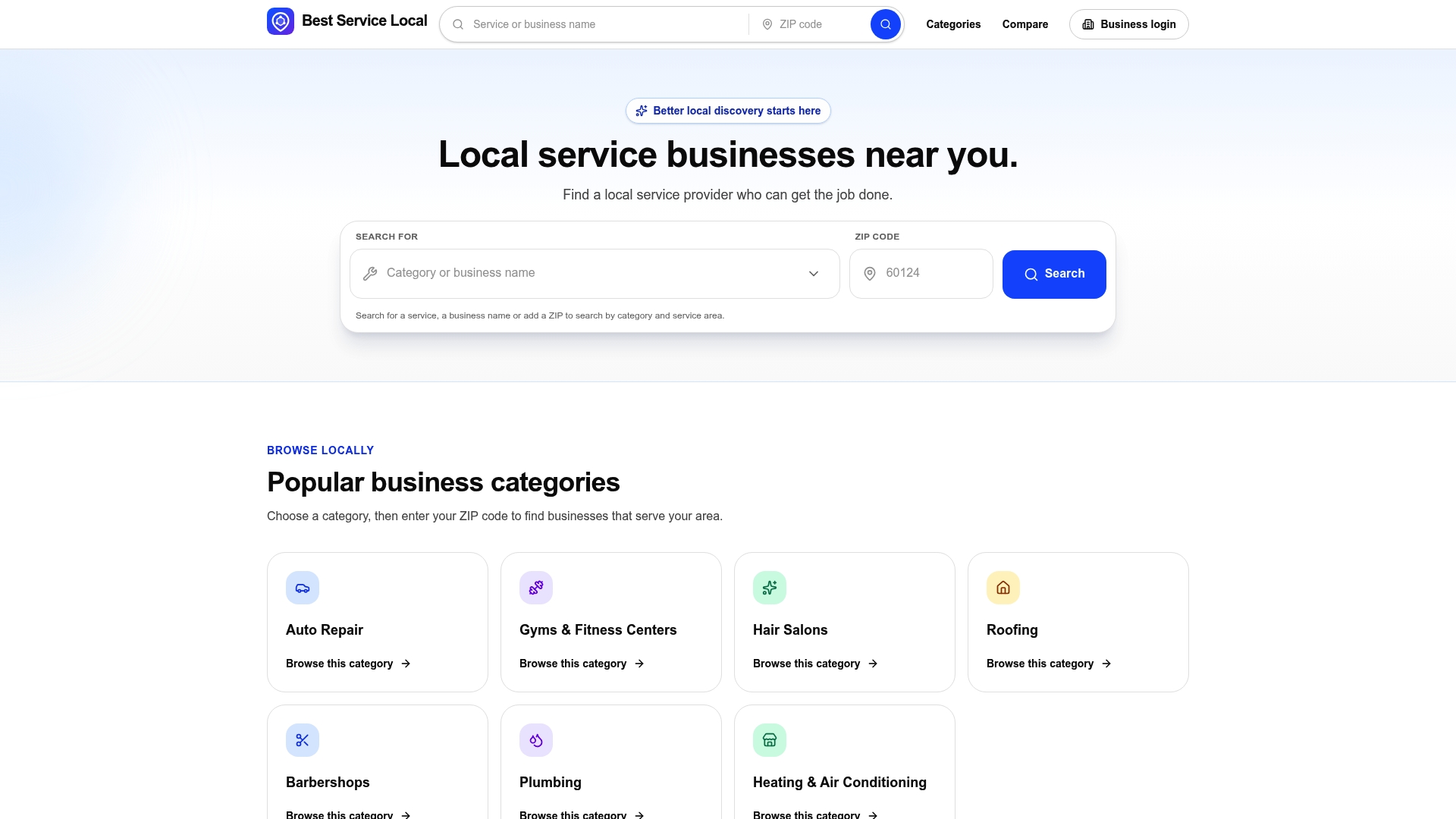
Whether you need a pro for a pre-purchase repair, a handyman for the punch list after your report, or a different service altogether, start on the Best Service Local home page. If you need small repairs done quickly, you can also browse a handyman profile such as Accurate Home Repair.
How to use your inspection report
The report is only worth the fee if you act on it. Read it in three passes.
- Safety and structure first. Roof, foundation, electrical hazards, gas, active leaks and anything that could injure someone come first.
- Costly systems second. Furnace, air conditioner, water heater and roof age tell you what you may be paying for in the next few years.
- Maintenance items last. Caulk, loose handrails and gutters are real, but they rarely change a deal.
For anything serious, ask the inspector which specialist should take a look, then get a quote from a licensed contractor in that trade. Use those quotes to ask the seller for repairs or a credit, or to decide whether to walk away within your contract’s inspection window.
FAQ
How much should I budget for a home inspection?
Budget $350 to $500 for a typical single-family home, and more if the house is large, old or far from town. Published averages sit in the $200 to $500 band per Forbes Home, but your local quotes are the number that counts. Add money for any specialty tests you plan to order.
Who pays for a home inspection?
Buyers usually hire and pay for the inspection, since it protects their purchase decision. Sellers can order a pre-listing inspection on their own, and in that case the seller pays. Your purchase contract spells out the inspection period, so read it before you book.
Is a cheaper inspection a bad sign?
Not always, but check why it is cheaper. A lower price may reflect a smaller scope, a faster visit or a thinner report. Ask for the inclusions and exclusions in writing and compare them against the other quotes you collected.
Do radon, mold or sewer line checks come with the standard price?
Usually not. ASHI notes that services such as radon, mold, sewer-lateral and wood-destroying-insect inspections fall outside a home inspection, so they are typically quoted as separate services. Ask each inspector which add-ons they offer and what each one costs.
Should sellers get an inspection before listing?
It can help. A pre-listing inspection gives you time to repair problems or price the house with the findings in mind. It costs about what a buyer’s inspection of the same home would, and buyers may still order their own.
Sources
- InterNACHI Home Inspection FAQ for Home Buyers and Sellers
- Forbes Home: How Much Does Home Inspection Cost?
- Spectora Market Update, August 2024
- SoFi: How Much Does a Home Inspection Cost and Who Pays for It?
- ASHI: Home Inspection Specializations and Extra Services