
$5,000 Difference? Itemized Heat Pump Installation Costs for Homeowners
$5,000 Difference? Itemized Heat Pump Installation Costs for Homeowners
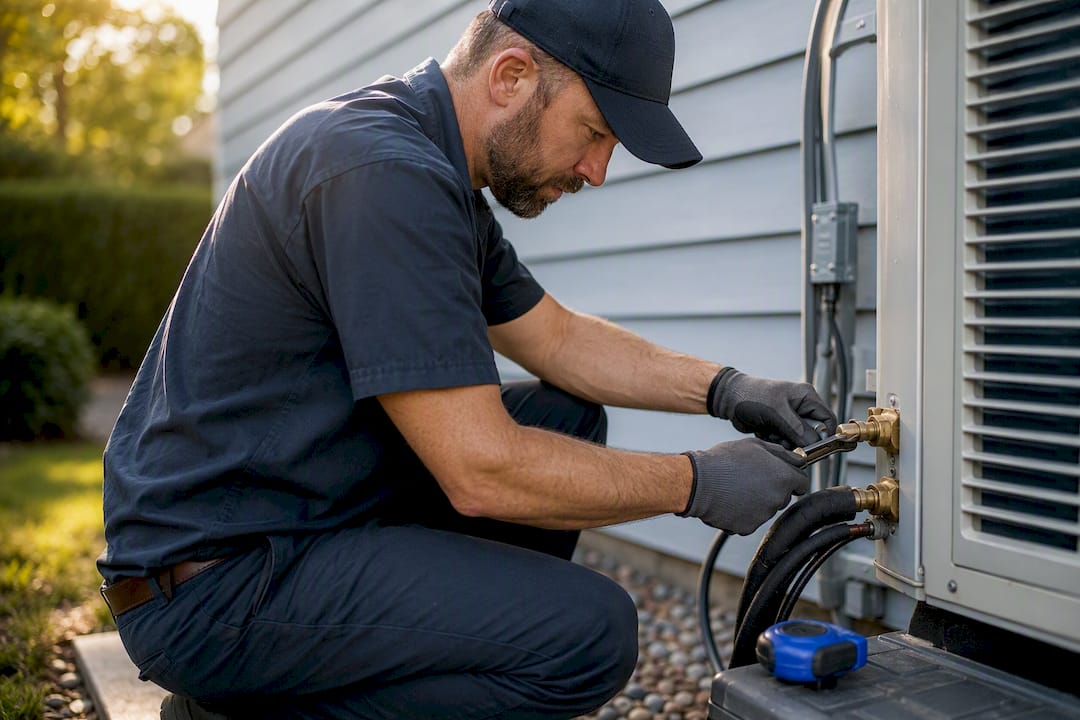
Most homeowners pay between $6,000 and $18,000 for a full heat pump installation in 2026, with a typical ducted air-source job landing around $12,000 to $14,000. Where you fall in that range depends mostly on three things: the system type you choose, whether your existing ductwork works or needs rebuilding, and whether your electrical panel can handle the new load. Ductless mini-splits and available rebates can pull the number down; cold-climate equipment and panel upgrades push it up.
TL;DR:
- A typical heat pump installation in 2026 costs between $6,000 and $18,000, with ducted systems averaging around $12,000 to $14,000, depending on ductwork and system type.
- Mini-split systems can be significantly cheaper for single zones at $1,500 to $4,500 but may reach up to $18,000 for multi-zone setups covering a whole house.
- Expenses increase if electrical panels need upgrading, duct repairs are extensive, or cold-climate equipment or long refrigerant lines are required.
- Current rebates and tax credits are focused on the IRA’s HOMES and HEAR programs, with state and utility rebates adding $500 to $3,000, but the federal 25C credit expired after 2025.
- Obtaining three detailed, itemized bids before choosing an installer improves cost accuracy and helps compare scope, warranty, and permit handling.
Table of Contents
- What Does a Heat Pump Installation Cost by System Type?
- How Much Does a Heat Pump Cost for a 2,000 Sq Ft Home?
- What’s Included in a Heat Pump Installation Quote?
- What Pushes a Heat Pump Quote Into the High End?
- What Rebates and Tax Credits Apply to Heat Pumps in 2026?
- How Do You Compare Heat Pump Installation Quotes?
- How Should You Budget and Finance a Heat Pump Installation?
- Why Trust This Cost Breakdown?
- What Homeowners Get Wrong About Heat Pump Pricing
- Ready to Compare Heat Pump Installers Near You?
- Sources
What Does a Heat Pump Installation Cost by System Type?
The type of system you pick sets your baseline before a single wire gets run. Air-source heat pumps, the most common whole-home option, typically install for $6,000 to $18,000, with straightforward ducted swaps clustering near $12,000 to $14,000. Some guides put the low end closer to $4,000 for smaller homes with simple installs, so treat these as overlapping ranges rather than a single fixed number.
Ductless mini-splits change the math entirely. A single-zone system runs $1,500 to $4,500, averaging around $3,000, but multi-zone setups covering a whole house can climb to $4,000 to $18,000 depending on how many rooms you’re conditioning.
- Air-source (ducted): $6,000 to $18,000, best for homes with existing ductwork in decent shape
- Mini-split (single-zone): $1,500 to $4,500, best for additions, garages, or one problem room
- Mini-split (multi-zone): $4,000 to $18,000, best for whole-home ductless conversions
- Hybrid/dual-fuel: Layers a heat pump with a backup furnace, often costing more upfront but cutting extreme-cold energy bills
- Geothermal: $12,000 to $40,000+, chosen for long-term efficiency in homes where owners plan to stay 15+ years
How Much Does a Heat Pump Cost for a 2,000 Sq Ft Home?
Home size and the tonnage it demands drive your quote more than any single feature on the equipment. Here’s how that typically shakes out, assuming existing ductwork stays in place and no panel upgrade is needed.
- 1,500 sq ft home, 2 to 2.5 tons: $7,500 to $12,000 installed for a straightforward ducted swap
- 2,000 sq ft home, 3 to 3.5 tons: $9,000 to $15,000 installed, with a clean swap onto good ducts landing closer to $10,000 to $13,000
- 2,500 sq ft home, 3.5 to 4 tons: $11,000 to $17,000, trending toward the higher end if the home has multiple stories or zoning needs
- 2,000 sq ft home with mini-split conversion: $8,000 to $16,000 across three to four zones, depending on layout complexity
The 2,000 sq ft example is the one most homeowners should anchor to: a 3 to 3.5 ton system on functional ducts, priced around $9,000 to $15,000 before rebates.
What’s Included in a Heat Pump Installation Quote?
Every quote you get should break down into recognizable pieces, and asking a contractor to itemize theirs is the single fastest way to spot a bad bid.
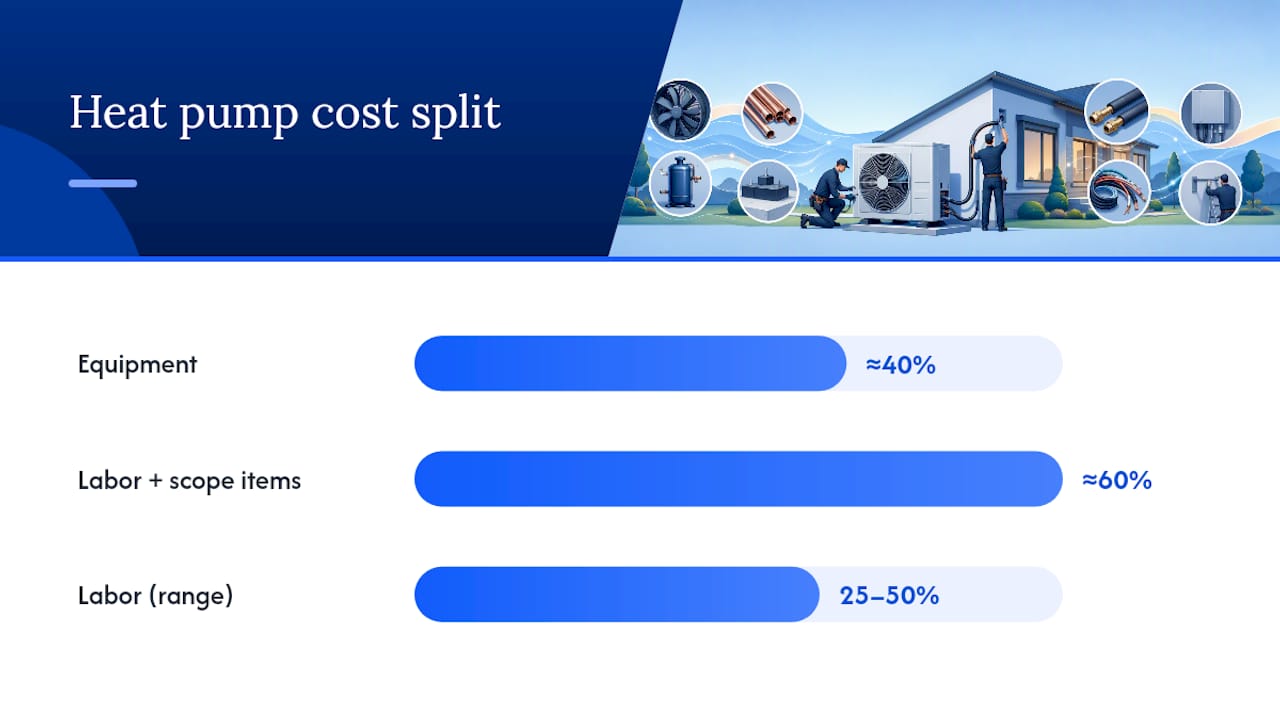
Equipment makes up roughly 40% of a typical bill, with labor and scope items like ductwork and electrical filling the remaining 60%, and labor alone can swing anywhere from 25% to 50% of total project cost depending on access, ductwork condition, and local labor rates. If a quote lumps all of this into one number, ask the contractor to split it before you sign anything.
What Pushes a Heat Pump Quote Into the High End?
A few specific conditions reliably send a bid from “typical” to “expensive,” and knowing them ahead of time keeps you from getting blindsided at the walkthrough.
- Electrical panel upgrades: older 100-amp panels often can’t support a new heat pump circuit, adding $300 to $4,000 depending on scope
- Major duct repairs or redesign: cracked, undersized, or missing ductwork can add thousands before the heat pump itself gets installed
- Cold-climate equipment: units rated for sub-zero performance cost more than standard models
- Long refrigerant line runs: mini-splits with the outdoor unit far from indoor heads need more line set and labor
Watch for vague line items like “labor: $4,500” with no hours specified, or “misc materials” with no list attached. Missing permit line items are another red flag. Pro Tip: Schedule your installation in early spring or late fall when contractors have open calendars, and get three itemized bids before choosing. Off-season timing alone can shave hundreds off labor pricing.
What Rebates and Tax Credits Apply to Heat Pumps in 2026?
The federal incentive picture shifted heading into 2026. The Section 25C tax credit expired for equipment placed in service after December 31, 2025, so homeowners installing this year can’t claim that particular credit anymore. Active federal pathways now run through the IRA’s HOMES program, which pays based on measured or modeled energy savings, and the income-qualified HEAR program for eligible households.
State and utility rebates remain the more reliable lever for most people, typically adding $500 to $3,000 on top of any federal pathway, and many utilities let you stack a state rebate with a utility-specific incentive on the same install. Ask your installer to supply itemized paperwork, including model numbers, efficiency ratings, and dated invoices, since most rebate programs require that documentation before they’ll pay out.
How Do You Compare Heat Pump Installation Quotes?
Three bids that look similar on price can differ wildly in scope. Work through this before picking one:
- Match equipment specs line by line — same tonnage, same efficiency rating (SEER2/HSPF2), not just “heat pump” written generically
- Ask for labor hours, not just a labor total — a contractor quoting 8 hours versus 20 hours for the same job is telling you something about corners being cut
- Confirm who’s pulling permits — if the quote doesn’t mention permits at all, ask directly
- Get warranty terms in writing — manufacturer warranty length, labor warranty length, and what voids each
- Ask about refrigerant handling and commissioning — a proper install includes a post-install charge check and airflow test, not just “plug it in and go”
- Verify licensing and check recent reviews — a quick call to your state’s contractor licensing board takes five minutes and confirms the business is legitimate
How Should You Budget and Finance a Heat Pump Installation?
Cash payment avoids interest entirely but ties up more capital upfront.
Run conservative math before committing: if a heat pump saves you $600 to $1,200 a year in combined heating and cooling costs, a $12,000 install pays back in 10 to 20 years, longer than the equipment’s typical 15-year lifespan in some cases. Rebates shorten that window meaningfully. Budget $150 to $300 a year for maintenance, including annual filter changes and coil cleaning, and know that skipping DIY installation, which can void warranties and introduces refrigerant-handling risk on mini-splits, protects both your warranty and your long-term costs.
Why Trust This Cost Breakdown?
This guide pulls from aggregated 2026 market data and contractor-scope analysis rather than a single vendor’s price list. Bestservicelocal helps you go from research to real quotes: search by service type and ZIP code to pull up verified installer profiles, compare their listed details side by side, and request itemized bids directly. For related budgeting context, see our AC installation cost breakdown and electrical panel upgrade guide.
What Homeowners Get Wrong About Heat Pump Pricing
The conventional advice treats heat pump installation like buying an appliance: find the lowest number and go. That’s backwards. Two quotes with identical unit models can differ by $5,000 once you account for how much ductwork one contractor plans to rebuild and the other plans to patch.
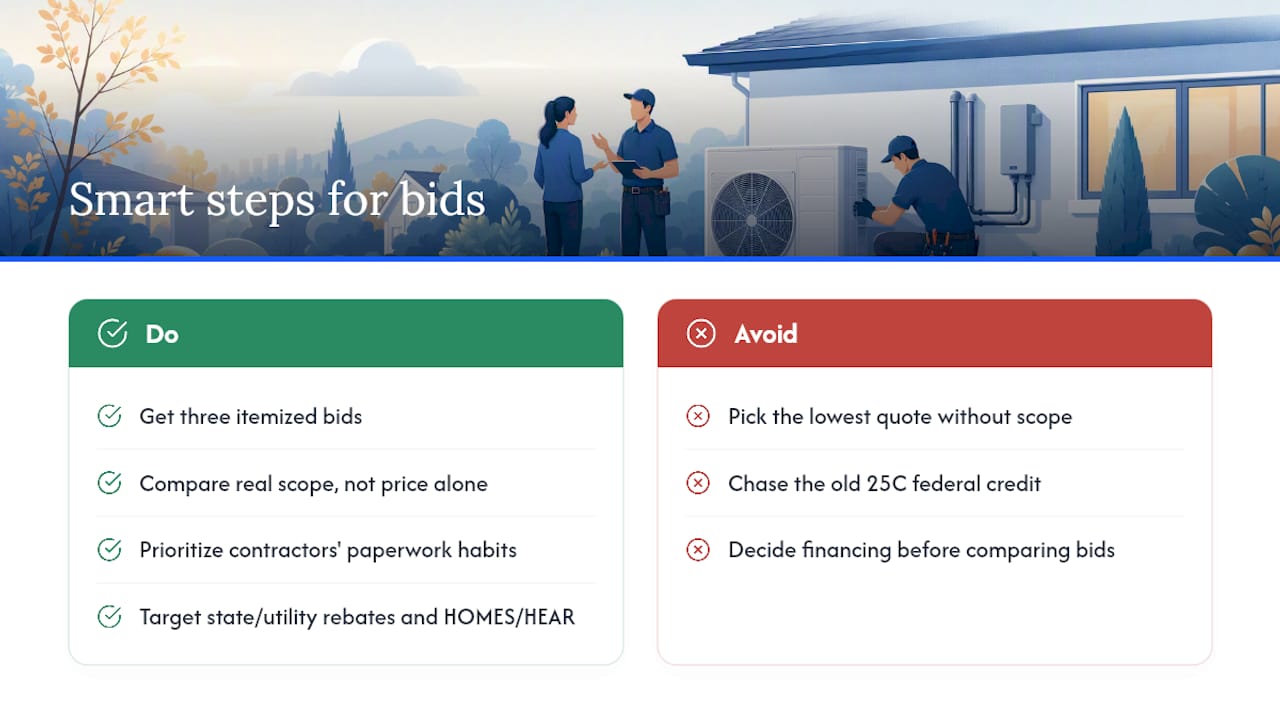
The bigger mistake is chasing the federal tax credit conversation as if it still works the way it did a few years ago. With 25C gone for 2026 installs, homeowners need to shift their attention to state and utility rebates and the IRA’s HOMES and HEAR pathways, which reward documentation and performance data rather than a flat credit. That means the contractor’s paperwork habits matter almost as much as their install quality.
If there’s one thing to prioritize first, it’s getting three itemized bids before touching financing decisions or rebate applications. Everything downstream, your net cost, your payback period, your warranty protection, depends on comparing real scope, not just a bottom-line number.
— Service
Ready to Compare Heat Pump Installers Near You?
Getting three itemized bids sounds simple until you’re actually staring at three PDFs written in three different formats, none of which break down labor the same way. Bestservicelocal fixes that comparison problem by putting verified installer profiles side by side, so you can check licensing details, service areas, and specialties before you ever pick up the phone.

Each business profile on Bestservicelocal includes verified details you’d otherwise have to dig up yourself, which matters when a heat pump quote hinges on scope items like electrical work or duct modifications. For comparison, it’s worth seeing how local heating contractors structure line-item pricing on similar installation projects elsewhere. When you’re ready to start collecting real numbers instead of ballpark guesses, search Bestservicelocal by service and ZIP code to find installers in your area, and request your first quote today.
Sources
- Cost to Install Heat Pump Guide (2026)
- Mini Split Installation Cost: What to Expect (2026 Prices) | HVAC Base
- Here’s how much heat pumps cost to install
- Cost to Install Heat Pump Guide (ConsumerAffairs)