
Furnace Replacement Cost: What to Expect in 2026
Furnace Replacement Cost: What to Expect in 2026
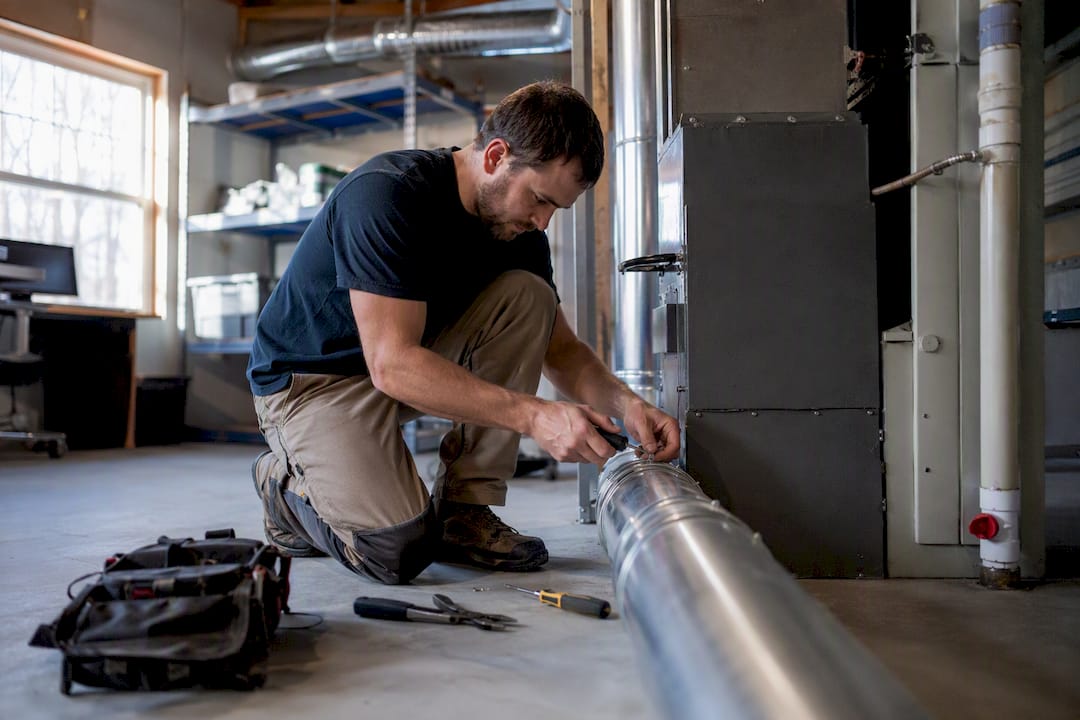
A new furnace typically runs $4,800 on average, with most complete projects landing between $3,800 and $8,500 depending on fuel type, efficiency, and how much ductwork or venting work is involved. Standard swaps (same fuel, same location, no ductwork changes) generally take several hours to complete. The three things that move your price most: fuel type, AFUE rating, and how complicated the installation turns out to be once a technician opens up your mechanical room.
Key Takeaways
Furnace replacement cost depends primarily on fuel type, AFUE rating, and installation complexity, with add-ons like ductwork and venting often separating a low quote from a realistic one.
| Point | Details |
|---|---|
| National average cost | Expect roughly $4,800 installed, with most projects falling between $3,800 and $8,500. |
| AFUE drives equipment price | Jumping from 80% to 96%+ AFUE typically adds $1,500 to $3,000 to equipment cost. |
| Watch for hidden add-ons | Ductwork, vent conversion, gas line work, and permits can add $500 to $3,000+ combined. |
| Get three itemized quotes | Prices for identical equipment can vary 30% to 50% between contractors in one city. |
| Replace at 15 to 20 years | Frequent repairs or a cracked heat exchanger mean replacement beats continued repair. |
| Compare installers by ZIP | Local AI Page lets you pull up nearby HVAC contractors with contact info and FAQs to request quotes. |
Table of Contents
- Furnace Replacement Cost by Type, Efficiency, and Home Size
- What Installation and Add-On Costs Really Look Like
- Estimating Your Home’s Likely Installed Cost
- When Repair Makes Sense and When Replacement Wins
- How to Get Quotes You Can Actually Compare
- Find Local HVAC Installers by ZIP Code
- Frequently Asked Questions
- Sources
Furnace Replacement Cost by Type, Efficiency, and Home Size
Fuel type sets your starting point. Gas furnaces generally run $3,800 to $12,000, with most homeowners landing in the $4,000 to $7,000 range. Electric furnaces tend to cost less upfront but more to run monthly. Oil furnaces and propane units usually price higher than gas because of specialized venting and tank considerations.
AFUE, the efficiency rating that measures how much fuel actually turns into heat versus escaping up the flue, drives a big chunk of the equipment cost. Jump to a 96% two-stage model, and you’re often adding $1,500 to $3,000 in equipment cost alone, before labor.
Stage type matters too:
- Single-stage: cheapest, runs at full blast or off, less even heating.
- Two-stage: mid-range premium, runs low most of the time, quieter and more efficient.
- Modulating: highest cost, adjusts output in small increments, best comfort and efficiency.
For sizing, a rough rule of thumb is 30 to 60 BTU per square foot, depending on your climate and insulation. A 2,000 square foot home in a cold climate might need a 90,000 to 100,000 BTU furnace, which nudges you toward the mid-tier equipment pricing.
What Installation and Add-On Costs Really Look Like
Labor typically makes up 25% to 35% of your total bill, and where you live changes that math substantially. The Northeast and West Coast generally run higher hourly rates than the Midwest or South, which is one reason two homeowners with identical furnaces can get quotes that differ by hundreds of dollars.
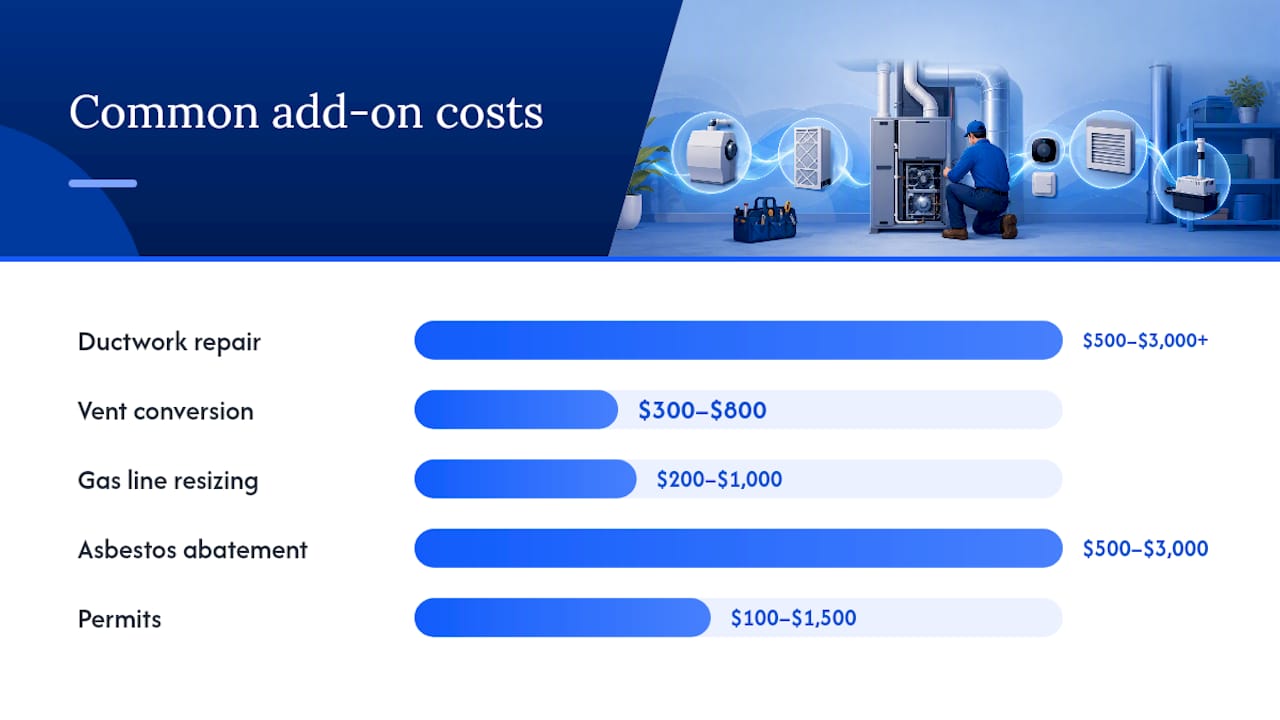
The add-ons are where budgets get blown. These are the line items to watch for:
- Ductwork repair or modification: $500 to $3,000+
- Vent conversion (needed when upgrading to a condensing furnace): $300 to $800
- Gas line resizing: $200 to $1,000
- Electrical upgrades: varies by panel condition and code requirements
- Asbestos abatement (older homes with vintage ductwork insulation): $500 to $3,000
- Permits: $100 to $1,500 depending on your jurisdiction
Pro Tip: Ask every contractor point-blank, “what is NOT included in this number?” Get the answer in writing before you sign anything. If a quote seems $1,000 cheaper than the others, that gap is usually sitting in an excluded line item, not a discount.
Estimating Your Home’s Likely Installed Cost
You don’t need a contractor visit to get a reasonable ballpark. Work through it in order:
- Calculate your BTU need. Multiply square footage by 30 to 60 BTU depending on climate severity (colder regions need more).
- Match BTU to equipment tier. Higher BTU needs generally push you toward larger, pricier units, and a furnace replacement calculator can refine this using your fuel type and region.
- Adjust for your region’s labor rates. Coastal and northern metro areas trend higher; rural and Midwest markets trend lower.
- Factor in timing. Scheduling installation in spring or fall shoulder season, instead of peak summer or dead winter, can save 10% to 15% simply because crews have more open slots.
- Map the timeline. Expect one to two visits for quoting, a few days to a couple weeks for permit approval depending on your city, and a single day for the install itself.
When Repair Makes Sense and When Replacement Wins
Age is the first filter. Once a furnace passes 15 to 20 years, Energy points toward replacement over continued repair, especially once major components start failing.
Run the math before deciding:
- A single repair under $300 to $500 on a furnace under 10 years old? Fix it.
- A repair quote approaching $1,500 to $2,000 on a furnace over 15 years old? That’s a strong signal to replace, since you’re often one failure away from spending that money again.
- Two or more repair calls in a single heating season is the tipping point most technicians use to recommend replacement.
Safety note: a cracked heat exchanger is not a repair-and-wait situation. It can leak carbon monoxide into your living space and requires immediate furnace replacement, full stop.
How to Get Quotes You Can Actually Compare
Getting this step right matters more than almost anything else in the process, because prices for identical equipment can swing 30% to 50% between contractors in the same city.
- Request itemized, written quotes. Every quote should list the exact model number, AFUE rating, labor cost, permit fees, and anything explicitly excluded.
- Collect at least three quotes. Compare scope line by line, not just the bottom-line number.
- Watch for red flags: pressure to sign same-day, no mention of permits, vague one-line “furnace replacement, $X,XXX” scopes, or a price dramatically below the other two.
- Verify the contractor. Confirm active licensing and insurance, ask about the length of both the equipment warranty and the labor warranty, and request local references you can actually call.
Pro Tip: A contractor who balks at giving you an itemized quote is telling you something. The good ones expect to be compared and welcome it.
Finding and Comparing Installers Near You
Local AI Page lets you search by ZIP code to pull up nearby HVAC contractors with service area details, FAQs, and direct contact info in one place, like this Elgin, Illinois HVAC profile. That makes it easier to request itemized quotes from multiple installers and check licensing claims before anyone sets foot in your house.
A practical note on protecting your budget
If there’s one thing worth repeating to a neighbor before they sign a contract, it’s this: verify the scope before you verify the price. I’ve seen enough quotes to know the cheapest number on paper often hides the most exclusions. Profiles with clear FAQs and direct contact details make it much faster to ask the right questions upfront.
Find Local HVAC Installers by ZIP Code
Local AI Page is built for exactly the moment you’re in right now: needing to compare real local installers without spending a weekend cold-calling companies from search results. Search your ZIP code on the Local AI Page homepage to pull up nearby HVAC contractors with contact details and service areas already laid out, or jump straight into a location like Lombard, IL or St. Charles, IL to see what a ZIP-specific results page looks like.

Every listing shows service area, direct contact info, and FAQs, so you can request itemized quotes from several installers without digging through five different contractor websites. If you’d rather browse coverage first, the full ZIP index shows every area currently listed. Start with your ZIP code and get quotes lined up before the next cold snap forces a rushed decision.
Frequently Asked Questions
What is the average furnace replacement cost in 2026? Most homeowners pay around $4,800 for a fully installed gas furnace, with typical ranges between $3,800 and $8,500 depending on AFUE, home size, and regional labor rates.
Does furnace replacement cost include ductwork? Not usually. Ductwork repair or replacement is commonly quoted separately and can add $500 to $3,000 or more, so always confirm whether it’s included in your estimate.
How long does furnace installation take? A standard swap with no ductwork or venting changes typically takes 4 to 8 hours. Add a day or two if vent conversion, electrical upgrades, or permit inspections are required.
Is it cheaper to replace a furnace in the off-season? Yes.
When should I repair instead of replace my furnace? If your furnace is under 10 years old and the repair is under $300 to $500, repair it. Past 15 years, or with a cracked heat exchanger, replacement is the safer and often cheaper long-term option.