
Avoid $15,000–$40,000 Probate Loss: Estate Planning Lawyer Cost
Avoid $15,000–$40,000 Probate Loss: Estate Planning Lawyer Cost

A simple attorney-drafted will typically runs $300 to $1,000, while a revocable living trust runs $1,500 to $5,000 for one person and more for couples. Full packages with powers of attorney and a healthcare directive often land between $2,000 and $5,000. The real wildcard isn’t the document itself. It’s complexity, trust funding, and whether you’re in a big city or a small town.
TL;DR:
- Flat fees for simple wills typically range from $300 to $1,000, while trusts cost between $1,500 and $5,000, depending on complexity.
- Complex estate planning involving real estate, business interests, or blended families often increases costs due to added legal strategy and custom drafting.
- Trust funding and execution expenses, such as deed preparation, notarization, and trustee fees, are usually separate from the document cost and can significantly raise the overall budget.
- Attorney experience level and the complexity of the client’s family or property situation influence legal fees more than geographic location.
- Always get written estimates detailing scope, document drafts, funding, amendments, and hours before signing any estate planning agreement.
Table of Contents
- How Much Does an Estate Planning Lawyer Cost by Billing Method?
- What Are Typical Price Ranges for Wills, Trusts, and Packages?
- What Actually Drives Your Attorney’s Bill Higher?
- What Hidden Costs Come With Trust Funding and Execution?
- Why Does Skipping a Trust Cost More Later?
- How Do You Vet an Estate Planning Attorney Before Hiring One?
- Why Most Cost Guides Miss the Real Number
- Find and Compare Local Estate Planning Attorneys
- Sources
How Much Does an Estate Planning Lawyer Cost by Billing Method?
Estate attorney fees break down into three billing structures, and knowing which one you’re being quoted changes how you should shop.
Flat fees dominate the market for routine documents. Most firms quote a single price for a will, a trust, or a bundled package, and flat-fee pricing is the norm for standard estate plans rather than the exception. You know your total cost upfront, which is exactly why it works well for straightforward situations: one marriage, no business interests, modest assets. The catch is that flat fees only protect you if the engagement letter spells out exactly what’s included. A vague scope is how “flat fee” quietly becomes “flat fee plus surprises.”
Hourly billing shows up for complex planning, contested probate, and anything that requires real strategy work rather than form-filling. Hourly rates for estate work typically run within a range commonly reported by practitioners., depending on the market and the attorney’s experience. Before you accept an hourly estimate, ask how many hours the attorney expects to bill. A quote of “$400 an hour” tells you nothing without a hint at total hours.
Retainers and percentage-of-estate billing mostly appear in probate administration, and some states allow attorneys to charge a percentage of the estate’s value rather than an hourly or flat rate for that work. That’s a different animal from planning fees, and it’s worth asking about specifically if you’re dealing with an estate after someone’s death rather than planning your own.
Whatever billing model you’re quoted, demand these in writing before signing:
- The exact documents included and who drafts them (attorney vs. paralegal)
- Whether trust funding is part of the price or billed separately
- The policy and cost for revisions or amendments after signing
- A clear statement of estimated hours if billing is hourly
Pro Tip: Ask for a sample engagement letter before your consultation. If the firm hesitates to share one, that’s a preview of how clear their final invoice will be.
What Are Typical Price Ranges for Wills, Trusts, and Packages?
Benchmark numbers help you sanity-check any quote you receive, and the ranges are more consistent nationally than most people expect.
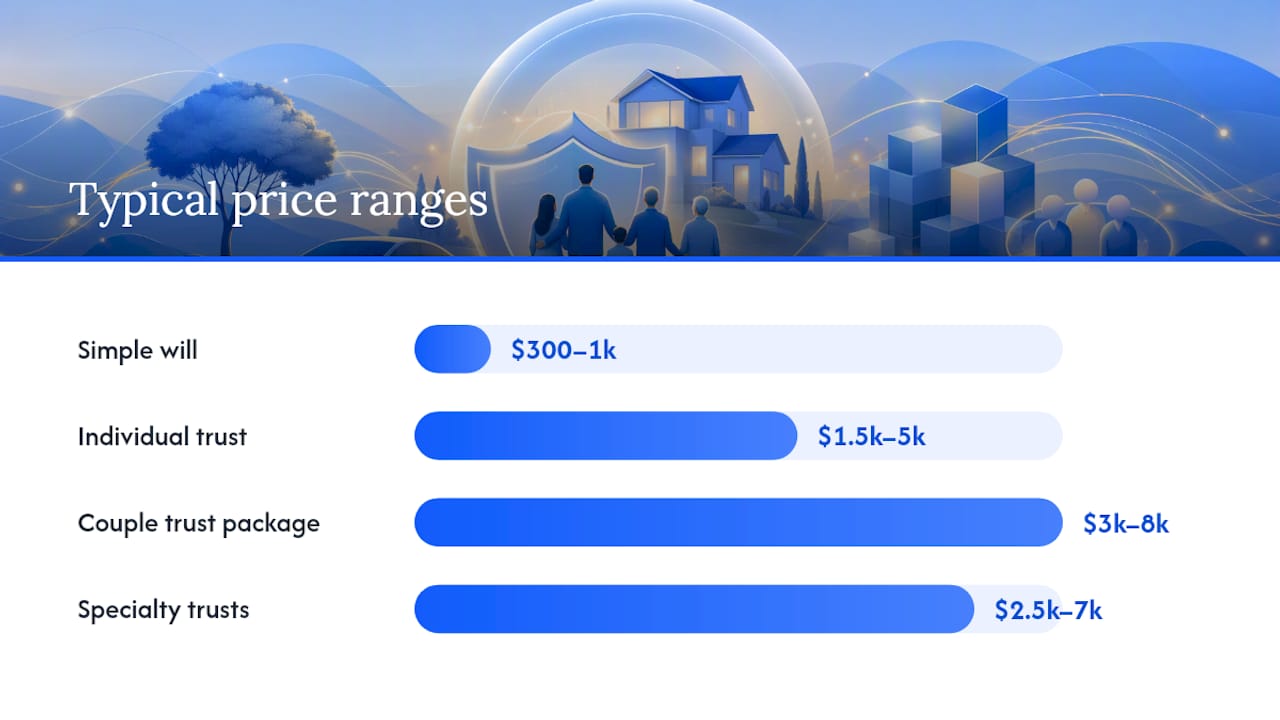
- Simple will: $300 to $1,000, with urban firms tending toward the top of that range
- Revocable living trust (individual): $1,500 to $5,000
- Couple trust packages with funding included: commonly $3,000 to $8,000
- Specialty trusts (special-needs, irrevocable life insurance trusts, charitable trusts): often $2,500 to $7,000 or more, depending on the tax and accounting complexity involved
A nationwide survey of firms found the median will package priced around $1,000, with the middle 50% falling between $750 and $1,500. Trust packages median around $2,700, with the middle range landing between $2,500 and $3,500.
Buying documents as a bundle is almost always cheaper than ordering them separately. A married couple who buys wills, trusts, and powers of attorney together typically pays less per document than either spouse would paying individually. Picture two scenarios: a single person needing just a will and healthcare directive might spend $800 total, while a couple wanting a funded trust, reciprocal wills, and financial powers of attorney could land at $5,500. Same law firm, wildly different scope.
What Actually Drives Your Attorney’s Bill Higher?
Two people can walk into the same law office and get quotes $3,000 apart, and it usually comes down to a handful of specific factors rather than the attorney simply charging more.
- Intake and strategy time. Practitioners report that client intake and legal strategy consume more attorney time than the actual drafting. A complicated family situation eats hours before a single document gets written.
- Business interests and real estate. Owning a business, rental properties, or property in multiple states adds legal complexity that a template can’t absorb.
- Blended families and special-needs planning. Second marriages, estranged children, or a beneficiary with a disability all require custom drafting that takes real thought, not boilerplate.
- Attorney experience level. A senior partner at a large firm bills differently than a solo practitioner, even for the same document set.
Here’s the number worth remembering: hourly rates swing by hundreds of dollars between markets, but flat-fee packages for standard plans barely move. Firm pricing philosophy and experience level drive cost variation more than geography does for routine wills and trusts, according to market analyses of estate planning pricing. If you want an accurate quote, come to the consultation with a rough asset list, family structure, and any business or multistate property noted ahead of time.
What Hidden Costs Come With Trust Funding and Execution?
The document price is rarely the full price. Trust funding, the process of retitling property and accounts into your trust’s name, is frequently excluded from the initial flat fee and billed separately, often per transfer or per deed.
Budget for these add-ons:
- Deed preparation and recording fees: vary by county, generally modest but real
- Mobile notary services: typically a flat callout fee if you need documents notarized outside the office
- Professional trustee fees: banks and corporate trustees often charge a percentage of trust assets with a dollar minimum, which can make small trusts disproportionately expensive to manage
- Amendments later: a simple trust amendment often runs $300 to $500, while a full restatement can cost $2,000 or more
Ask directly: “Is funding included? If not, what’s the per-transfer or per-deed cost?” An unfunded trust doesn’t protect your estate from probate no matter how well it’s drafted.
Why Does Skipping a Trust Cost More Later?
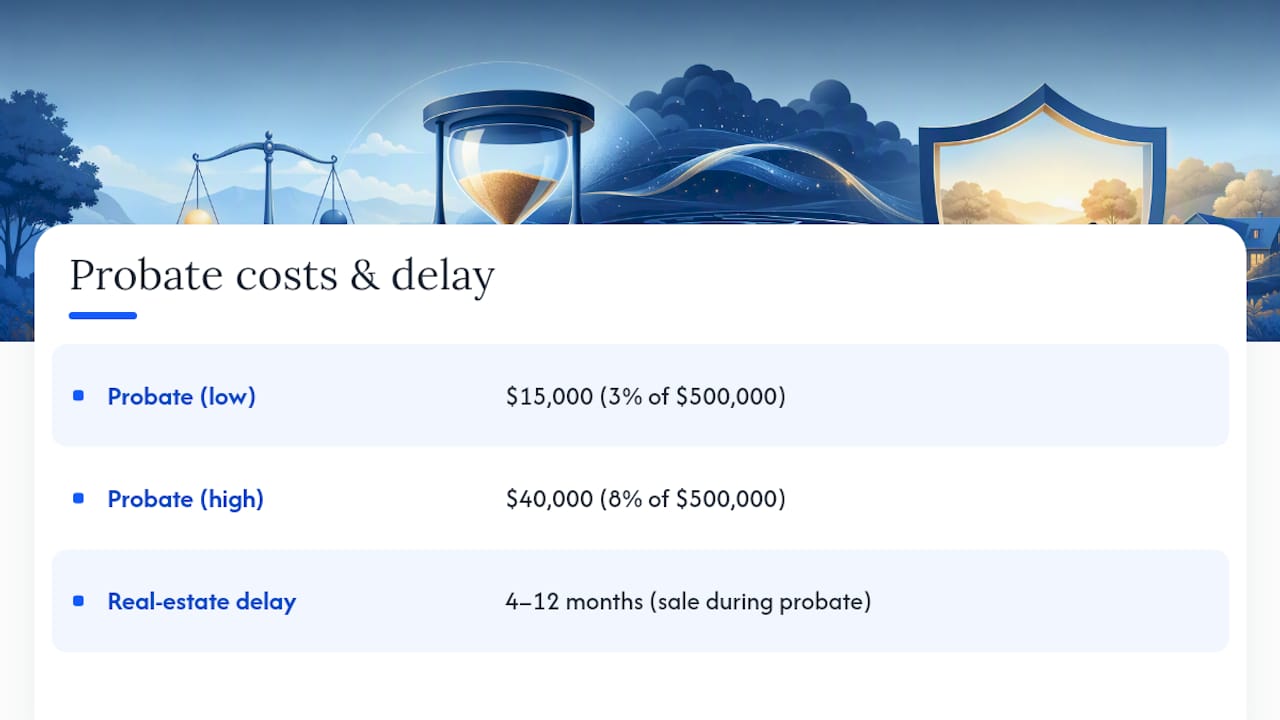
Probate typically consumes 3% to 8% of an estate’s value in fees and court costs. On a $500,000 estate, that’s $15,000 to $40,000 disappearing into administration rather than going to your heirs. Some states set statutory probate fee formulas that scale directly with estate size, so it’s worth checking your state’s statute before assuming a national average applies. When real estate is tied up in probate, selling the property can also mean a long wait; some sellers face a four to twelve month delay listing through a traditional agent while the court process runs its course. A properly funded trust, paired with correct beneficiary designations, sidesteps most of that. Federal estate tax rarely applies unless an estate exceeds the IRS exemption threshold, but state probate costs hit far more households than federal tax ever will.
How Do You Vet an Estate Planning Attorney Before Hiring One?
Price alone tells you little. Ask every attorney you’re considering these questions before comparing numbers:
- Is trust funding included, and if not, what’s the added cost?
- Who actually drafts the documents: the attorney or a paralegal?
- What’s the fee for amendments after signing?
- How many hours does a typical case like mine take?
- Can I see a sample engagement letter before committing?
Red flags worth walking away from: a quote with no written scope, reluctance to explain what funding costs, or pressure to sign the same day as the consultation.
Pro Tip: Request quotes from at least two firms and compare scope line by line, not just the bottom-line price. The cheaper quote sometimes excludes funding entirely.
Finding attorneys who actually serve your area is its own hurdle. Bestservicelocal lets you search by service type and ZIP code, then review verified business profiles before you ever pick up the phone, which makes it easier to get comparable, local estimates instead of guessing from a national average.
Why Most Cost Guides Miss the Real Number
The conventional advice on estate planning costs treats the document price as the whole story. It isn’t. Every ranking factor in this research points to the same conclusion: funding and execution costs are where budgets quietly blow up, not the drafting fee everyone quotes upfront. An attorney can hand you a beautifully drafted trust for $3,000, and if nobody retitles your house into it, that trust does nothing when you die. The document did its job. The funding didn’t get done.
What the reader should prioritize first isn’t the cheapest flat fee. It’s asking exactly what’s included in that fee and what isn’t, then pricing the gap. A $2,500 package that includes full funding often beats a $1,800 package that leaves you to retitle three properties and four accounts on your own, paying per-deed fees the whole way. State-specific probate formulas matter too. Don’t assume your state matches a national blog’s example estate. Check your own statute, get two or three real local quotes, and treat the first number you hear as a starting point, not a verdict.
— Service
Find and Compare Local Estate Planning Attorneys
Getting fee quotes shouldn’t require five phone calls and a week of voicemail tag. This platform allows you to compare estate attorneys near you by searching with your service type and ZIP code, helping you view business profiles side by side instead of piecing together information from scattered websites.

Before you request quotes, jot down a short summary: your rough asset list, whether you own a business or property in more than one state, your marital and family situation, and whether you already suspect you’ll need trust funding help. Supplying that upfront gets you a far more accurate number than a generic phone inquiry. Verified profiles on Bestservicelocal show service areas and client reviews, so you can weigh reputation alongside price rather than picking blind.
Request estimates from two or three attorneys, then compare what’s actually included, not just the bottom line. Start your search on Bestservicelocal and line up your quotes before you commit to anyone.
This article is general information, not a substitute for advice from a qualified lawyer. Consult a qualified legal professional about your own circumstances before acting on anything here.