
Duct Cleaning Cost in 2026: $300–$700 and How to Get a Fair Quote
Duct Cleaning Cost in 2026: $300–$700 and How to Get a Fair Quote
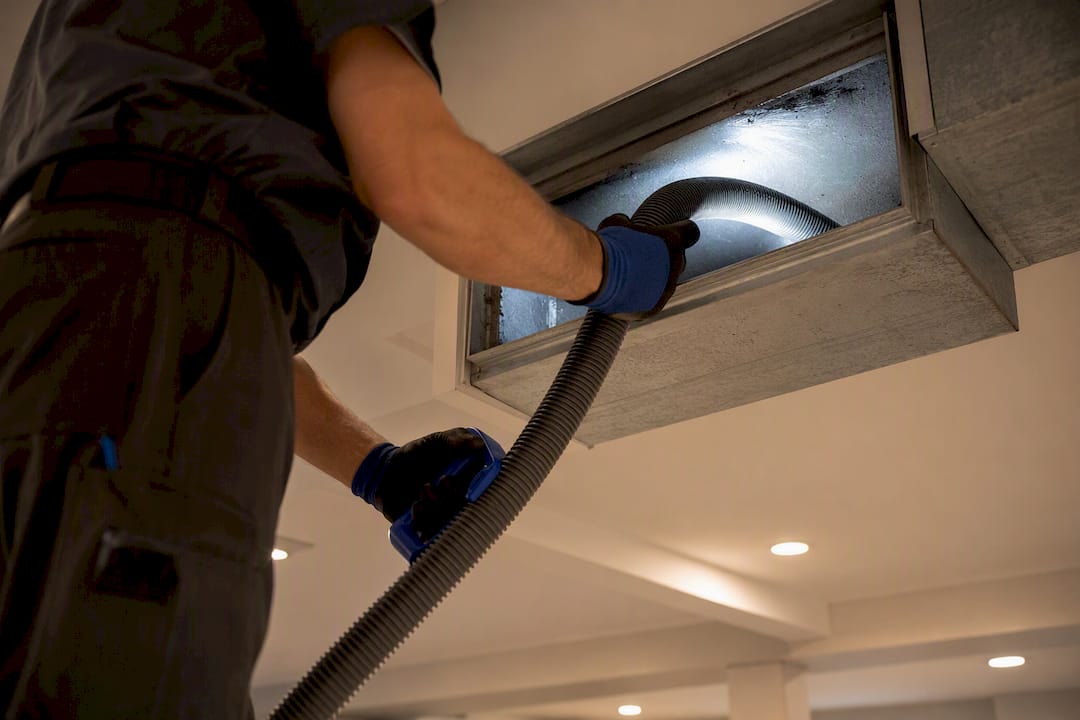
Expect to pay $300 to $700 for a standard single-family home, with most jobs landing near $400 to $500. That covers a complete, NADCA-standard cleaning of one HVAC system. The EPA doesn’t recommend routine duct cleaning; it’s advised only when there is visible mold, pest infestation, or debris heavy enough to block airflow. If your ducts look and smell fine, you can likely skip it and put that money toward something with better payback.
TL;DR:
- Duct cleaning typically costs between $300 and $700 for a single-system home, with higher prices for multiple zones or larger properties.
- Quotes vary widely depending on whether pricing is per system, per vent, hourly, or by square footage, making direct comparisons essential.
- The EPA recommends duct cleaning only when there is visible mold, pest infestation, or debris that blocks airflow, otherwise it offers little benefit.
- Additional costs can include dryer vent cleaning, antimicrobial treatments, and mold remediation, which can significantly increase the overall price.
- Always obtain a written scope and total price, ask about credentials, and compare verified local providers to avoid unnecessary upsells or low-quality services.
Table of Contents
- How Much Does Duct Cleaning Cost on Average?
- What’s the Difference Between Per-Vent, Per-System, and Hourly Pricing?
- What Makes Duct Cleaning Cost More or Less?
- Is Duct Cleaning Actually Worth the Money?
- How Do You Get an Accurate, Comparable Quote?
- Where Can You Find Vetted Duct Cleaning Pros Near You?
- What a Straight Answer on Budgeting Looks Like
- Get Local Quotes Before You Commit to a Price
- Sources
- FAQ
How Much Does Duct Cleaning Cost on Average?
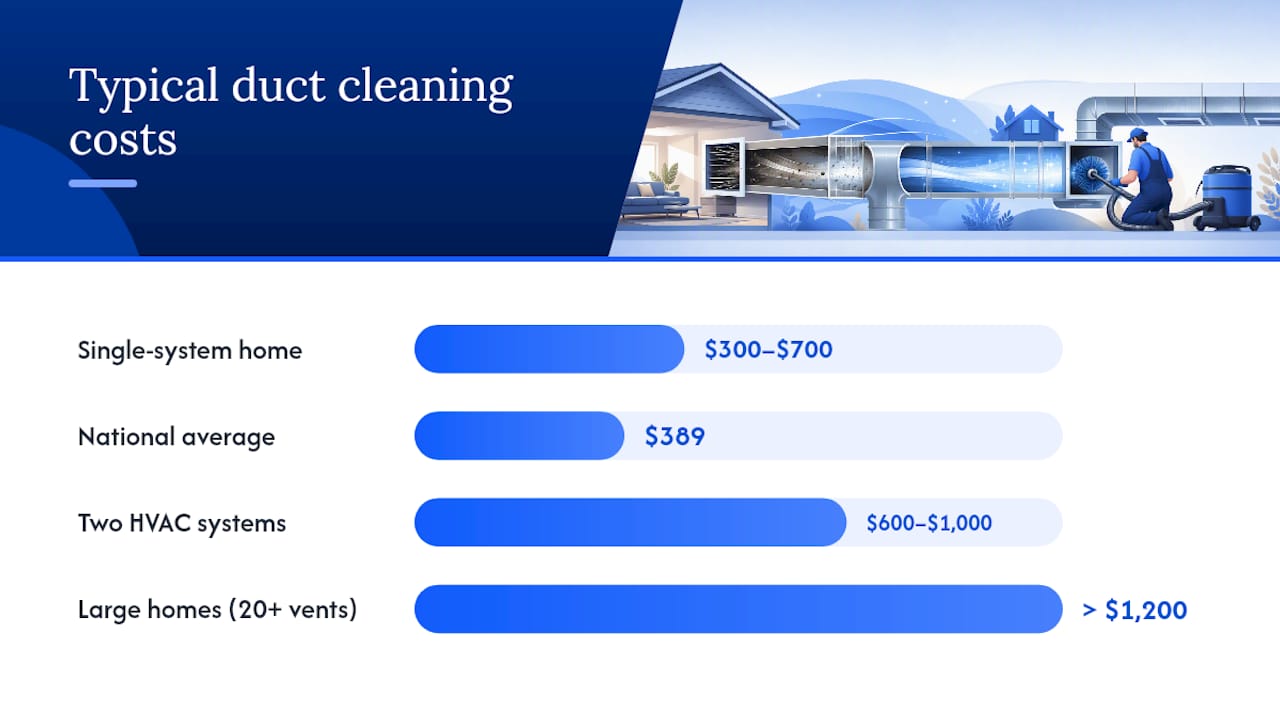
A single-system home typically runs $300 to $700 for a full cleaning, with NerdWallet pegging the national average around $389. Homes with two HVAC systems, like a lot of two-story houses with separate zones upstairs and downstairs, often land between $600 and $1,000. Larger properties or homes with more than 20 vents can push past $1,200 once every register and the air handler get serviced.
Commercial jobs work differently. Property managers usually see pricing by square footage or by the hour rather than a flat per-home rate, since duct systems in office buildings or apartment complexes vary so much in complexity. Hourly technician rates commonly fall between $90 and $150, and larger commercial contracts are often bid per square foot after a walkthrough, according to HousecallPro’s pricing data.
Here’s how the common pricing anchors stack up:
| Pricing Unit | Typical Range | Best For |
|---|---|---|
| Per system (whole-home) | $400–$500 | Standard single-family homes |
| Per vent | $40 per vent | Homes with unusual vent counts |
| Per square foot | Varies by calculator estimate | Commercial or large properties |
| Hourly | $90–$150 per hour | Post-construction or unknown-access jobs |
Rising labor, fuel, and insurance costs are nudging these averages upward year over year, so a quote that felt high in 2023 may be closer to standard now.
What’s the Difference Between Per-Vent, Per-System, and Hourly Pricing?
Contractors quote duct cleaning four main ways, and each one hides different assumptions about your home:
- Per-system pricing covers one complete HVAC system, ducts, registers, air handler, and coil, for a typical flat rate. It’s the most common model for standard residential jobs.
- Per-vent pricing charges for each supply and return vent, which can vary significantly between homes.
- Hourly pricing is used when the scope is unclear, like post-construction cleanups or homes with unusual duct access.
- Per-square-foot pricing is mostly a commercial-property tool, used for buildings with irregular duct layouts.
Here’s why the model matters: a 1,800-square-foot home with 18 vents might cost $450 flat under per-system pricing, but the same home under per-vent pricing at $40 a vent comes to $720. Neither number is wrong. They’re just measuring the job differently, which is exactly why comparing three quotes side by side only works if you first convert them to the same unit.
What Makes Duct Cleaning Cost More or Less?
Scope drives price more than anything else. A technician pricing your job is really answering four questions: how many vents, how many systems, how hard is the ductwork to reach, and what’s it made of.
-
Vent and system count: more registers and multiple HVAC zones mean more labor hours, which is the single biggest swing factor in your quote.
-
Duct material: flexible ductwork is faster to clean than rigid metal trunk lines, so metal systems often carry a modest upcharge.
-
Access difficulty: crawl spaces, tight attics, or finished basements that hide ductwork behind drywall add time and sometimes a separate access fee.
-
Dryer vent cleaning: a common add-on priced separately, usually $40 to $150 depending on vent length and whether the vent is easily reachable.
-
Antimicrobial or sanitizing treatment: often $100 to $250 added to the base cleaning, though this is one of the more frequently upsold extras worth questioning.
-
Mold remediation: a different category of work entirely. Moderate cases run $1,200 to $3,800, and severe infestations can hit $10,000, because this involves containment and lab-verified removal, not a standard cleaning crew.
-
Blower and coil cleaning: sometimes bundled into per-system pricing, sometimes billed as a $75 to $200 add-on.
-
Regional cost differences: labor rates, insurance requirements, and equipment costs vary by market, so a quote in a high-cost metro area will naturally run above the national average.
If a quote comes in dramatically below $300 for a full-home job, ask what’s excluded. Cheap quotes usually mean a smaller scope, not a better deal.
Is Duct Cleaning Actually Worth the Money?
The EPA’s own guidance is blunt: duct cleaning is not something to do on a schedule. It’s warranted when you see visible mold growth inside the ducts, evidence of rodents or insects, or debris buildup thick enough to restrict airflow. Outside those triggers, there’s little proof that cleaning ducts in an otherwise normal home improves indoor air quality or lowers energy bills.
If your real goal is lower utility bills or better comfort, duct cleaning usually isn’t the fix. Typical homes lose 20 to 30 percent of conditioned air through leaky ductwork, and sealing those leaks tends to deliver a better return than a cleaning service ever will, according to Home Energy Decisions. Consider these alternatives before booking a cleaning:
- Duct sealing can help with energy loss and uneven room temperatures.
- Coil and blower cleaning may improve airflow if ducts appear clean.
- Duct replacement might be needed for damaged or very old ductwork rather than just dusty ducts.
If you’re weighing a full HVAC upgrade instead of a repair, our guide on AC installation costs breaks down what that investment looks like.
How Do You Get an Accurate, Comparable Quote?
Getting three apples-to-apples quotes takes more than three phone calls. Work through this checklist before you sign anything:
- Request a written scope listing every system, vent, and the air handler covered, plus what’s explicitly excluded.
- Ask for before-and-after camera footage. Reputable contractors following NADCA standards document duct interiors before and after the job.
- Ask about mold testing. If anyone suspects mold, insist on third-party lab verification before agreeing to any chemical treatment.
- Get an all-in total price in writing, not a per-vent estimate you have to calculate yourself.
- Ask what credentials the technician holds and whether the company is NADCA-certified.
Watch for red flags: a sub-$150 “whole-house special” almost always covers only the main trunk line and turns into an upsell once the crew arrives. Same goes for anyone pushing chemical fogging on the spot without lab testing, or refusing to show camera documentation of your actual ducts.
Pro Tip: Never accept a verbal quote. Get the scope, the exclusions, and the total price in writing before the crew shows up. The written quote is your only leverage if the final bill doesn’t match what you agreed to.
If you’re also managing dust from a bigger renovation, a low-dust door replacement process can help keep debris from re-entering freshly cleaned ductwork.
Where Can You Find Vetted Duct Cleaning Pros Near You?
Comparing quotes gets a lot easier when you’re not chasing down five separate contractors by phone. Bestservicelocal lets you search by service type and ZIP code, then pull up verified business profiles side by side instead of guessing which company actually serves your neighborhood.
- Search “duct cleaning” plus your ZIP code to surface providers who actually operate in your area.
- Use verified profiles to check credentials and service details before you call.
- Compare multiple providers side by side using the checklist above, scope, camera documentation, and all-in pricing, so every quote you collect measures the same thing.
For broader tips on vetting any local contractor, the Bestservicelocal blog covers what to look for beyond price alone.
What a Straight Answer on Budgeting Looks Like
Refuse any quote that won’t put scope and price in writing. Plan on $300 to $700 for a standard single-system home, and keep a little extra set aside in case mold testing or a dryer vent add-on comes up once the technician actually looks at your ductwork.
— Service
Get Local Quotes Before You Commit to a Price
Finding a provider who actually services your ZIP code can save time and effort by avoiding calls to companies that do not cover your neighborhood.

You already know what a fair quote should include: written scope, camera documentation, mold testing when warranted, and an all-in price with no surprise add-ons. You can pull up verified local provider profiles and compare them side by side against that exact checklist, instead of relying on whoever answers the phone first. Search by service and ZIP code to find duct cleaning pros operating in your area right now, and request written quotes from a few before you commit to anyone.
Sources
- Should you have the air ducts in your home cleaned? | US EPA
- Air Duct Cleaning Cost: Is It Worth It? | NerdWallet
- Duct Cleaning Price Guide 2026: Average Rates & How to Charge | HousecallPro
- Cost to Clean Ducts | Homewyse
- Air Duct Cleaning Cost in 2026: Real Prices and When to Skip It | Home Energy Decisions
FAQ
Is It Worth Paying for Air Duct Cleaning?
Only if you have visible mold, a pest infestation, or heavy debris blocking airflow. The EPA doesn’t recommend cleaning on a routine basis for homes without those specific problems.
What Are the Signs My Ducts Need Cleaning?
Look for visible mold growth inside vents or the air handler, signs of rodents or insects, or thick dust and debris visibly restricting airflow when the system runs. Musty odors when the HVAC kicks on can also point to mold.
What Are the Drawbacks of Duct Cleaning?
Improper cleaning can dislodge dust and debris into your living space rather than removing it, and low-cost “specials” often cover only the main trunk line while pushing expensive add-ons once technicians arrive. Cleaning also rarely improves energy bills the way duct sealing does.
How Much Does Professional Duct Cleaning Typically Cost?
National guides show typical residential costs between $300 and $700 for a standard single-system home, with averages near $389 to $475 depending on the source and region. Pricing on the higher end usually reflects multi-system homes or added services like sanitizing.
What Should Be Included in a Standard Duct Cleaning Service?
A complete NADCA-standard job covers supply and return ducts, registers, grilles, the air handler, blower, coil, and drain pan, with before-and-after camera documentation. Premium services typically add antimicrobial treatment, dryer vent cleaning, or mold testing at extra cost.