
How to Choose a Plumber: Checks, Questions and Quotes
How to Choose a Plumber: Checks, Questions and Quotes

Choose a plumber in four steps. Verify the license and insurance with your state board. Check that the plumber actually serves your ZIP code. Get written quotes from at least three companies. Ask a few direct questions before anyone touches a pipe. Do it in that order and you filter out most of the problems before price even comes up.
This guide walks through each step with the checks state regulators recommend, a way to read reviews without being fooled by star ratings, the questions worth asking, and what to do when the pipe has already burst.
TL;DR
- Look up the plumber’s license and insurance on your state’s licensing site before you agree to anything. Most states require plumbers to be licensed, and the board’s search is free.
- Get at least three written quotes that list the work, the materials and how the job is priced (hourly or flat).
- Read reviews for patterns: how the company handled problems, not just the star average.
- Ask who will do the work, whether a permit is needed, what the warranty covers and how payment is scheduled.
- In an emergency, shut off the water first, then verify the license by phone or online before you approve the dispatch fee.
Table of Contents
- Start with the license, not the ad
- Make sure the plumber serves your area
- Read reviews for patterns, not stars
- Compare quotes on the same terms
- Questions to ask before you agree
- If it is an emergency
- Our perspective on choosing a plumber
- Find local plumbers by ZIP code
- A quick checklist to take to the phone
- FAQ
- Sources
Start with the license, not the ad
A good ad is not proof of good work. The Federal Trade Commission’s contractor hiring guide says to find out for yourself: ask neighbors and co-workers, check online ratings sites you trust, get written estimates from several firms and remember that the lowest bidder may not be the best choice.
Licensing is the first filter because it is the one you can check objectively. Rules differ by state, so start at your state’s plumbing board or labor department. A few examples show what these agencies tell consumers:
- Texas. The Texas State Board of Plumbing Examiners lets you search licensed plumbers by city or ZIP code, see the license type and status, and check disciplinary history. Its consumer information page advises getting the Responsible Master Plumber’s license number (it begins with an M), verifying it and the Certificate of Insurance on file, and checking with your city’s plumbing inspection department for complaints and permit requirements.
- Minnesota. The state labor department says every individual plumber must be licensed or registered, and a business that contracts with consumers for plumbing needs a plumbing contractor license. Licensed contractors carry a surety bond and liability insurance.
- Washington. The Department of Labor & Industries recommends verifying the contractor’s license, bonding, liability insurance and any outstanding infractions on its verification page before you hire.
- Alabama. The state plumbers and gas fitters board suggests confirming insurance for worker’s compensation, property damage and personal liability, and checking complaint history with the Better Business Bureau, the Attorney General’s office and regulatory boards.
If your state is not listed, search for “[your state] plumbing license lookup.” Use the official government result, not a directory that repackages the data.
What to write down from the lookup
Keep a short note for each company you consider:
- The license number and the name it is issued under (the business or the master plumber).
- The license status: active, expired or suspended.
- Any disciplinary history.
- Whether the insurance certificate is on file or the company can send you one.
The license number should also appear on the written estimate and the invoice. In Texas, the board says those documents should carry the master plumber’s number. If a company will not put its number on paper, move on to the next one.
For a wider checklist that applies to any trade, see our guide to contractor background checks.
Make sure the plumber serves your area
A licensed plumber two counties away is not much help on a Saturday morning. Before you compare anything else, confirm the company works in your ZIP code and can give you a realistic arrival window. Travel time often shows up as a trip charge on the bill, so ask about it up front.
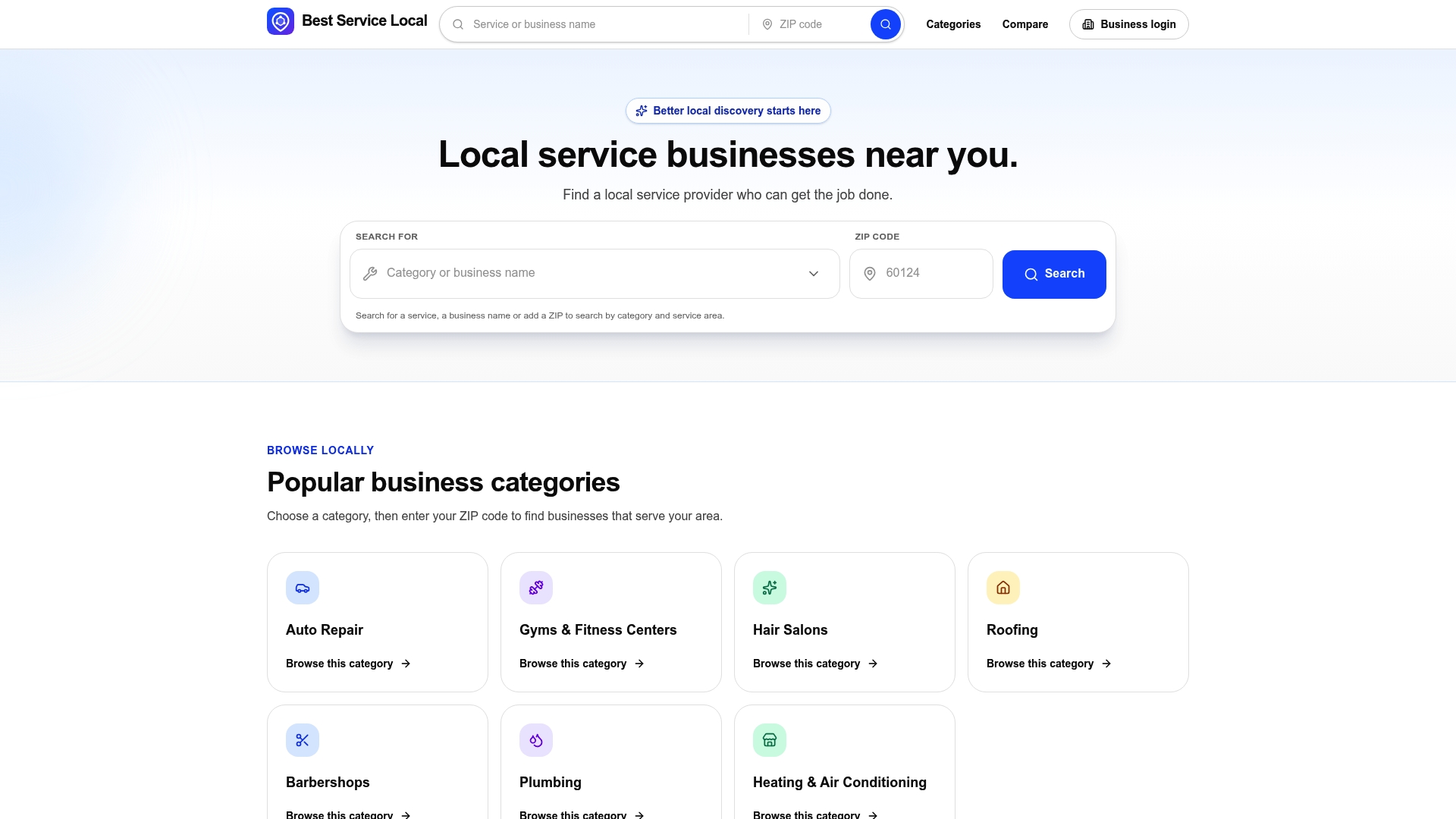
This is the problem a ZIP code search is built for. On Best Service Local you search by service type and ZIP code, so the businesses you see are the ones that say they operate where you live. You can then open each profile and compare them side by side before you contact anyone.
Read reviews for patterns, not stars
Reviews are useful when you read them the way an inspector reads a report. A 4.8 average built on twelve reviews tells you less than a 4.5 built on three hundred. Try this routine on each company on your shortlist:
- Sort by newest. Ownership, staff and quality change. Last month matters more than three years ago.
- Read the middle ratings. Three-star reviews usually describe what actually happened, including what went right.
- Look for the same detail repeated. Showing up on time, cleaning up, sticking to the quote: praise that repeats across many reviews is credible. So are repeated complaints about surprise charges or callbacks that never happened.
- Check how the company replies. A calm, specific reply to a bad review says a lot about how it will treat you if something goes wrong.
- Cross-check on two or three sites. The FTC advises checking a contractor’s reputation on online rating sites you trust, and the Alabama board points to the Better Business Bureau and the Attorney General’s office for complaint history.
Then ask for references. Washington’s labor department recommends collecting three references you can call and, where possible, visit. Ask each reference whether the final price matched the quote, whether the plumber showed up when promised, and whether anything needed fixing afterward.
Judging experience
Years in business matter less than years doing your kind of job. A plumber who spends most days on water heater swaps is a different hire from one who specializes in sewer line repair or remodel rough-in. Ask how often the company does the exact work you need, and whether the person who comes to your house is the one who does it.
Compare quotes on the same terms
The Texas board states that it does not regulate what plumbers charge, so prices vary widely from one company to the next. It recommends getting several price estimates and having all warranties and cost estimates in writing. Our step-by-step piece on getting multiple quotes for local services shows how to keep them comparable.
A useful written quote includes:
- The specific tasks the plumber will perform
- Parts and materials, with brands or grades where it matters (fixtures, water heater model)
- Labor, and whether it is hourly or a fixed price
- Trip, diagnostic or after-hours fees
- Permit costs, if a permit is required
- The warranty on parts and on labor
- The license number
Hourly or flat rate
Ask every company how it prices the job before you choose on price. The Alabama board makes the same point: find out whether the contractor charges by the hour or at a flat rate.
Typical US models, according to one 2026 pricing breakdown from a plumbing company, are:
| Pricing model | Typical figure reported | How it works |
|---|---|---|
| Free quote, hourly | $85–$135 per hour plus parts | You pay for time on the job |
| Diagnostic fee, flat rate | $49–$150, credited to the job | A set price after the diagnosis |
| Membership plan | $15–$30 per month | Aimed at older homes with frequent calls |
Local figures differ. A Michigan company’s 2026 cost guide puts hourly rates at roughly $75 to $150 depending on experience, company size and job complexity, with emergency or after-hours work typically carrying a surcharge. Treat any single number as a starting point and use quotes from your own ZIP code as the real benchmark. For a fuller breakdown of what to budget, read our plumber cost guide.
To compare an hourly quote with a flat one, one Dallas-Fort Worth plumbing company suggests asking the hourly company for its estimated job duration and adding 20 to 30 percent for realistic variance. That gives you a rough like-for-like figure.
Payment terms
The Alabama board advises caution about paying in cash or paying for work or materials before the job begins. Pay by card or check so you have a record, and tie larger payments to finished stages of work.
Questions to ask before you agree
These are the questions that separate a prepared professional from a rushed one. Put the answers in writing, even if it is just a confirming email.
- What will this cost in total? Ask for a written estimate that names the tasks, not a number over the phone.
- Who will do the work? The licensed master plumber, a journeyman, or an apprentice? Many states allow supervised helpers, but you should know who is in your house and who is responsible.
- What is your license number, and can you send proof of insurance? You will verify both yourself.
- Does this job need a permit, and who pulls it? Your city’s plumbing inspection department can confirm the rules.
- Is the price fixed or hourly? And what would cause it to change?
- What does the warranty cover, and for how long? Parts and labor are often covered separately.
- What happens if you find something unexpected? A good plumber stops, explains and gets your approval before adding to the bill.
- When can you start and how long will it take? Ask for a window, not just a day.
Pay attention to how they answer as much as to what they say. Clear, patient answers to routine questions are a good sign. Vague replies or pressure to decide on the spot are a reason to get another quote.
If it is an emergency
Not every plumbing problem can wait for three quotes. A San Diego plumbing company lists signs that cannot wait, including a burst pipe, sewage backup, no water at all, a leaking water heater tank and an overflowing toilet you cannot stop. It also notes that mold can begin in wet drywall within 24 to 48 hours, which is why speed matters.

If you smell gas, leave the house and call your gas utility or 911 from outside. Do not call a plumber from inside.
For water emergencies:
- Shut off the main water valve, or the fixture’s shutoff if it is a single toilet or sink.
- Move belongings away from the water and photograph the damage for your records.
- Call two or three licensed plumbers that serve your ZIP code and ask for the dispatch fee and the hourly rate before approving the visit.
- Verify the license while you wait. It takes a couple of minutes on your state board’s site.
The Texas board notes that emergencies may require immediate action, even though it recommends bids for planned projects. It also says plumbers must portray their prices and services accurately. After-hours dispatch can cost more: the San Diego guide cites $150 to $300 plus the repair in that market, so ask what applies where you live. A slow drain is rarely an emergency, and our drain cleaning cost guide explains what to expect when it is a routine call.
Our perspective on choosing a plumber
Most bad plumbing experiences start the same way: someone in a hurry picks the first name on a search page and learns about the license, the insurance and the fee afterward. We built Best Service Local to reverse that order.
When you search by service type and ZIP code, you start with businesses that operate in your area, so travel time and coverage are not a surprise. Verified business details on each profile give you the facts in one place, and the comparison tools let you line up providers on what they offer before you pick up the phone.
Our advice is simple. Shortlist three providers, compare them side by side, confirm each license with your state board, and ask for written quotes. You will spend half an hour and avoid most of the pain that comes from rushed hiring.
Service
Find local plumbers by ZIP code
Ready to build your shortlist? Enter the service you need and your ZIP code on Best Service Local to see providers that cover your area, open their profiles and compare them side by side. Browsing and contacting providers costs you nothing.
Once you have two or three names, run each through your state’s license lookup and request written quotes using the checklist above.
A quick checklist to take to the phone
| Check | What good looks like |
|---|---|
| License | Active on your state board’s site, number on the estimate |
| Insurance | Certificate on file or sent to you on request |
| Service area | Works in your ZIP code, clear arrival window |
| Reviews | Recent, detailed, consistent, with professional replies to complaints |
| References | Three you can actually call |
| Quote | Written, itemized, states hourly or flat |
| Permit | The plumber says whether one is needed and who handles it |
| Payment | Card or check, larger payments tied to progress |
FAQ
How do I choose a good plumber?
Verify the license and insurance first, then confirm the company serves your ZIP code. Get at least three written quotes, read recent reviews for patterns and call a few references. Pick the one who answers your questions clearly and puts everything in writing.
How do I find the best local plumbers near me?
Search by service type and ZIP code so you only see providers that operate in your area. Then compare their profiles side by side and check each license on your state board’s website. Neighbors’ recommendations are a useful extra signal.
How much should I pay for a plumber?
It depends on your market, the job and the pricing model. Published 2026 company guides report hourly rates from about $75 to $150 and diagnostic fees of $49 to $150. Quotes from your own area are the best guide. Our plumber cost guide has more detail.
Should I pay a plumber upfront?
Be cautious about it. The Alabama plumbing board advises care with paying in cash or paying for work or materials before the job begins. Ask for a written payment schedule and pay by card or check.
Sources
- Federal Trade Commission: Hiring a Contractor
- Texas State Board of Plumbing Examiners: News
- Texas State Board of Plumbing Examiners: Consumer Information
- Minnesota Department of Labor and Industry: Choosing a plumber
- Washington State L&I: Hiring a Plumbing Contractor
- Alabama Plumbers and Gas Fitters Examining Board: Hiring a Plumbing Contractor
- Repipe Solutions: Free quote vs flat-rate plumber cost
- FK Plumbing: Plumbing service costs in Michigan
- Buckner Blvd Plumbing: DFW plumbing costs 2026
- Plumbing Pro SD: Signs you need an emergency plumber