
Homeowners: Budget $3–$8/sq ft for Carpet and Why the Pad Matters
Homeowners: Budget $3–$8/sq ft for Carpet and Why the Pad Matters
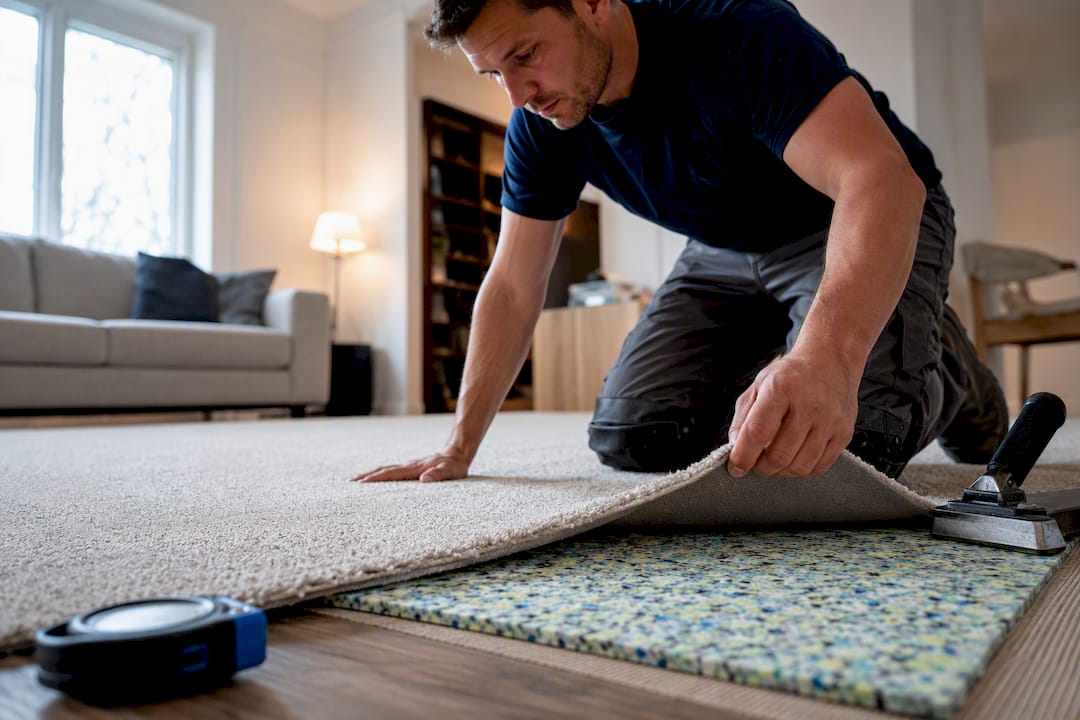
Most homeowners land somewhere between $3 and $8 per square foot installed, with a typical combined average around $5.60 once carpet, padding, and labor are all in the quote. A standard 12x12 bedroom usually runs $500 to $1,600 installed, while a 400 square foot living room lands closer to $1,800 to $4,400. The swing between those numbers comes down to three things: fiber type, pad quality, and labor rates in your market.
TL;DR:
- Regional labor rates can increase carpet installation costs by 10 to 25 percent, especially in large metro areas, due to higher wages and minimum charges.
- Most carpet quotes include separate costs for material, padding, and labor, with padding often being the largest expense after the carpet itself.
- Small rooms or staircases can carry a premium per square foot because setup time and minimum charges do not scale down with size.
- DIY demolition and disposal can save $1 to $2 per square foot, but proper installation requires professional skill to avoid costly ripples or seam issues.
- Expect installation times of one to three weeks, depending on ordering speed, season, and scheduling, with actual room installs taking two to four hours each.
Table of Contents
- What Drives Carpet Installation Cost: Budget, Mid-Range, and Premium Tiers
- Breaking Down a Carpet Quote Line by Line
- Room-by-Room Cost Examples to Anchor Your Budget
- Where DIY Actually Saves Money on Carpet Installation
- How to Get Quotes You Can Actually Compare
- How Long Carpet Installation Actually Takes
- Hidden Fees and Extra Costs That Can Change Your Budget
- Why We Built a Way to Compare Real Local Quotes
- Find Verified Carpet Installers Near You
- Sources
What Drives Carpet Installation Cost: Budget, Mid-Range, and Premium Tiers
The per-square-foot number you see quoted almost always maps to a fiber and pad combination, and knowing the tiers helps you sanity-check whether a bid is realistic before you sign anything.
- Budget tier ($2.50 to $4.50 per sq ft installed): Polyester or olefin carpet with basic foam padding. Fine for closets, rentals, or rooms you plan to replace again within five years.
- Mid-range tier ($4.50 to $7 per sq ft installed): Nylon or triexta fiber with mid-density padding. This is where most homeowners land, and it lines up with the $5.60 average reported across recent installs.
- Premium tier ($7 to $10+ per sq ft installed): Wool or high-end nylon with dense, high-rebound padding. Common in primary bedrooms or homes staying put for a decade or more.
Homewyse’s cost calculator estimates typical installed carpet costs in a mid-range band per square foot, consistent with usual market prices. Two things push that number higher regardless of tier: regional labor rates, which the Bureau of Labor Statistics shows running 10 to 25 percent above the national average in large metro areas, and installer minimums. A single small room often gets billed at a flat minimum charge that inflates the effective per-square-foot price well above what a whole-house job would cost.
Breaking Down a Carpet Quote Line by Line
A carpet installation quote is really five or six separate charges stacked together, and knowing what each one should cost helps you spot a bid that’s missing something.
- Carpet material: $1 to $5+ per sq ft, depending on fiber and pile
- Padding: roughly $0.30 to $1.80 per sq ft depending on density, per Project Cost Pro’s calculator
- Labor: often the smallest slice, running $0.50 to $2.50 per sq ft depending on the source and local wage rates, according to D and G Flooring’s breakdown
- Demo and disposal of old flooring: $1 to $2 per sq ft, more if it’s glued down
- Seam charges: often built into labor, but wide rooms needing multiple carpet widths can add a flat fee per seam
- Stairs: billed per step, typically $14 to $50 depending on the source and carpet grade
- Subfloor repair: conditional, quoted separately once the old flooring comes up and any rot or unevenness is visible
Pro Tip: Ask your installer to itemize padding and labor separately on the quote. A bid that lumps “carpet and install” into one number is hiding which part you’re actually paying for, and that’s exactly where cheap pad substitutions happen.
Labor tends to surprise people by being the smaller cost, not the bigger one. Padding and material usually make up the larger share of the total, which is worth remembering when a contractor tries to save you money by cutting the pad instead of adjusting labor.
Room-by-Room Cost Examples to Anchor Your Budget
Concrete numbers beat abstract per-square-foot math when you’re trying to figure out what your actual project will cost.
- 12x12 bedroom (144 sq ft): $500 to $1,600 installed, per Handy Hearth’s room data
- Living room, 200 to 300 sq ft: roughly $900 to $2,700, scaling with size and fiber grade
- Living room, closer to 400 sq ft: $1,800 to $4,400 installed
- Staircase (13 to 16 steps): add the per-step surcharge on top of the base carpet cost, typically $200 to $700 for a full flight
- Whole upstairs (three bedrooms plus a hallway): $3,500 to $9,000 depending on tier and square footage
Small rooms carry a real premium, which is why a detailed home valuation can help prioritize your renovation budget effectively. Setup time, waste cutting, and minimum job charges don’t scale down with square footage, so a 100 square foot room can cost nearly as much per foot as a 300 square foot one. To scale these examples to your own space, measure length times width in feet, divide by nine for square yards if your quote is priced that way, then multiply by the installed per-square-foot range for your chosen tier.
Where DIY Actually Saves Money on Carpet Installation
Demo and haul-away are the two jobs worth doing yourself. Ripping out old carpet and hauling it to the curb takes an afternoon, minimal skill, and can shave $1 to $2 per square foot off your total, since that’s roughly what installers charge for tear-out and disposal.
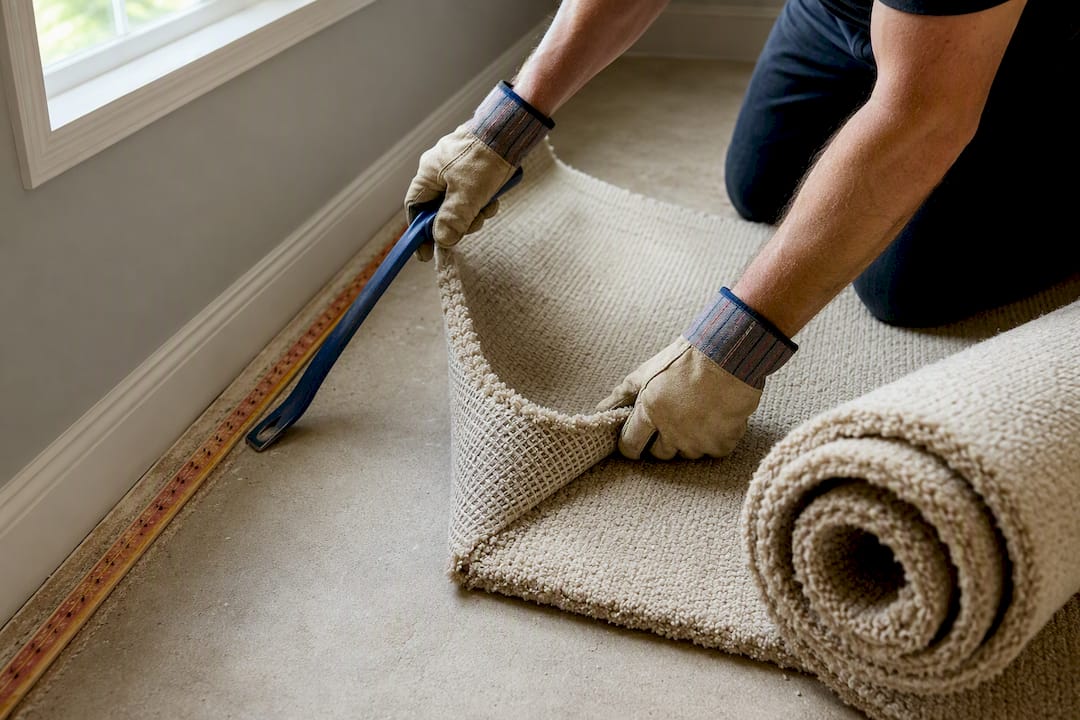
DIY installation itself is a different story. Stretching carpet properly requires a power stretcher and knee kicker, and a botched seam or loose stretch shows up as rippling within months. The labor savings from DIY installation rarely justify the risk of a redo. On padding, spend the extra $0.50 to $1 per square foot for a denser pad rather than upgrading to a pricier carpet fiber. A better pad extends carpet life and improves comfort more than most fiber upgrades do for everyday wear, and cheap pad can void some manufacturer warranties outright.
Pro Tip: Late fall and January tend to be slower months for flooring contractors, and some offer discounted rates just to keep crews booked. Ask about off-season pricing before you commit to a spring installation date.
How to Get Quotes You Can Actually Compare
- Measure every room before calling anyone. Have total square footage, stair count, doorway transitions, and current floor type (carpet, tile, hardwood) written down.
- Ask what pad is included. Get the density and thickness spec in writing, not just “standard padding.”
- Ask if demo and disposal are included. Some quotes assume you’re removing the old carpet yourself.
- Ask about seam placement and charges. Wide rooms need multiple carpet widths, and seam count affects both cost and durability.
- Confirm insurance and licensing. A contractor background check before hiring protects you if something goes wrong mid-job.
- Ask about warranty coverage. Installation warranties and carpet warranties are separate, and installers should explain both.
Watch for red flags: a quote that just says “carpet and install, $X” with no line items, a pad spec that’s unusually vague, or a bid that comes in far below every other quote you’ve collected. Checking a company’s complaint history through a source like the Better Business Bureau can reveal patterns of skipped steps or warranty disputes before you ever sign a contract.
How Long Carpet Installation Actually Takes
From the first measurement visit to walking on new carpet, most residential jobs take one to three weeks total. The measurement and quoting phase itself usually takes a few days to a week if you’re collecting bids from multiple installers, since scheduling an in-home visit and waiting for a written estimate takes time.
Once you accept a quote, carpet often needs to be special-ordered unless the installer stocks your chosen style, which adds another one to two weeks for delivery. The installation day itself is fast: a single room typically takes two to four hours, while a whole-house job with furniture moving, old carpet removal, and multiple rooms can run one to two full days. Stairs add time because each step requires individual cutting and tucking.
Weather and season affect scheduling more than most people expect. Installers book up fast in spring and early summer when moving season overlaps with home renovation season, so a job that would take one week to schedule in February might mean a three-week wait in May. If your project is tied to a move-in date or a home sale, book your installer as soon as you have a signed quote rather than waiting until the week before you need it done.
Hidden Fees and Extra Costs That Can Change Your Budget
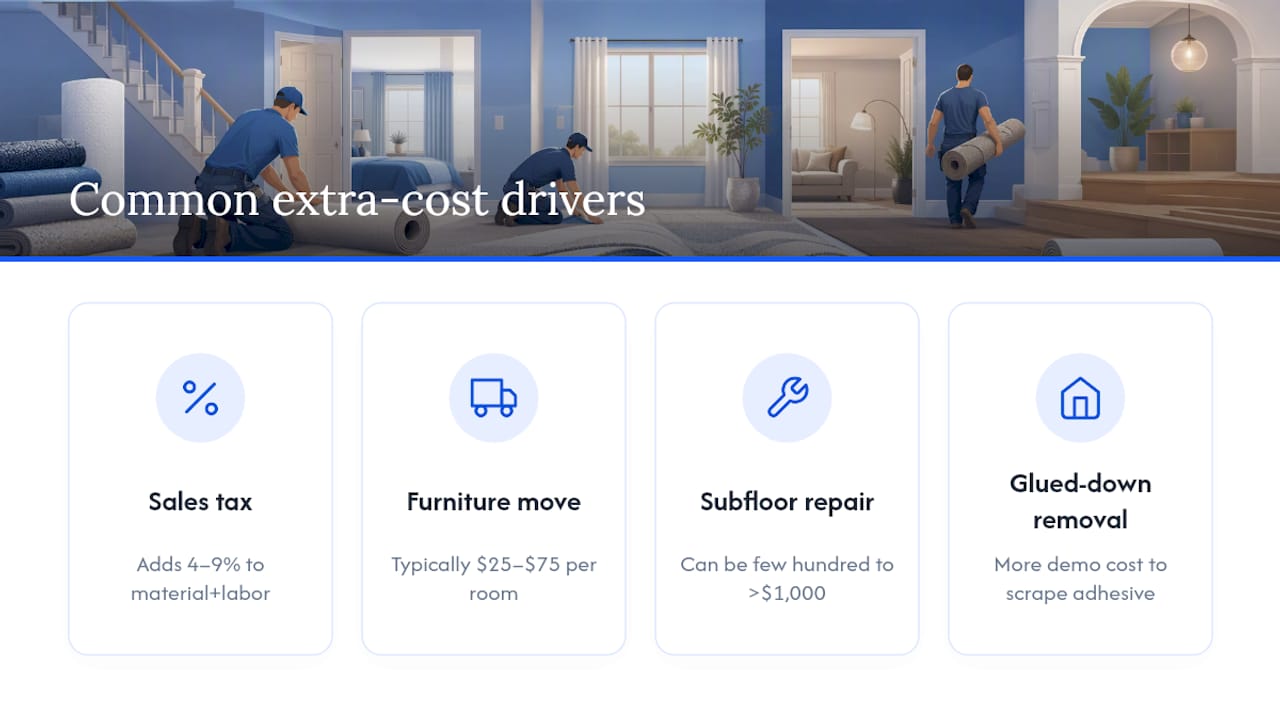
Sales tax on both material and labor applies in most states and can add 4 to 9 percent to your total depending on where you live, so ask whether quoted prices are pre-tax or already include it. Carpet installation itself rarely requires a permit, but if the project includes subfloor replacement or structural repair, some municipalities do require one, and that cost isn’t always volunteered upfront.
Furniture moving is a common add-on fee, often $25 to $75 per room if you want the crew to handle it instead of clearing rooms yourself. Disposal fees for old carpet and pad sometimes get billed separately from demo labor, particularly if your area charges landfill tipping fees. Glued-down carpet removal, common in older homes or over concrete slabs, costs more to demo than carpet installed over standard tack strip because it requires scraping adhesive residue before new flooring can go down.
Subfloor repair is the biggest wildcard. You won’t know if there’s water damage, rot, or an uneven surface until the old carpet comes up, and that discovery can add anywhere from a few hundred to over a thousand dollars depending on the extent of the damage. Ask your installer upfront how they handle surprise subfloor issues and whether they’ll pause for your approval before doing repair work you didn’t budget for.
Why We Built a Way to Compare Real Local Quotes
Every number in this guide is a range, and ranges only get useful once you match them against real bids in your ZIP code. That’s the gap Bestservicelocal was built to close. Search by service type and location, and you’ll pull up verified installer profiles you can compare side by side instead of guessing whether one quote is fair based on a national average.
We’ve also seen enough vague “carpet and install” quotes to know what separates a reliable installer from a risky one, which is why our contractor background check guidance exists as a companion resource. If you’re budgeting for more than flooring this year, our AC installation cost guide uses the same line-item approach to help you plan bigger home projects without surprises.
— Service
Find Verified Carpet Installers Near You
There are services that let you search by service type and ZIP code, pull up verified business profiles, and compare installers side by side before you ever pick up the phone.

Before hiring anyone, confirm a few things directly with the installer:
- Ask for proof of insurance and licensing
- Get the pad density and thickness spec in writing
- Request references or check review history on their profile
- Confirm whether demo, disposal, and seam charges are included in the number they quote
Head to Bestservicelocal to search local installers by ZIP code and request quotes you can actually compare apples to apples.
Sources
- Carpet Installation Cost in 2026 (By Room + Fiber)
- Cost to Install Carpet - 2025 Cost Calculator (Customizable)
- How Much Does Carpet Installation Cost in 2026? - D and G Flooring
- Occupational Employment Statistics (OES) - BLS