
Balayage vs Highlights: Which Look Fits Your Lifestyle
Balayage vs Highlights: Which Look Fits Your Lifestyle
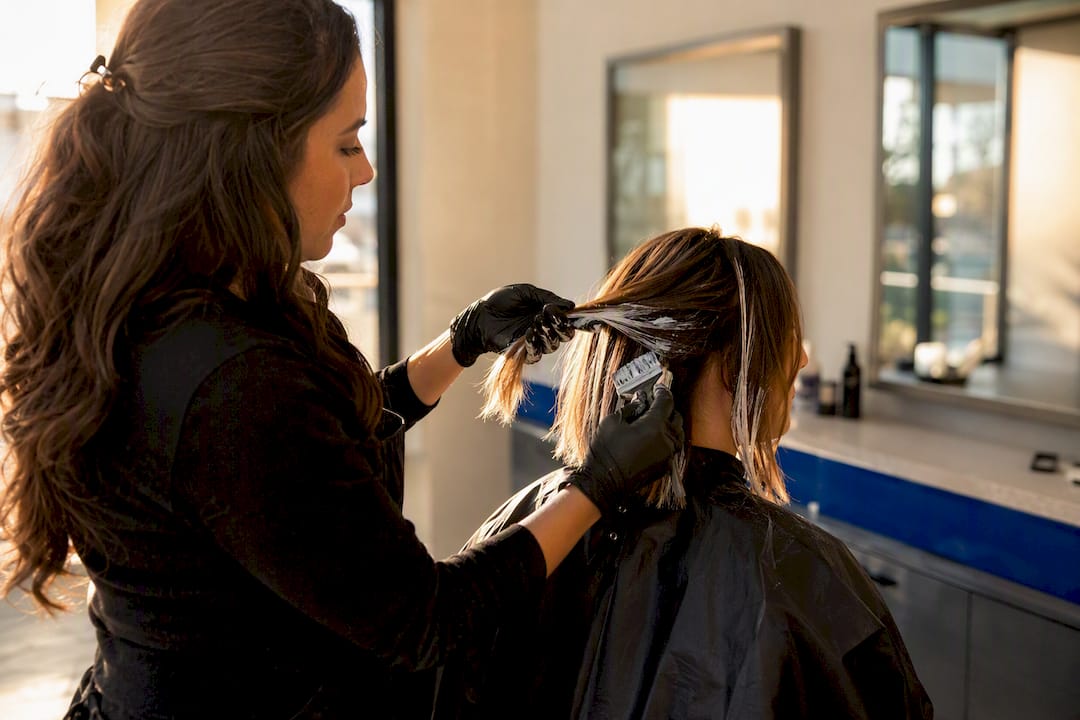
Pick balayage for a low-maintenance, sun-kissed look; pick highlights for precise, high-contrast brightness. The reason comes down to how the color goes on. Balayage is painted on freehand, so it fades the way real sun exposure would, with soft regrowth that doesn’t scream “roots.” Highlights are processed inside foil, which isolates and lifts each section evenly from root to tip, giving you the brightest, most uniform result but the fastest-growing root line.
- Want to go four or more shades lighter? Foils typically deliver more reliable lift on that kind of dramatic shift.
- Want to stretch time between salon visits? Balayage’s gradual grow-out usually wins.
- Have dark or previously colored hair? Foils often handle it more predictably.
Key Takeaways
Balayage delivers a lower-maintenance, hand-painted look with gradual grow-out, while foil highlights deliver brighter, more uniform lift for bigger color changes.
| Point | Details |
|---|---|
| Application method drives the outcome | Foils enclose and lift evenly; freehand painting blends softly for a natural finish. |
| Maintenance windows differ | Balayage often stretches 10 to 16 weeks; foil highlights usually need 6 to 8 weeks. |
| Foils suit dramatic lightening | Going four or more shades lighter, especially on previously colored hair, favors foils. |
| Appointment time varies widely | Sessions run from 45 minutes to 3 hours depending on length, density, and add-ons. |
| Start your search locally | Local AI Page helps you find and compare nearby salons by ZIP code before booking a consult. |
Table of Contents
- Balayage vs Highlights at a Glance
- What Is Balayage? Technique, Variants, and What to Expect
- What Are Highlights? Foil Application, Variants, and What to Expect
- Key Differences: Lift, Personalization, and When Each Method Wins
- Pros and Cons of Balayage and Highlights
- Who Should Choose Balayage vs Highlights?
- Maintenance, Cost, and Timeline After Your Appointment
- How to Choose: A Salon-Consult Checklist
- Combination Techniques: Foilyage and Hybrid Approaches
- What Stylists and Colorists Say About Lift and Longevity
- A Stylist Note on Booking Locally
- Find and Compare Salons Near You
- Sources
Balayage vs Highlights at a Glance
| Attribute | Balayage | Highlights |
|---|---|---|
| Application technique | Freehand painting, open-air | Foil-wrapped, root-to-tip saturation |
| Look/finish | Soft, graduated, sun-kissed | Defined, uniform, high-contrast |
| Maintenance frequency | Every 10 to 16 weeks | Every 6 to 8 weeks (up to 12) |
| Appointment time | 45 minutes to 3 hours | 1 to 3 hours |
| Best for | Low-maintenance, natural dimension | Maximum brightness, precise lift |
Choose balayage if you want a look that grows out gracefully and don’t want to be back in the chair every month. Choose highlights if brightness and even coverage matter more to you than stretching out appointments.
What Is Balayage? Technique, Variants, and What to Expect
Balayage comes from the French word for “to sweep,” and that’s exactly what a colorist does: sweep lightener onto the surface of the hair by hand, with no foil involved. The technique is applied in an open-air, freehand style, which is why balayage results look softer and less uniform than foiled color.
Stylists typically start light around the mid-shaft and build density toward the ends, leaving the root area closer to its natural depth. That placement is deliberate. It mimics how hair actually lightens in the sun, and it’s the mechanical reason balayage grows out without a hard demarcation line at the scalp.
A few common variations you’ll hear in a consult:
- Partial balayage: color concentrated around the face and crown, good for a subtle first attempt.
- Full balayage: coverage through the entire head for more overall dimension.
- Balayage with babylights: fine, hand-painted pieces mixed in near the hairline for extra softness.
Session times vary a lot depending on length and how much dimension you want. A simple balayage refresh can take about 45 minutes, while a full-length, heavily layered application can run closer to three hours.
Pro Tip: If your stylist suggests balayage during your consult, ask specifically how close to the root they plan to start. A wider gap near the scalp usually means a longer stretch before your next appointment.
What Are Highlights? Foil Application, Variants, and What to Expect
Foil highlights work by isolating small sections of hair, applying lightener, and sealing each section in foil to trap heat and control processing. That enclosed environment is what allows more consistent, root-to-tip lightening than an open-air technique can typically achieve.
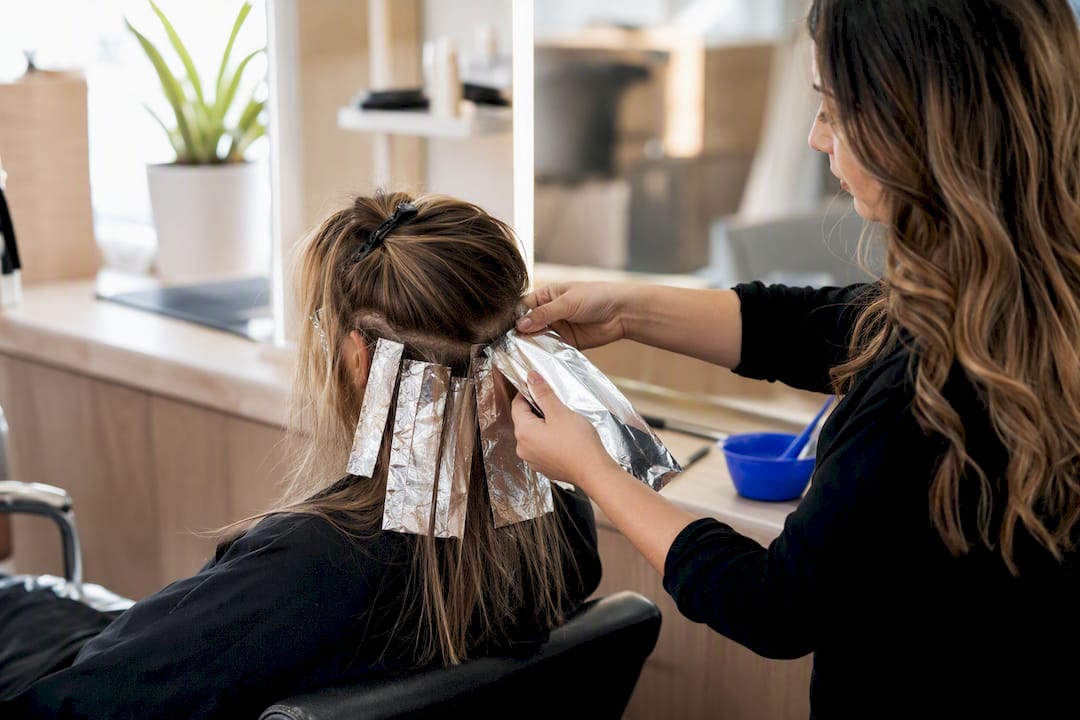
Because every foiled section processes the same way, the result reads more structured and uniform, which is part of why highlights are the go-to when someone wants a noticeable, all-over brightening rather than a soft wash of dimension.
Variants change how bold or subtle the final look reads:
- Babylights: very fine foils placed close together for a delicate, natural-looking brightness.
- Chunky highlights: wider, more saturated foils for maximum contrast, popular in retro-inspired color trends.
- Partial highlights: foils concentrated at the crown and hairline rather than through the whole head.
Processing and session time run anywhere from one to three hours, largely driven by how many foils are needed to cover the head evenly.
Key Differences: Lift, Personalization, and When Each Method Wins
The biggest practical difference between these two techniques isn’t cosmetic, it’s chemical. Foils create a sealed, heat-trapping environment, which is why they’re the standard choice for lifting hair four or more shades lighter. Balayage, applied in open air, tends to deliver a softer, closer-to-base result rather than dramatic lightening.
- Foils win on lift capacity. If you’re going from dark brown to a noticeably lighter blonde, foils give a colorist more control over how far the hair lightens in a single session.
- Balayage wins on customization and grow-out. Because it’s painted by hand, a stylist can place lighter pieces exactly where your face catches light, and the soft edges mean regrowth is far less obvious than with foils.
- Previous color changes the equation. On hair that’s already been dyed or heavily processed, foils often provide more predictable results because the enclosed setup gives more reliable, repeatable lift than freehand painting on a color-corrected base.
- Balayage demands more artistry. Foil placement is fairly mechanical once a stylist decides on the pattern. Freehand painting for a seamless blend takes real skill, so ask to see a portfolio of balayage work specifically, not just general color photos.
None of this makes one technique objectively “better.” It just means the two solve different problems, and your starting hair color is often what tips the decision.
Pros and Cons of Balayage and Highlights
Balayage:
- Pro: longer stretches between appointments and a forgiving grow-out.
- Pro: soft, customizable placement that flatters your face shape.
- Con: less effective for dramatic, all-over lightening.
- Con: results depend heavily on the individual stylist’s hand-painting skill.
Highlights:
- Pro: maximum brightness and even, predictable lift.
- Pro: precise placement for a crisp, “just-colored” finish.
- Con: root regrowth shows faster, meaning more frequent touch-ups.
- Con: repeated foil processing near the scalp can add up in cumulative damage.
Either technique can stress your hair’s protein structure, especially with repeated lightening. If you’re coloring often, ask your stylist about adding a bond-building treatment, like Olaplex or a similar in-salon system, to the service.
Who Should Choose Balayage vs Highlights?
Balayage tends to suit people with naturally wavy or textured hair, since the graduated color plays well with movement, and anyone who wants to go months between salon visits. It’s also a common choice for blending gray, because the soft, varied placement disguises new growth better than a hard foil line.
Highlights make more sense if you have very dark or previously processed hair and want a real color shift, or if you simply prefer the crisp, “just done” look and don’t mind more frequent refreshes. Fine or short hair can also read more evenly with foils, since there’s less length for freehand painting to graduate across.
- Fine hair: highlights often show cleaner separation.
- Heavily processed hair: foils usually lift more reliably.
- Gray blending: balayage tends to disguise regrowth better.
- Short hair: foils can look more deliberate; balayage needs more length to show its blend.
Bring photos of your goal color to your consult and say plainly how much upkeep you’re willing to commit to. That one conversation prevents most disappointing color outcomes.
Maintenance, Cost, and Timeline After Your Appointment
Balayage clients typically stretch touch-ups to every 10 to 16 weeks, while traditional foil highlights usually need attention every 6 to 8 weeks to keep roots from looking obvious, sometimes stretching to 12 weeks with lower-contrast placement.
Appointment length depends less on foils-versus-freehand and more on how many sections your stylist works and which finishing services you add, like a gloss, toner, or bond treatment. Cost follows a similar pattern: stylist experience level, salon tier, and add-ons move the price more than the base technique does.
- Use a sulfate-free, color-safe shampoo to slow fading.
- Add a weekly hydrating mask if you’re lightening more than two shades.
- Space out heat styling between appointments; heat damage accelerates fading on lightened strands either way.
Statistic Callout: A full-length balayage session can run up to three hours, while a simple version takes about 45 minutes, so ask upfront which category your hair falls into before booking your time slot.
How to Choose: A Salon-Consult Checklist
Before you book, get clear on four things: how bright you want to go, how much upkeep you’re realistically willing to do, your timeline before a big event, and the current condition of your hair. Walking in with answers to those four questions makes the consult faster and the result more predictable.
- Ask about expected lift. How many shades lighter can you realistically go in one session without excessive damage?
- Ask what products they’ll use. Bleach, high-lift tint, and toner all behave differently, and a good stylist should explain the plan.
- Ask about processing time. A rushed foil job or an underdeveloped balayage both lead to uneven, disappointing color.
- Ask for a maintenance plan. Get a real touch-up window, not a vague “whenever you feel like it.”
Pro Tip: Ask to see the stylist’s portfolio specifically for your hair type and starting color. A colorist who’s mostly worked on already-light hair may struggle with a dramatic change on dark strands.
Red flags worth walking away from: a stylist who promises a huge color jump in one sitting with no mention of multiple sessions, someone with no portfolio examples close to your hair type, or vague answers when you ask how often you’ll need to come back.
Combination Techniques: Foilyage and Hybrid Approaches
Stylists frequently blend both methods in a single appointment, often called foilyage or foilayage. The idea is simple: use foils near the face and part line for maximum brightness, then hand-paint the rest of the lengths for a softer, more natural blend.
- Face-framing foils plus balayage through the lengths gives brightness where it shows most, with easier grow-out everywhere else.
- Hybrid techniques usually mean a longer appointment than either method alone, since the stylist is doing two application styles in one visit.
- They’re a strong option if you want more brightness than balayage delivers but don’t want the full maintenance schedule of an all-foil head.
What Stylists and Colorists Say About Lift and Longevity
Colorists who work with both techniques daily tend to draw the same line: balayage for longevity and a natural finish, foils for brightness and precision.
Salon professionals consistently frame balayage as the choice for a “lived-in” aesthetic and longevity, while highlights get chosen for precision, maximum brightness, and a crisp, just-colored look that needs more frequent refreshing.
That split isn’t just style preference, it’s rooted in the chemistry. On virgin, never-colored hair, both methods can perform well. But once hair has been previously lightened or color-corrected, many colorists lean toward foils, since the enclosed environment gives them more repeatable control over how far the color lifts.
A Stylist Note on Booking Locally
Whatever direction you lean after reading this, the real decision happens in the chair, during a conversation about your hair’s history and how much upkeep you actually want. No article replaces that consult. If you’re not sure where to start, Local AI Page makes it easy to find nearby salons and see their service details before you call.
— Local AI Page
Find and Compare Salons Near You
Reading about balayage and foils only gets you so far. Sooner or later you need a real stylist who can look at your actual hair and tell you what’s realistic. That’s where Local AI Page comes in.

Search by ZIP code and you’ll see salon profiles with service details, so you can compare a few options before committing to an appointment. It’s not a substitute for the in-person consult this guide keeps pointing you toward. Think of it as the step before that consult, the part where you figure out who to call in the first place. If you want to see how this works in your area, browse local businesses by ZIP code and start comparing salons near you today.
Sources
- Balayage vs. Highlights: How They Differ and How to Pick One
- Balayage Vs Highlights: What’s the Difference? | John Frieda
- Balayage vs. highlights: everything to know about the color techniques | Glamour
- Balayage vs. Foil Highlights: Which Is Right for Your Hair? | Burman & Co
- Balayage Vs Highlights: 6 Key Differences For Your Look | Stylecraze